
Spot Bitcoin ETF cumulative trading volume exceeds $50 billion

Cumulative trading volume for spot Bitcoin ETFs broke past $50 billion yesterday.The ETFs also returned to net inflows, bringing in $251.4 million on Thursday.
Spot Bitcoin ETF cumulative volumes increased from $28.3 billion at the start of the month to $50.5 billion by the close of trading yesterday, boosted by a multi-week high trading volume of more than $2.5 billion on Tuesday, according to The Block’s data dashboard.
Thursday’s spot Bitcoin ETF trading volume came in at $1.2 billion, led by BlackRock’s IBIT on $457.2 million, followed by Grayscale’s GBTC and Fidelity’s FBTC on $348.8 million and $255.7 million, respectively.
Grayscale’s higher fee GBTC fund has been gradually squeezed for market share by trading volume, down from 50.5% when the spot Bitcoin ETFs launched on Jan. 11 to 28.6% as of yesterday, coinciding with persistent daily outflows. BlackRock’s IBIT has been the principal benefactor, growing from a 22.1% market share to 37.4% during the same period. Fidelity’s FBTC is in third place with a 20.9% share of the market.
Spot Bitcoin ETFs return to net inflows after Wednesday’s net outflows
The spot Bitcoin ETFs also returned to net inflows of $251.4 million on Thursday after recording net outflows of $35.7 million on Wednesday — the first since Jan. 25, according to data from BitMEX Research.
Fidelity’s FBTC led yesterday’s inflows, adding $158.9 million. BlackRock’s IBIT registered $125.1 million worth of inflows, while Grayscale’s GBTC witnessed $55.7 million in outflows. The remaining funds generated inflows of less than $10 million each. Total net flows now stand at around $5.3 billion.
Newborn nine ETFs approach 300,000 BTC in AUM
In terms of Bitcoin held, the newborn nine spot Bitcoin ETFs — excluding Grayscale’s converted GBTC fund — are fast approaching 300,000 BTC, with 292,615 BTC in assets under management, per BitMEX Research, equating to around $14 billion.
In contrast, assets held by Grayscale’s GBTC have fallen by over 25% from around 619,000 BTC on Jan. 11 to 454,660 BTC ($24 billion) as of yesterday.
Bitcoin is currently trading at $51,207, according to The Block’s price page . The largest cryptocurrency by market capitalization is down 2% over the past week. However, it remains up 26.5% this month and 21% year-to-date.

BTC/USD price chart. Image: The Block/TradingView .
Disclaimer: The content of this article solely reflects the author's opinion and does not represent the platform in any capacity. This article is not intended to serve as a reference for making investment decisions.
You may also like
They boosted the Yen but failed to hold U.S. Treasury bonds! Is Basent a "weak teammate" for U.S. stocks?
This week, Besant made high-profile calls to suppress yen short positions and raised the US Treasury repo limit to $6 billion. As a result, the yen strengthened, but US Treasuries declined—10-year yields hit their highest level since October 2023, and 30-year yields approached a twenty-year peak. Analysts noted that the combination of a stronger yen and rising US Treasury yields is simultaneously impacting carry trades and stock valuations, posing a dual threat to the US stock market bull run. This is described as "the greatest risk facing the bull market."
SK hynix US stocks surge to new highs, storage sector strengthens across the board! Goldman Sachs declares: The worst days are over
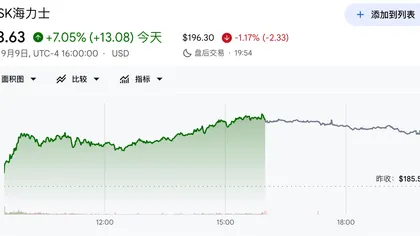
A Goldman Sachs research report ignited the storage sector, with SK Hynix soaring 7% on the US stock market in a single day to a record high. Micron and SanDisk also rose in tandem, outperforming the broader market. Goldman Sachs pointed out that a technical breakout in the storage sector, combined with low hedge fund positions, has shifted the "pain trade" direction upward. However, on the same day, the CEO of Kioxia poured cold water on the rally, stating bluntly that NAND "prices have risen enough." Amid this tug-of-war between bulls and bears, Micron's September 30 earnings report will be a key deciding factor.
Report: OpenAI expected to spend $750 billion on computing power by 2030! The company still states that "computing power is extremely insufficient"
OpenAI has raised its 2030 computing power expenditure forecast to $750 billion, an increase of more than 25% compared to the previous estimate of around $600 billion. Bottlenecks exist in multiple supply chain segments such as chips, electricity, and land. Whether massive orders can be converted into usable computing power on schedule has become a key test for the AI infrastructure sector.
Crypto prices
More


