
Cardano Developers to Release Node Upgrade Following Failed DDoS Attack

Following a failed DDoS attack on the Cardano blockchain on June 25, developers are set to release a node upgrade to enhance security and prevent similar future attacks.
The swift response from the Cardano community kept the network operational and saved Cardano from a potentially big disaster.
Failed Cardano DDoS attack Prompts Node Upgrade
The Cardano network experienced an attempted DDoS attack beginning at block 10,487,530. Raul Antonio, chief technology officer of Fluid Tokens, explained that the attack tried to manipulate the blockchain into charging lower fees for high-value transactions.
A distributed denial-of-service (DDoS) attack involves overwhelming a target, such as a server or a blockchain network, with a flood of internet traffic to disrupt normal operations. The attacker uses multiple compromised systems to generate massive fake traffic, causing the target system to become slow or entirely unavailable to legitimate users.
The attack caused each transaction to execute 194 smart contracts, with the attacker spending 0.9 ADA per transaction.
They filled each block with numerous transactions, using REWARD-type smart contracts to send large transactions while spending the least possible amount. Despite the attacker’s efforts, the DDoS attack did not achieve its intended goal and failed to move any stolen funds.
Additionally, if successful, the attacker could have stolen staked Cardano tokens from the network.
“The idea behind this attack is to take advantage of the fact that the size of reference scripts currently does not impact the transaction fee, but it does impact the work that validators have to do to process the transaction,” Anastasia Labs founder and CEO Philip Disarro said.
Disarro and other Cardano developers outsmarted the attacker, reclaiming the stolen ADA tokens and stopping the DDoS attack.
The attacker eventually halted the attack and failed to move any stolen funds.
“Thanks for the free money, moron,” Disarro commented. “Truly iconic that the attacker who presumably wanted to damage the ecosystem actually ended up donating to the open-source smart contract development work we do.”
Cardano Blockchain Will Upgrade To Minimize Attacks
“If you rush to deploy something to production without thorough testing and a high-quality, independent audit, you might wind up losing a lot of money to vulnerabilities just like the attacker did,” he said.
Intersect, a member-based organization for the Cardano ecosystem, confirmed the attack and thanked the developer community for their swift resolution.
Although the Cardano network was not compromised and continued to function normally, Intersect noted that “the network has experienced a higher load than normal, and some stake pool operators (SPOs) have been negatively affected due to an intensification in block height battles.”
Intersect assured that “once a solution has been properly tested and deployed, we will share the new node version for SPOs to upgrade to.”
The Intersect task force is collaborating to identify and test a solution to minimize the impact of such spam attacks further.
Unfortunately, Cardano is not the first blockchain to have experienced a DDoS attack in 2024. In January, layer-2 blockchain Manta Network suffered a DDoS attack shortly after successfully listing its Manta token on multiple exchanges. The attack caused the blockchain’s nodes to experience over 135 million remote procedure call (RPC) requests.
Disclaimer: The content of this article solely reflects the author's opinion and does not represent the platform in any capacity. This article is not intended to serve as a reference for making investment decisions.
You may also like
They boosted the Yen but failed to hold U.S. Treasury bonds! Is Basent a "weak teammate" for U.S. stocks?
This week, Besant made high-profile calls to suppress yen short positions and raised the US Treasury repo limit to $6 billion. As a result, the yen strengthened, but US Treasuries declined—10-year yields hit their highest level since October 2023, and 30-year yields approached a twenty-year peak. Analysts noted that the combination of a stronger yen and rising US Treasury yields is simultaneously impacting carry trades and stock valuations, posing a dual threat to the US stock market bull run. This is described as "the greatest risk facing the bull market."
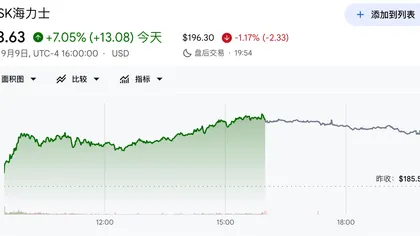
SK hynix US stocks surge to new highs, storage sector strengthens across the board! Goldman Sachs declares: The worst days are over
A Goldman Sachs research report ignited the storage sector, with SK Hynix soaring 7% on the US stock market in a single day to a record high. Micron and SanDisk also rose in tandem, outperforming the broader market. Goldman Sachs pointed out that a technical breakout in the storage sector, combined with low hedge fund positions, has shifted the "pain trade" direction upward. However, on the same day, the CEO of Kioxia poured cold water on the rally, stating bluntly that NAND "prices have risen enough." Amid this tug-of-war between bulls and bears, Micron's September 30 earnings report will be a key deciding factor.
Report: OpenAI expected to spend $750 billion on computing power by 2030! The company still states that "computing power is extremely insufficient"
OpenAI has raised its 2030 computing power expenditure forecast to $750 billion, an increase of more than 25% compared to the previous estimate of around $600 billion. Bottlenecks exist in multiple supply chain segments such as chips, electricity, and land. Whether massive orders can be converted into usable computing power on schedule has become a key test for the AI infrastructure sector.
Crypto prices
More


