
Goldman Sachs CEO David Solomon says bitcoin could be 'a store of value case'

The Goldman Sachs CEO joined CNBC for an interview from the Summer Olympics in Paris, France.“I’ve always said I think it’s a speculative investment,” David Solomon said. “I don’t see a real use case.”
David Solomon, the chief executive of Goldman Sachs, is not one to speculate on the price of bitcoin or any other crypto assets.
"I've always said I think it's a speculative investment," Solomon said during an interview with CNBC at the Summer Olympics in Paris, France. "I don't see a real use case."
Solomon said the underlying technology behind crypto is "super interesting," highlighting how progress can be made to take the friction out of the financial system as the system becomes increasingly digitized.
When asked by CNBC's Joe Kernan if building a reserve similar to a gold reserve is a store of value case or a use case for Bitcoin BTC -3.88% , Soloman said "there very well could be a store of value case."
In 2021, the same year Goldman Sachs launched a crypto desk, Solomon said, "Bitcoin is on an inevitable path to have the same market capitalization and then a higher one than gold."
The price of bitcoin is up about 490% over the past five years and trades around $66,237, according to The Block's BTC price page . The spot price of gold is up about 67% in that same period.
Goldman's role in crypto
Despite Solomon's more tepid comments Tuesday, 2024 is shaping up to be a big year for Goldman's push into the crypto space. Earlier this year, Goldman Sachs was among several firms to have completed a series of tests on Canton Network, an interoperable "network designed for institutional assets" created by Digital Asset Holdings.
In a fireside chat in March at the Digital Asset Summit in London, Mathew McDermott, Goldman's global head of digital assets, said the company has been actively investing in the digital asset space and "looking at the bankruptcy claims and other investing opportunities."
The bank confirmed it had seen growing interest from hedge fund clients in crypto-related products.
“Many of our largest clients are active or exploring getting active in the space,” Max Minton, Asia Pacific head of digital assets of Goldman Sachs, told Bloomberg. This came near the height of the post-spot bitcoin ETF launches.
On July 10, it was reported that Goldman Sachs plans to launch three tokenization projects by the end of the year, focused on U.S. and European markets. The firm is also said to be planning to create marketplaces for tokenized assets.
"Central banks are looking at digital currencies, working to apply this technology to the local markets and determine the longer-term impact on global payment systems," Solomon said during an earnings call in April 2021. "Also significant focus on cryptocurrencies like Bitcoin, where the trajectory is less clear as market participants evaluate their possibility as a store of value."
Disclaimer: The content of this article solely reflects the author's opinion and does not represent the platform in any capacity. This article is not intended to serve as a reference for making investment decisions.
You may also like
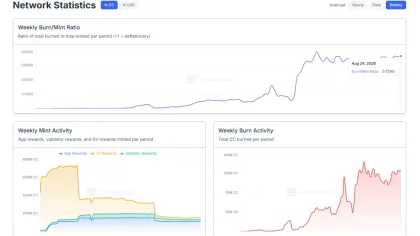
CC Price Eyes Recovery as Burn Activity Gains Ground
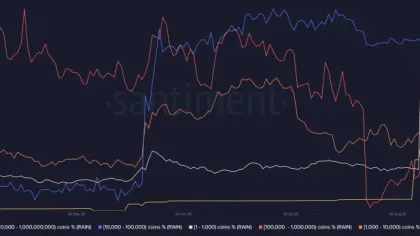
RAIN Price Eyes New High as Whales Absorb Retail Selling
Where are Crypto Whales Buying Next After Bitcoin’s Rally

High-beta U.S. stocks surge, Snowflake up 26% intraday, Tesla up nearly 8%, AI earnings and Waller's dovish shift ignite risk appetite
Dell rebounded nearly 25% from pre-earnings levels, with its results showing that AI spending continues to flow into servers, networks, and data center infrastructure. Snowflake delivered strong earnings and raised its full-year guidance, further fueling momentum: AI is becoming a new growth engine for software. The “power shortage” logic for AI data centers gained traction again, with Bloom Energy surging nearly 10% intraday. Robinhood, bitcoin whale Strategy, and other cryptocurrency-related stocks jumped double digits intraday, highlighting a return of risk appetite. However, Broadcom fell nearly 7% after its earnings, reflecting the market's higher expectations for AI performance.
Crypto prices
More


