
North Carolina passes anti-CBDC bill, overrides governor's veto

Quick Take The North Carolina Senate passed a bill on Monday that bans state participation in CBDC testing sponsored by the Federal Reserve.
The North Carolina General Assembly has passed a bill that prohibits the state’s participation in Federal Reserve branch testing of a central bank digital currency .
On Monday, the Senate voted 27-17 in favor of the House Bill 690 to override Democrat Gov. Roy Cooper’s veto . The bill bans payments to the state using a CBDC and prohibits state participation in CBDC testing.
Cooper said in a July statement on his veto that the House Bill 690 was “premature, vague, and reactionary.” He said at the time that “efforts are being made at the federal level to ensure standards and safeguards are in place to protect consumers, investors and businesses that may want to make monetary transactions in digital assets and North Carolina should wait to see how they work before taking action."
Dan Spuller, head of industry affairs of Blockchain Association, wrote on X on Monday that the bill “should have never been vetoed,” and that Cooper “blew an opportunity to send a strong message to the Federal Reserve that [North Carolina] stands united against CBDCs.”
The North Carolina’s anti-CBDC bill comes after the U.S. House in May passed the CBDC Anti-Surveillance State Act , a Republican-led bill blocking a CBDC. The bill intends to block the Fed from issuing a CBDC to individuals.
The Federal Reserve has been exploring the possibility of CBDC issuance and has released a report examining its pros and cons. Fed Chair Jerome Powell has said that the Fed would not issue a CBDC without congressional approval — and that, if the central bank was to adopt a CBDC, it would be done through the banking system.
Disclaimer: The content of this article solely reflects the author's opinion and does not represent the platform in any capacity. This article is not intended to serve as a reference for making investment decisions.
You may also like
Meta (META.US) teen protection measures only cover US users, global regulatory replication risks emerge
Meta's recent changes to Instagram and Facebook currently apply only to users in the United States. These include restrictions on the amount of time young users can spend on the apps, as well as limits on disabling safety settings. These changes are part of a series of landmark settlement agreements aimed at addressing allegations that the social media networks pose safety risks to children, and could cost the company up to $18 billion.

Bilibili Q2 Net Profit Surges 55%, Advertising Becomes Growth Engine, Gross Margin Improves for 16 Consecutive Quarters | Earnings Report Insights
Bilibili's Q2 revenue reached 7.94 billion yuan, an 8% year-on-year increase, with a net profit of 339 million yuan, up 55% year-on-year. Advertising revenue rose to 3.13 billion yuan, a 28% year-on-year increase, making it the primary growth engine; game revenue declined by 14% due to a high comparison base. Gross profit margin improved for the 16th consecutive quarter to 37.2%, and operating profit grew by 48%. Daily active users (DAU) reached 116.5 million, with an average daily usage time of 113 minutes.
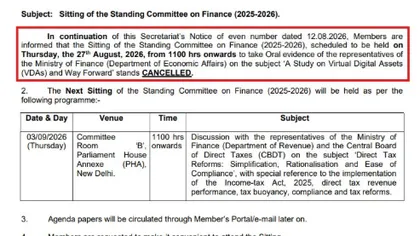
India’s Crypto Law Delayed Again: What the Latest VDA Hearing Cancellation Means for Investors
Crypto prices
More


