
Bitcoin short-term holder demand weakens, long-term accumulation continues: CryptoQuant

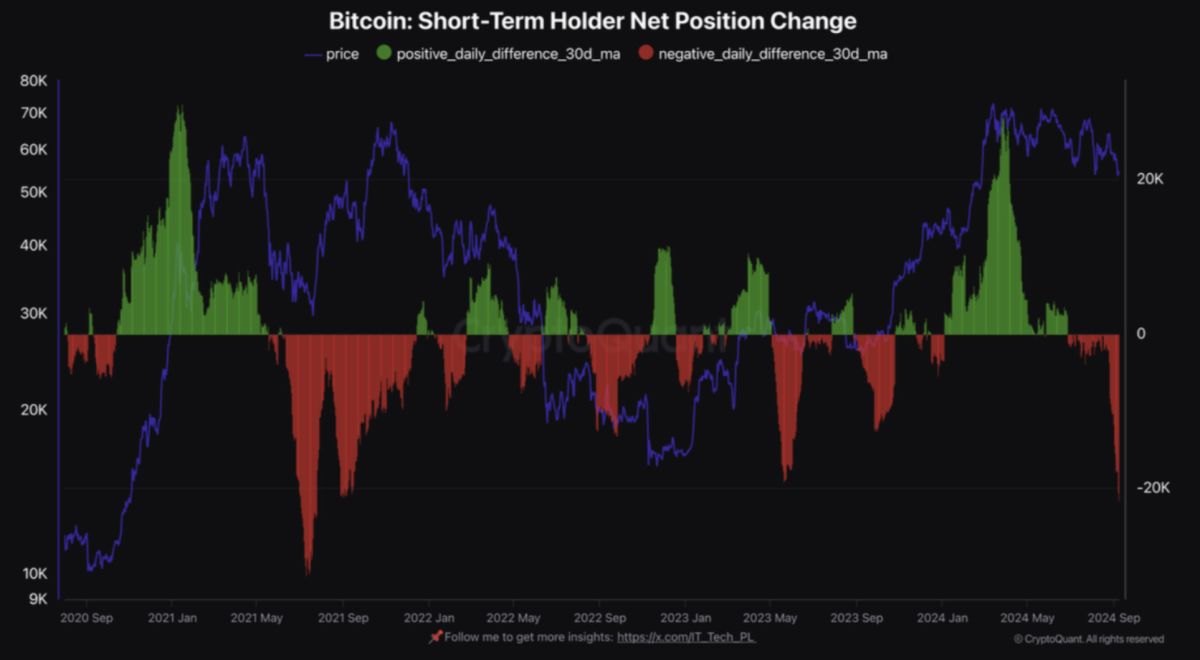
CryptoQuant noted the number of bitcoins held by short-term holders has been declining since late May, suggesting a weakening in demand.In contrast, long-term bitcoin holders appear to accumulate in the face of this short-term holder capitulation.
"The fact that short-term holders are not accumulating can mean demand for bitcoin remains weak," CryptoQuant Head of Research Julio Moreno told The Block. Moreno added that bitcoin long-term holders are accumulating in the face of this short-term holder capitulation. However, Moreno said that the opposite of this dynamic could play out if demand for bitcoin grows again, "leading to short-term holders buying from long-term holders."
The CryptoQuant analyst further highlighted charts that showed a notable shift in bitcoin ownership dynamics. They revealed that short-term holders—those who have held their bitcoin for 155 days or less—have significantly reduced their positions, particularly throughout July and August.
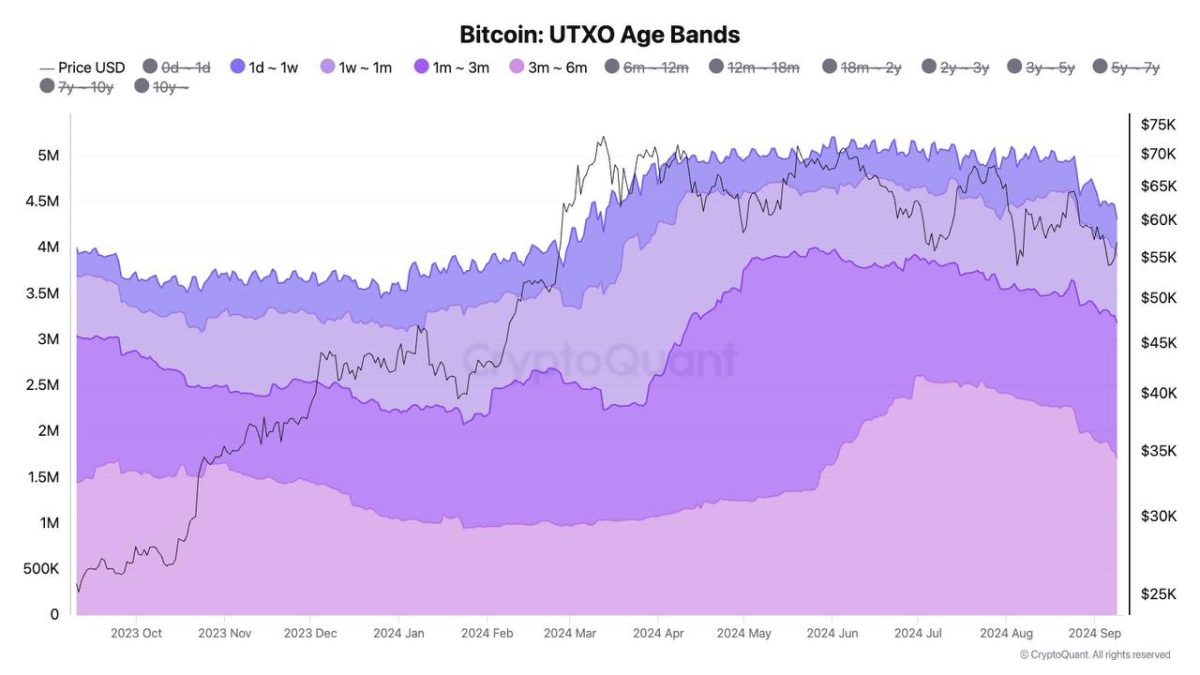
The number of bitcoins held by short-term holders has declined since late May. Image: CryptoQuant.
CryptoQuant contributor IT Tech said the dynamic could lead to medium-term price appreciation and market stabilization. Increased accumulation by long-term holders could lead to price stabilization and position the market for a potential rebound, while short-term holder sell-offs may create short-term downward pressure on bitcoin prices. The data shows a clear capital flow from weak hands (short-term holders) to strong hands (long-term holders), signaling market stability," they said.
Disclaimer: The content of this article solely reflects the author's opinion and does not represent the platform in any capacity. This article is not intended to serve as a reference for making investment decisions.
You may also like
U.S. equity risk premium hits lowest level since 2002, JPMorgan: Impact of rising interest rates will be more painful than in the past two decades
The buffer for risk in the US stock market is running thin. JPMorgan warns that the equity risk premium of the S&P 500 has fallen to 2.1%, its lowest level since 2002, more than 100 basis points below its historical average. The era of low premiums hides three major risks: a systemic increase in the stock market's sensitivity to interest rate shocks; global investors have overweighted equities to a twenty-year high, facing rebalancing pressure; and the strengthening positive correlation between stocks and bonds is causing risk parity strategies to continuously fail. If real interest rates rise further, this silent repricing of valuations may erupt violently.
UK Crime Agency Maps How Crypto Laundering Routes Shift Between Platforms
Why Is ZEC Being Shorted? $27M TRUMP Trader Opens $6.49M Short on Zcash

Crypto prices
More


