
BlackRock Warns of Quantum Computing Threat in Bitcoin ETF Risk Disclosure

The uodated Bitcoin and Ethereum ETF filings reflect BlackRock’s continued engagement with regulators and evolving market structures in the crypto ETF space.
BlackRock has updated its S-1 registration statement for the iShares Bitcoin Trust (IBIT), introducing new language that outlines the potential risks posed by quantum computing.
This revision, filed on May 9, reflects growing industry awareness of how advanced computing technologies could impact cryptographic systems used in digital assets.
BlackRock Flags Theoretical Quantum Risks to Bitcoin Security
In the filing, the asset manager warned that future advancements in quantum computing may undermine the security framework underpinning Bitcoin.
Should quantum technology evolve far beyond its current state, it could render the cryptographic algorithms used by Bitcoin obsolete.
This could allow malicious actors to exploit vulnerabilities, including gaining unauthorized access to wallets that store Bitcoin for the trust or its investors.
While quantum computing is still developing, BlackRock emphasized that the technology’s full capabilities remain uncertain.
However, the firm considers it important to disclose any theoretical threats that could affect the performance or security of its crypto investment products.
Bloomberg ETF analyst James Seyffart said the update is a key factor that is standard in ETF filings. He explained that issuers routinely list all potential threats, no matter how remote.
“To be clear. These are just basic risk disclosures. They are going to highlight any potential thing that can go wrong with any product they list or underlying asset thats being invested in. It’s completely standard. And honestly makes complete sense,” Seyffart added.
Notably, BlackRock’s filing also covers concerns about regulatory actions, energy consumption, mining concentration in China, network forks, and prior market events like the collapse of FTX.
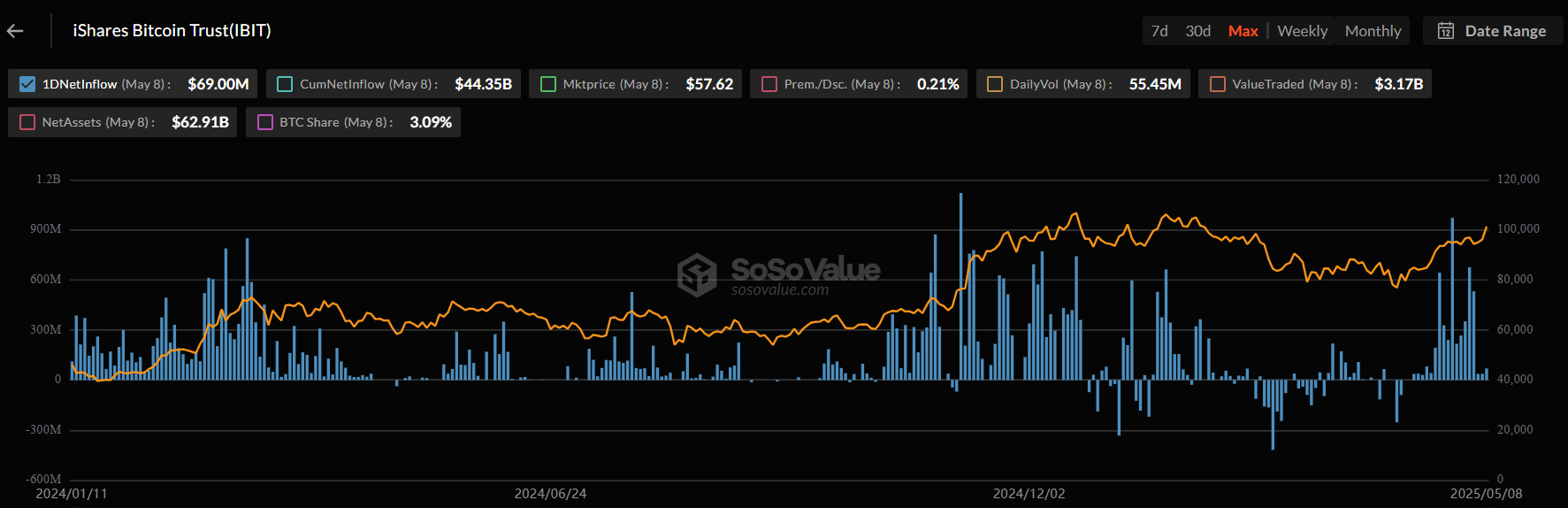 BlackRock’s IBIT Flows. Source:
SoSoValue
Despite these warnings, IBIT remains the largest spot Bitcoin ETF on the market. It has recorded 19 consecutive days of inflows, attracting more than $5.1 billion during the reporting period.
Ethereum ETF Filing Adds In-Kind Redemption Structure
In a separate filing, Seyffart revealed that BlackRock also amended its S-1 application for its spot Ethereum ETF.
The new version includes plans to support in-kind creation and redemption—a model allowing investors to swap ETF shares directly for Ethereum, instead of using cash.
This structure could lower transaction costs and reduce market friction. It also avoids converting crypto into fiat currency, which is currently required under the cash-based model. The approach may help issuers minimize price slippage and save on trading fees.
The SEC has yet to approve in-kind redemption models for crypto ETFs, but analysts expect progress this year.
“Eric Balchunas & I expect SEC approval for in-kind at some point this year…Notably, the first application for any of the Ethereum ETFs to allow In-kind create/redeem has a final deadline around ~10/11/25,” Seyffart noted.
BlackRock’s filing follows the firm’s meeting with the US Securities and Exchange Commission (SEC) to discuss crypto ETF staking and securities tokenization.
Disclaimer: The content of this article solely reflects the author's opinion and does not represent the platform in any capacity. This article is not intended to serve as a reference for making investment decisions.
You may also like
Eight Highlights of Anthropic IPO Prospectus: Astonishing Growth, but Risks are Obvious
The Anthropic prospectus reveals several highlights: a large-scale enterprise customer base with over 1,900 customers generating more than one million dollars in revenue; as of June 2026, revenue has increased by 1,368% year over year, far surpassing the growth rate of computing costs; positive operating cash flow; and all seven co-founders remain with the company. The company also acknowledges risks, including concentrated supply from TSMC and potential memory chip shortages as significant concerns. October ARR data will be additionally disclosed in a revised version of the document.

Selling Chips, Leasing, Providing Residual Value Support: Broadcom (AVGO.US) Teams Up with Wall Street's Four Giants to Raise $63 Billion to "Inject Funds" for Anthropic's Chip Procurement
Broadcom has reached a $63 billion deal with Bank of America, Blackstone Group, Citigroup, and Morgan Stanley to provide funding for the purchase of chips for AI model developer Anthropic PBC. The transaction is conducted through a newly established special purpose company, which has secured financial commitments from these firms to purchase Broadcom chips and lease them to Anthropic.

The Biggest Winner in the AI Fundraising Frenzy: Goldman Sachs Remains the King of Wall Street
In a single day, three AI mega financing deals totaling over $210 billion took place, and Goldman Sachs’ name appeared in each one: co-leading Meta’s $95 billion stock offering, exclusively overseeing the $40 billion chip financing structure for SpaceX, and serving as the lead bookrunner for Anthropic’s IPO. The AI financing supercycle is reshaping the competitive landscape on Wall Street, with Goldman Sachs taking the lead in turning relationship advantages into real money.

Anthropic may secure the "largest IPO in the stock market," but may not achieve "investment grade in the bond market"
The prospectus reveals that the company is already burdened with $6.2 billion in current liabilities, and its uninitiated lease commitments have soared from $50 billion to $321 billion, with an additional $77 billion in hidden borrowing options. The off-balance-sheet "chip financing" structure it has built in partnership with Broadcom is considered a potential counterparty risk due to circular trading. In comparison, SpaceX made a clear commitment to an investment-grade credit rating and successfully completed a $25 billion bond issuance. Anthropic, however, has barely mentioned an investment-grade credit rating, making it difficult for bond market buyers to price its offerings.
Crypto prices
More


