
Bitcoin ETF Outflows Slow, But Market Sentiment Stays on Edge| ETF News

Bitcoin spot ETFs faced $129M in outflows last week, a slower pace than before. Despite a dip in funding rates, call option demand hints at bullish hope.
Last week, US-listed spot Bitcoin exchange-traded funds (ETFs) recorded net outflows exceeding $120 million.
While the figure reflects continued investor caution, it also represents a slight improvement from the previous week’s larger outflows, signaling a tentative resurgence in bullish sentiment.
BTC ETF Outflows Cool After Heavy June 5 Dump
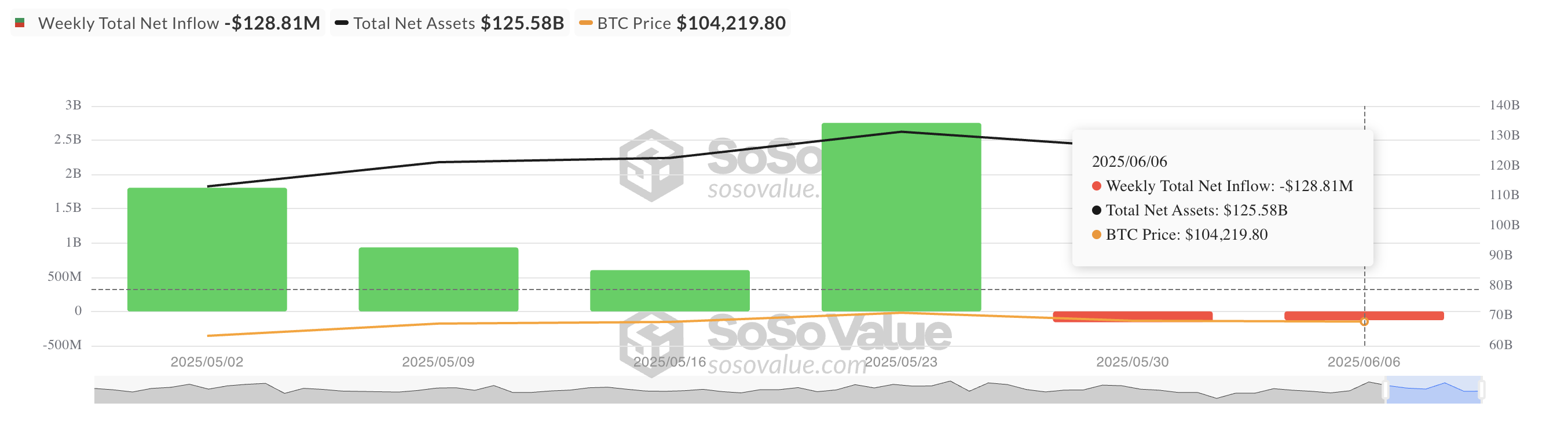
According to SosoValue, net outflows from spot BTC ETFs totaled $129 million between June 2 and June 6. The moderation in capital flight suggests that while some institutional investors remain wary, others may be growing more risk-on sentiment.
 Total Bitcoin Spot ETF Net Inflow. Source:
SosoValue
Last week, the heaviest single-day outflow occurred on June 5, when BTC’s price fell to an intraday low of $100,372. The drawdown dampened sentiment across ETF markets, with net outflows totaling $278.44 million that day.
However, the fact that outflows lessened on the following trading day points to growing resilience in the market, despite BTC’s lackluster price performance.
Bitcoin Futures Turn Bearish, Options Stay Bullish
Today, BTC has posted a mild 0.13% price decline to trade at $105,488 at press time. The coin has resumed its sideways trading, reflecting ongoing uncertainty in the broader crypto market.
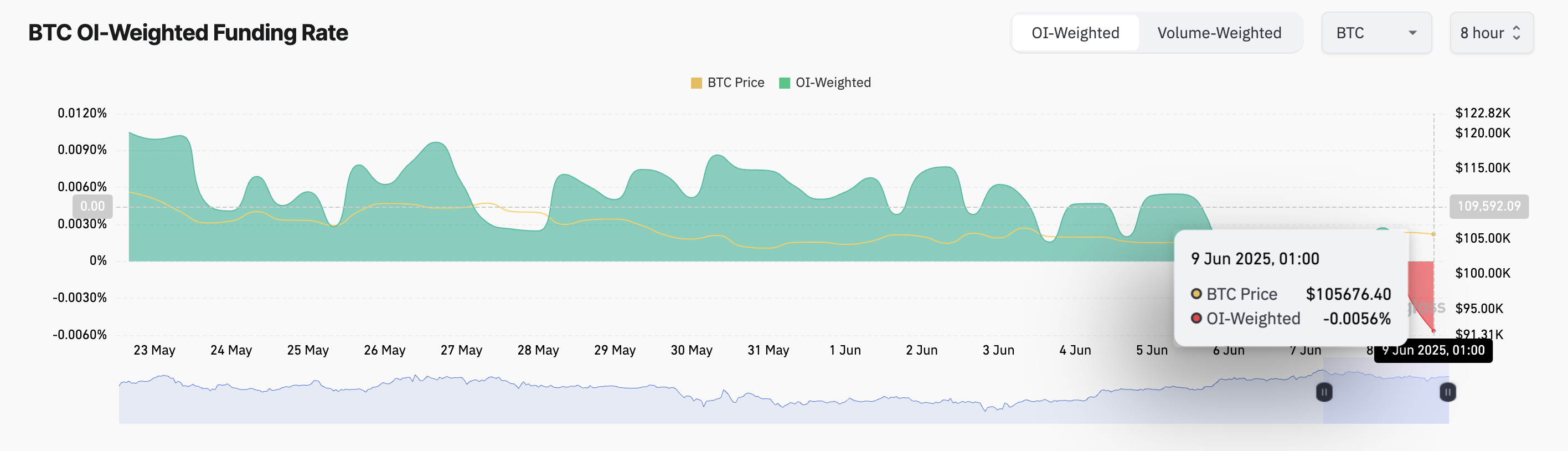
Meanwhile, the funding rate across major perpetual futures markets has turned negative, indicating that more traders are betting on further downside in the short term. As of this writing, this is at -0.0056%.
 Bitcoin Funding Rate. Source:
Coinglass
The funding rate is a periodic payment between traders in perpetual futures contracts to keep the contract price aligned with the spot price. When the funding rate is negative, there is a higher demand for short positions. This trend indicates more traders are betting on BTC’s price decline, adding to the bearish pressure in the market.
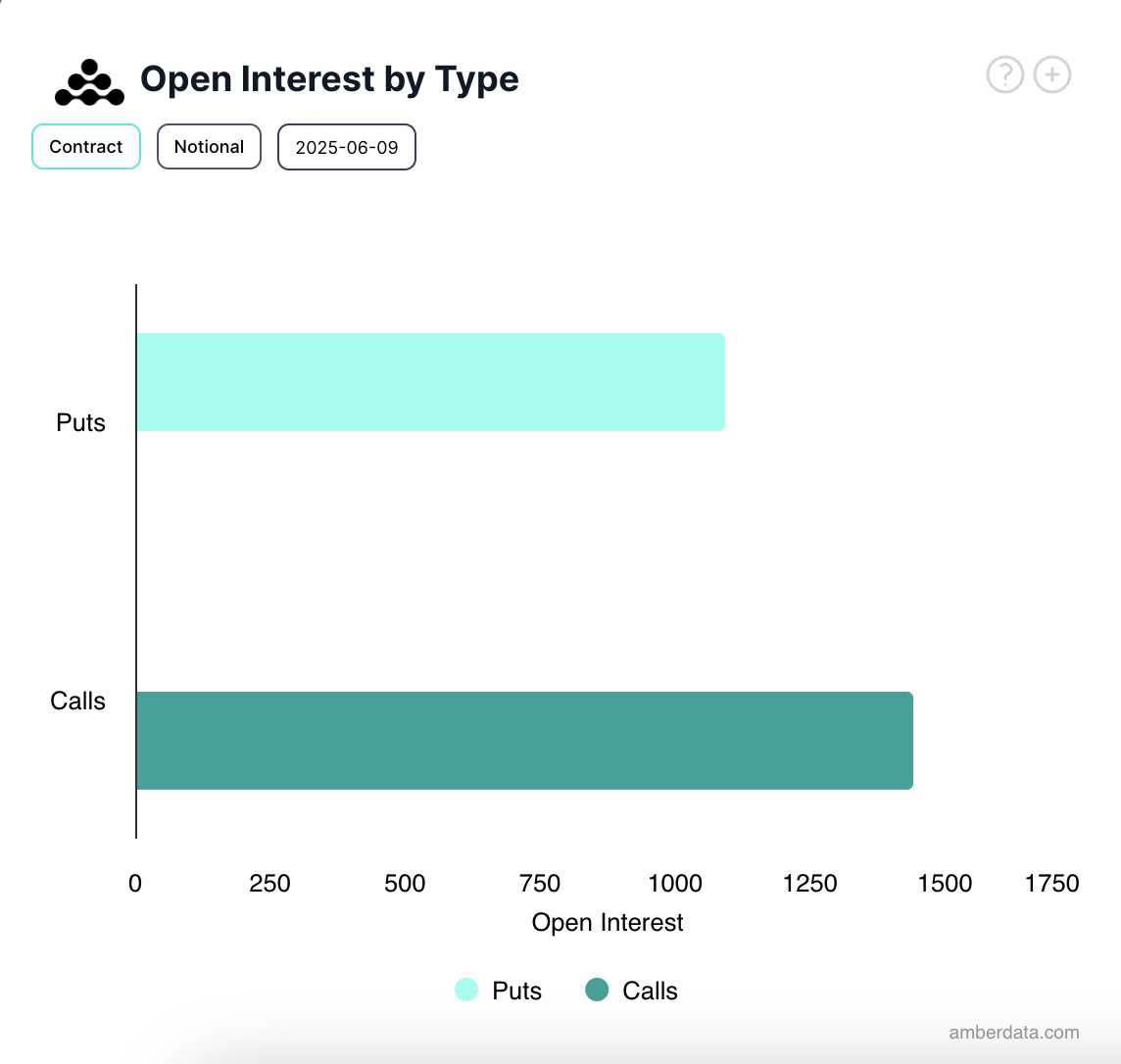
However, BTC options data offers some respite. Per Deribit’s data, BTC options traders continue to show strong demand for call options. This points to optimism among sophisticated market participants, even as short-term indicators remain mixed.
 Bitcoin Options Open Interest. Source:
Deribit
Overall, while BTC ETF weekly flows remain in the red, the deceleration in outflows and a rise in bullish derivatives positioning suggest that market participants may be bracing for a potential turnaround.
Disclaimer: The content of this article solely reflects the author's opinion and does not represent the platform in any capacity. This article is not intended to serve as a reference for making investment decisions.
You may also like
Uber Technologies stock closes 3.43% lower; 15-minute RSI sits at 27.11
Counter-terrorism forces take to the streets, Louvre closes! France erupts in a new wave of protests over the weekend, with turmoil threatening to spread across Europe
France is engulfed in a new wave of violent protests, with 70,000 security personnel deployed urgently and curfews imposed in multiple cities. Macron admits to mishandling the response. Financial markets have sounded the alarm early — the spread between French and German government bonds has surged to its highest level since the European debt crisis, PMI has fallen below the threshold for expansion, luxury shops have boarded up windows, the Louvre Museum has closed, and Paris City Hall estimates losses of tens of millions of euros. The turmoil also threatens to spread across Europe.

Bitcoin Miners Are Fleeing to AI: So Why Is the Hash Rate Surging?

Once frenzied buying, now the "ammunition warehouse" shrinks by 51 trillion KRW! Korean retail investors can no longer afford to buy
In four months, Korean retail investors' "ammunition stockpile" has dropped by 36.5%, returning to levels seen at the beginning of the year. Although retail investors have collectively made net purchases exceeding 75 trillion won, they are still absorbing the sell-off, but the influx of new funds has dried up, and the replenishment rate lags far behind the consumption rate. Combined with the KOSPI plunging nearly 20% this month, continued net selling by foreign investors, and concerns over AI-related credit risks, the Korean stock market may find it difficult to see a sustained rebound in the short term without support from private investors' funds.
Crypto prices
More


