
Ethereum Crashes 10% as Israel-Iran Conflict Sparks Market Turmoil

Ethereum’s price has dropped sharply amid rising geopolitical tensions between Israel and Iran. Market indicators suggest continued bearish sentiment, with traders betting on further losses.
Today, Ethereum has suffered a double-digit price decline as escalating geopolitical tensions between Israel and Iran rattle investor confidence across global markets.
On-chain data reveals that ETH’s sharp decline has sparked a surge in short positions across its futures market, signaling that many traders are now betting on further price losses.
ETH Crashes Amid Middle East Turmoil
The airstrike launched by Israel on Friday has intensified fears of broader conflict in the Middle East, sending shockwaves through both traditional and digital asset markets.
ETH, the second-largest cryptocurrency by market cap, has been hit hard, plunging over 10% in the past 24 hours as traders respond to growing geopolitical uncertainty.
On-chain data suggests that many traders expect this price dip to continue, as reflected by the coin’s long/short ratio readings. At press time, this stands at 0.86, indicating more traders are betting against the altcoin.
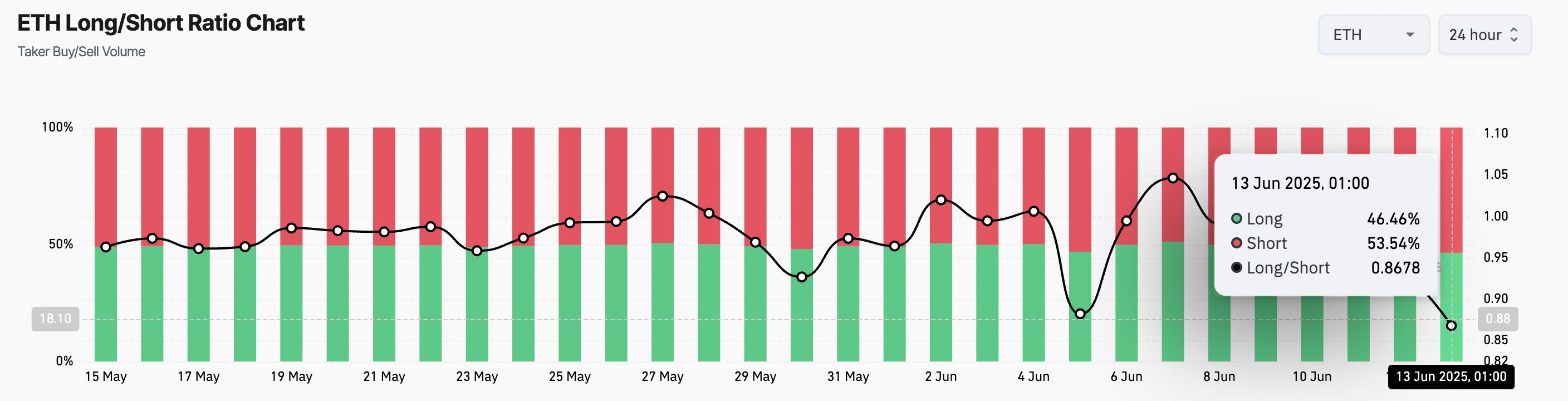 ETH Long/Short Ratio. Source:
Coinglass
This ratio compares the number of long and short positions in a market. When an asset’s long/short ratio is above 1, there are more long than short positions, indicating that traders are predominantly betting on a price increase.
Conversely, as seen with ETH, a ratio below one indicates that most traders are positioning for a price drop. This shows the heightening bearish sentiment and growing expectations of a continued decline.
Furthermore, ETH’s negative Balance of Power (BoP) supports this bearish outlook. At press time, this momentum indicator is at -0.69, confirming the waning demand for the leading altcoin among market participants.
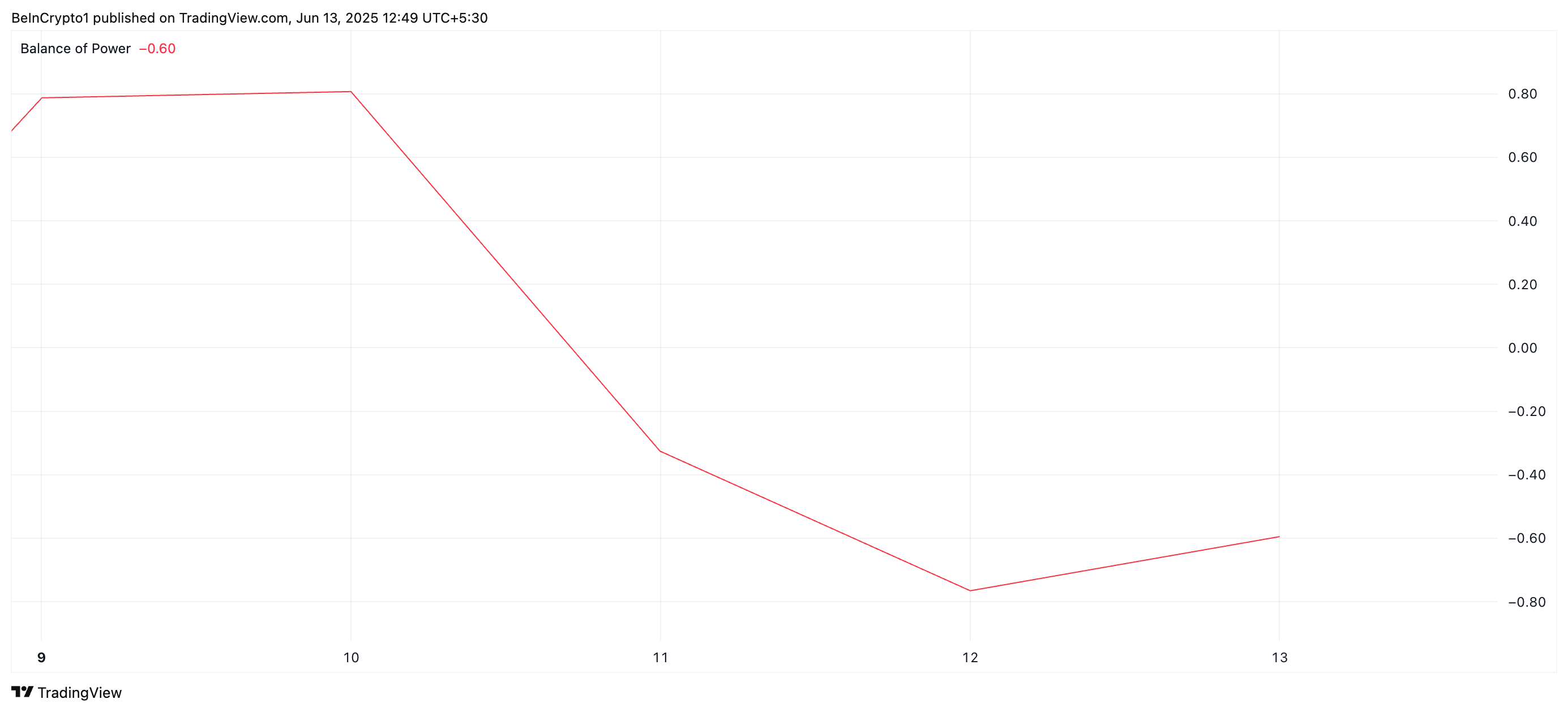 ETH BoP. Source:
TradingView
The BoP indicator measures the strength of buyers versus sellers in the market. A negative BoP reading suggests that selling pressure dominates, indicating a lack of fresh demand and a higher likelihood of continued price decline.
Market Awaits ETH’s Next Move
At press time, ETH trades at $2,523, holding just above the support floor at $2,424. If sell-side pressure strengthens, the coin could break below this floor, potentially triggering a further drop toward $2,027.
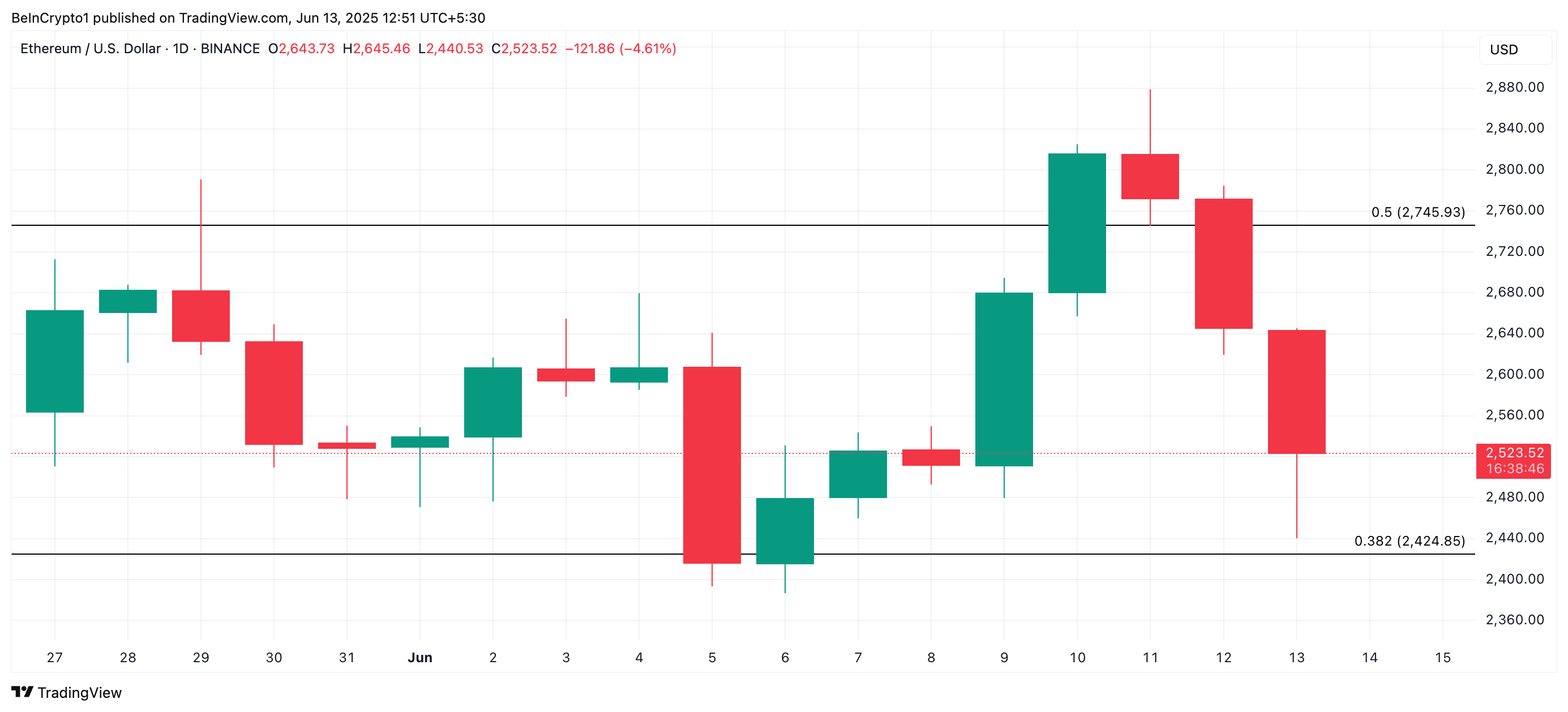 ETH Price Analysis. Source:
TradingView
Conversely, a renewed wave of buying interest could invalidate the bearish outlook. In that case, ETH might rebound and rally toward $2,745.
Disclaimer: The content of this article solely reflects the author's opinion and does not represent the platform in any capacity. This article is not intended to serve as a reference for making investment decisions.
You may also like
Bitcoin Miners Are Fleeing to AI: So Why Is the Hash Rate Surging?

Once frenzied buying, now the "ammunition warehouse" shrinks by 51 trillion KRW! Korean retail investors can no longer afford to buy
In four months, Korean retail investors' "ammunition stockpile" has dropped by 36.5%, returning to levels seen at the beginning of the year. Although retail investors have collectively made net purchases exceeding 75 trillion won, they are still absorbing the sell-off, but the influx of new funds has dried up, and the replenishment rate lags far behind the consumption rate. Combined with the KOSPI plunging nearly 20% this month, continued net selling by foreign investors, and concerns over AI-related credit risks, the Korean stock market may find it difficult to see a sustained rebound in the short term without support from private investors' funds.
Apple Prints TD Sequential Sell 9 — Last Two Led to 15.66% and 13.63% Corrections

The Collapse of "Consensus Trading" and the Birth of a New Consensus! Goldman Sachs Explains: Why Institutions Are Currently Significantly Reducing AI Holdings
The extremely crowded trade of "going long on AI, short on everything else" is undergoing a painful unwinding—markets are no longer satisfied with the "burn rate narrative." Mega-scale cloud providers must deliver real, visible revenue conversions alongside $1.1 trillion in capital expenditures. A power gap of 40-50 gigawatts, rising capital costs, and a macro paradigm shift from an era of "overspending" are turning AI trades from a matter of faith into a harsh test of monetization.
Crypto prices
More


