
Japan Holds Rates, China Crypto Crime in Korea and More

Welcome to the Asia Pacific Morning Brief—your essential digest of overnight crypto developments shaping regional markets and global sentiment. Grab a green tea and watch this space. Japan maintains a steady monetary policy amid trade uncertainties. Korean court sentences Chinese scam money launderer using USDT. Trump’s crypto report briefly mentions the Strategic Bitcoin Reserve framework … <a href="https://beincrypto.com/japan-holds-rates-china-crypto-crime-korea-and-more/">Continued</a>
Welcome to the Asia Pacific Morning Brief—your essential digest of overnight crypto developments shaping regional markets and global sentiment. Grab a green tea and watch this space.
Japan maintains a steady monetary policy amid trade uncertainties. Korean court sentences Chinese scam money launderer using USDT. Trump’s crypto report briefly mentions the Strategic Bitcoin Reserve framework despite campaign promises.
Japan Also Likely to Maintain Current Interest Rates
The Bank of Japan convenes Thursday for its second policy meeting day. Governor Ueda and eight board members will likely keep borrowing costs steady, marking the fourth consecutive gathering without rate adjustments since January.
Recent US-Japan tariff negotiations concluded successfully, reducing some market uncertainty. However, central bank officials demand more comprehensive data on corporate impacts. Many policymakers insist on thorough analysis before considering changes.
The BOJ releases economic projections extending through fiscal 2027 on Thursday. Rising rice costs and persistent inflation will shape growth estimates.
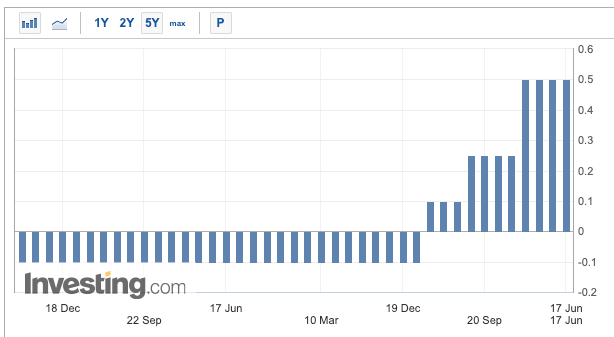 Japan Interest Rate. Source:
Japan’s cautious approach mirrors Federal Reserve decisions made Wednesday evening. US officials maintained rates between 4.25-4.50 percent unchanged. Both central banks prioritize economic stability over immediate policy responses amid global trade uncertainties.
Korean Court Sentences Chinese Investment Scam Money Launderer
The Korean Court sentenced a man to three years’ imprisonment for laundering Chinese investment fraud proceeds through USDT stablecoins. Korean local media reported that the defendant operated as a “washing agent” from December 2023, converting criminal proceeds into cryptocurrency through his home office.
The man collaborated with Chinese investment scam organizations, transferring funds to third-party accounts before converting to cash and delivering to USDT sellers. He laundered 650 million won, $467,861, worth of fraud money between January and March 2024, earning approximately 120 million won, $86,374, in commissions.
The court applied both money laundering and fraud charges, treating him as an investment scam co-conspirator rather than merely an accomplice. The judge noted the defendant maintained close relationships with Chinese crime organization leaders, recruiting other money launderers and providing criminal infrastructure.
White House Crypto Report Briefly Addresses Strategic Bitcoin Reserve
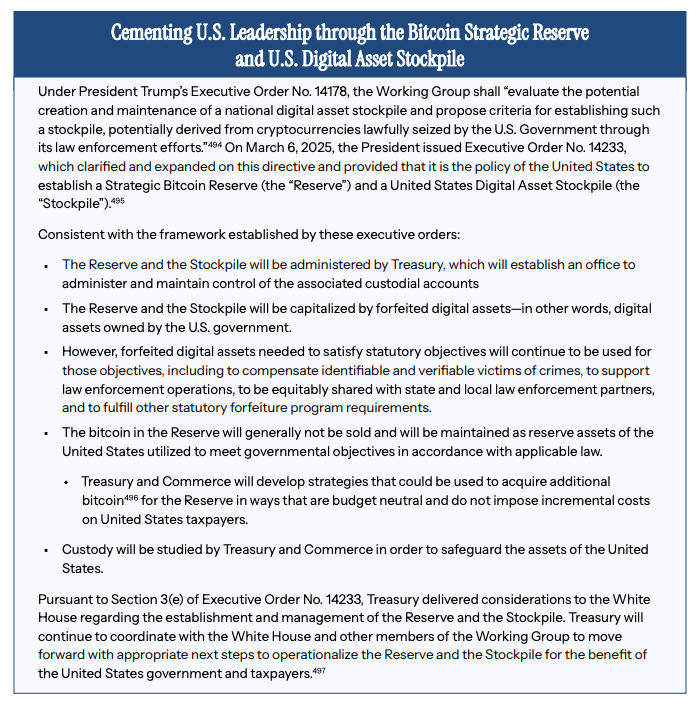
President Trump’s digital asset policy report dedicates just one page to his Strategic Bitcoin Reserve. The single-page section appears in a 166-page comprehensive study released Thursday. Trump repeatedly promised detailed reserve coverage throughout his presidential campaign.
The brief framework outlines Treasury Department administration using forfeited government Bitcoin exclusively. Holdings will generally avoid sales, maintained as strategic reserve assets. However, the report omits specific plans for additional Bitcoin purchases.
 President Trump’s digital asset policy
report dedicates just one page to his Strategic Bitcoin Reserve.
President Trump’s digital asset policy
report dedicates just one page to his Strategic Bitcoin Reserve.
Bloomberg reports administration officials will provide more details soon. Top crypto adviser Bo Hines promised “people will be very pleased” with forthcoming plans while the Treasury works on infrastructure setup.
Shigeki Mori contributed.
Disclaimer: The content of this article solely reflects the author's opinion and does not represent the platform in any capacity. This article is not intended to serve as a reference for making investment decisions.
You may also like
CoreWeave default probability exceeds 60%! Jensen Huang "puts out the fire": Financing costs are declining, no need for NVIDIA to backstop
After Jensen Huang's speech, CoreWeave's stock price, which had fallen by as much as 9.5% in early trading, turned positive. The company's five-year CDS rose above 1,190 basis points during Thursday’s session, a historical high reflecting the cost of debt default protection, while yields on some of its corporate bonds have climbed above 15% to 16%. The five-year CDS spreads for Oracle, Amazon, Google’s parent company, and Meta are all at historically high levels. Deutsche Bank analysts believe that as the AI capital expenditure cycle is increasingly supported by debt rather than free cash flow, investors must place greater emphasis on signals from the credit market. Overall, while AI-related financing costs are not yet excessively high, worrying signs have begun to emerge.

Bitcoin volatility trends show Bitcoin is less volatile than 57% of S&P 500 stocks

Wall Street is wary of Bessent making another move to suppress yields; key clues may emerge this Friday
This Friday, major primary dealers of government bonds will receive the U.S. Treasury's routine survey before the refinancing announcement is released. Citigroup expects the survey may hint at a reduction in long-term bond issuance, or even the cancellation of 20-year U.S. Treasury bonds. Morgan Stanley emphasizes: "The next two refinancing announcements will be crucial, especially the one in November, which comes right after the midterm elections."
Risk aversion outweighs inflation concerns, US and European government bonds rise across the board, US Treasury yields plunge more than 10 basis points intraday
Investors concerned about rising inflation are shifting their focus to the potential impact of high borrowing costs on economic growth. Some commentators have linked the recent decline in U.S. Treasury yields to surging financing costs for AI-related companies, suggesting that pressure in the technology stocks and AI infrastructure sectors is driving funds toward safe-haven assets such as government bonds.

Crypto prices
More


