
South Korea Boosts Stablecoin Push After U.S. Tariff Deal

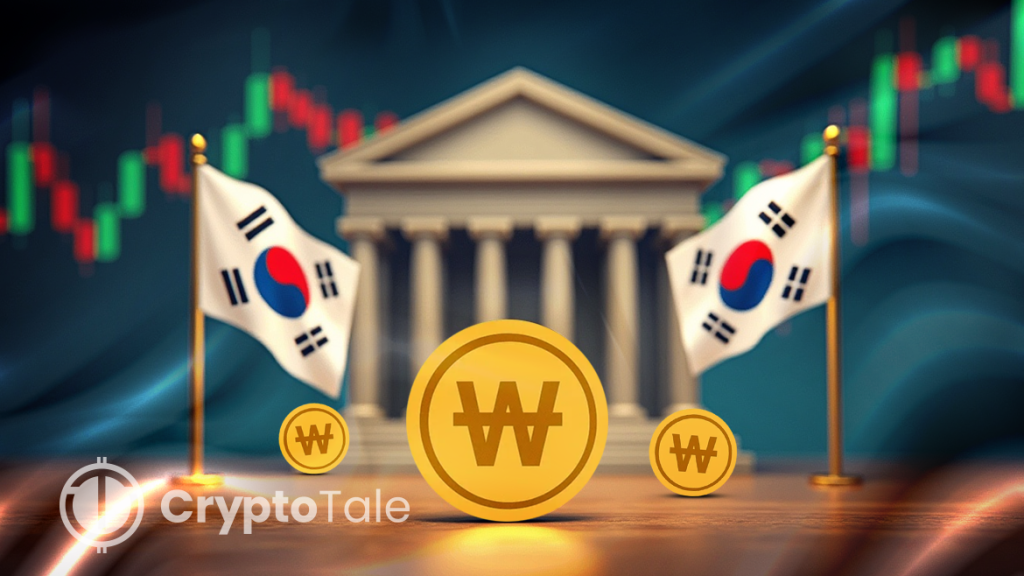
- South Korea agreed to invest $350 billion in U.S. projects under a new trade deal.
- Political lawmakers in Korea propose new rules to control won-pegged stablecoins.
- Hong Kong stablecoin issuers must meet expectations of new rules or face shutdown orders.
President Donald Trump announced on Wednesday a revised trade deal with South Korea, slashing planned tariffs to 15% from 25%. According to the President’s Truth social page, the agreement comes just ahead of a self-imposed August 1 deadline. The deal also includes a $350 billion South Korean investment in U.S. projects and $100 billion in U.S. energy imports. Trump confirmed that South Korea will allow U.S. agricultural and auto products into its market without duties.
The South Korean government stated its rice and beef markets remain protected. Former trade minister Cheong In-kyo noted that much depends on how the pledged investments are structured. “Depending on how and where $350 billion will be spent, this fund will be looked at differently,” he told sources. Amid these shifting trade dynamics, South Korea has stepped up its efforts in the digital finance space.
Seoul Races to Secure Stablecoin Autonomy
South Korean lawmakers have introduced new stablecoin legislation to regulate digital assets pegged to the Korean won. Competing bills were submitted by both ruling and opposition parties to the National Assembly. These bills assign oversight responsibilities to the Financial Services Commission, which would supervise issuance, redemption, reserves, and emergency mechanisms.
At the same time, the Bank of Korea restructured its Digital Currency Research Lab into a business-oriented Digital Currency Lab. It also created a virtual-asset division to manage and monitor cryptocurrency markets and build infrastructure for Korean-won-backed stablecoins. Kiwoom Securities responded swiftly by filing trademarks for stablecoins like “KiwoomKRW.”
Meanwhile, a coalition of South Korean credit card companies is preparing for the new era of digital currency. The firms are working on integrating stablecoins into payment platforms, wallets, cross-border remittances, loyalty systems, and custody services. These preparations are seen as a proactive move to comply with expected regulation and compete with fintech startups.
Related: Stablecoins Don’t Boost Treasury Demand, Peter Schiff Warns
Hong Kong’s Enforcement Clock Starts Ticking
On the other hand, Hong Kong will be implementing its Stablecoins Ordinance from August 1, 2025, which proposes a stringent licensing of all stablecoin issuers who rely on a fiat. According to Bloomberg, the regulations dictate that companies have to fulfill criteria in reserves, governance, anti-money laundering, redemptions, and operational security.
The Hong Kong Monetary Authority (HKMA) announced a six-month transitional period for implementation. Firms that cannot meet compliance within three months must wind down operations within four months. Issuers unable to meet basic requirements will be ordered to shut down within one month of being notified.
A Wednesday report by Radio Television Hong Kong confirmed that provisional licenses will be granted to issuers that demonstrate near-term compliance capability. However, the HKMA clarified that only a few licenses will be issued at first and did not disclose any applicant names.
The HKMA stated, “We will not release applicant identities, and only a limited number of licenses will be granted during this initial stage.” Will stablecoins now become a tool of global financial diplomacy?
With the U.S. expanding trade influence and Hong Kong accelerating its digital finance framework, South Korea’s stablecoin ambitions may serve as a strategic pivot and the outcome could determine who shapes the next era of digital money.
The post South Korea Boosts Stablecoin Push After U.S. Tariff Deal appeared first on Cryptotale.
Disclaimer: The content of this article solely reflects the author's opinion and does not represent the platform in any capacity. This article is not intended to serve as a reference for making investment decisions.
You may also like
Over $10 billion in market value evaporated in four trading days as CoreWeave (CRWV.US) debt risks trigger sell-off, but Deutsche Bank sees it as a buying opportunity
Deutsche Bank believes that the recent sell-off of CoreWeave lacks sufficient company fundamentals to justify it, and the sharp price correction has instead created a buying opportunity for investors.

Overnight US Stock Market | Inflation Pressure Continues to Rise, All Three Major Indexes Up, Dell (DELL.US) Down 6.8%
At the close of trading, the Dow Jones Industrial Average rose 557.51 points, or 1.08%, to 52,178.99 points; the S&P 500 Index gained 25.18 points, or 0.33%, to 7,744.12 points; and the Nasdaq Composite Index increased by 20.16 points, or 0.08%, to 26,713.03 points.
Interactive Brokers (IBKR.US) Q3 revenue increased by 16% year-on-year, announces over 70% increase in quarterly dividend
Driven by growth in net interest income and commission income, Interactive Brokers' Q3 net revenue increased by 16% year-on-year, with adjusted earnings per share rising by approximately 18% year-on-year.
CoreWeave default probability exceeds 60%! Jensen Huang "puts out the fire": Financing costs are declining, no need for NVIDIA to backstop
After Jensen Huang's speech, CoreWeave's stock price, which had fallen by as much as 9.5% in early trading, turned positive. The company's five-year CDS rose above 1,190 basis points during Thursday’s session, a historical high reflecting the cost of debt default protection, while yields on some of its corporate bonds have climbed above 15% to 16%. The five-year CDS spreads for Oracle, Amazon, Google’s parent company, and Meta are all at historically high levels. Deutsche Bank analysts believe that as the AI capital expenditure cycle is increasingly supported by debt rather than free cash flow, investors must place greater emphasis on signals from the credit market. Overall, while AI-related financing costs are not yet excessively high, worrying signs have begun to emerge.

Crypto prices
More


