
SEC Chair Atkins debuts 'Project Crypto' to update rules and regulations, with a focus on onchain

Quick Take The project is building off a report released on Wednesday by the President’s Working Group. “Project Crypto will help ensure that the United States remains the best place in the world to start a business, develop cutting-edge technologies, and participate in capital markets,” Atkins said.
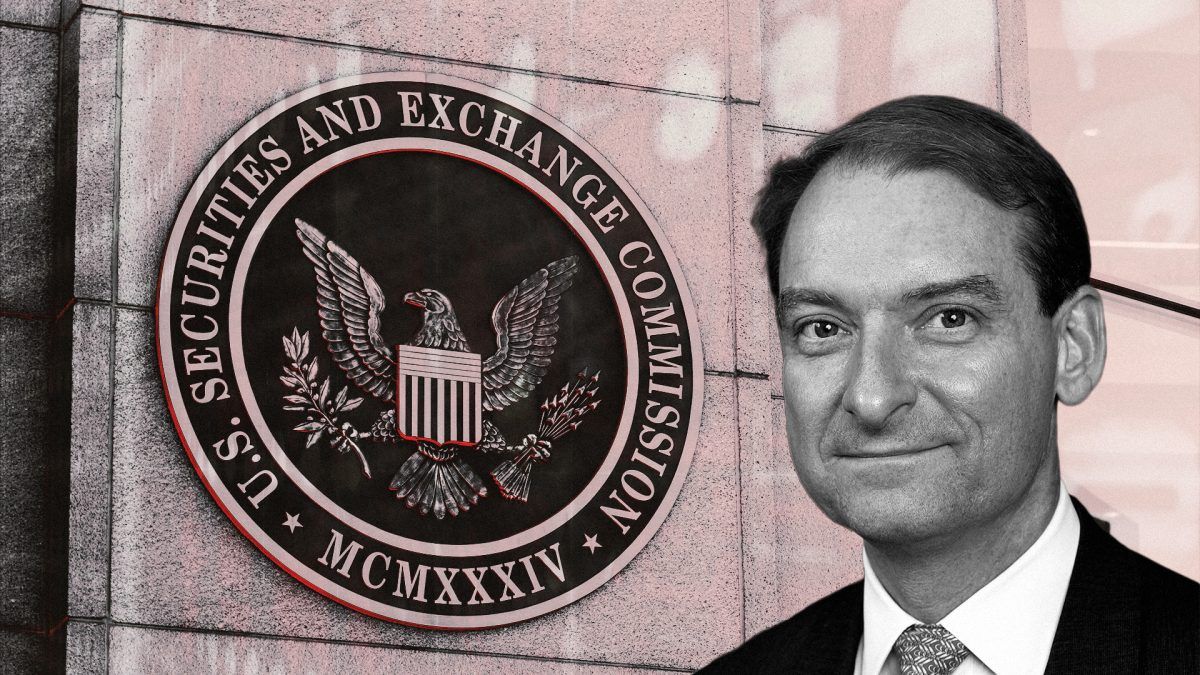
The U.S. Securities and Exchange Commission launched "Project Crypto," which its chair says will be an initiative to "modernize the securities rules and regulations to enable America’s financial markets to move on-chain."
SEC Chairman Paul Atkins announced the launch on Thursday during a speech, and said the project was building off a report released on Wednesday by the President's Working Group.
"That is why I am launching Project Crypto and directing the SEC’s policy divisions to work with the Crypto Task Force, led by Commissioner Peirce, to swiftly develop proposals to implement the PWG’s recommendations," Atkins said. "Project Crypto will help ensure that the United States remains the best place in the world to start a business, develop cutting-edge technologies, and participate in capital markets."
On Wednesday, a report was released detailing how federal agencies plan to approach crypto. The working group is made up of agency heads, including Atkins, Treasury Secretary Scott Bessent, and Commerce Secretary Howard Lutnick, among others.
"To achieve President Trump’s vision of making America the crypto capital of the world, the SEC must holistically consider the potential benefits and risks of moving our markets from an offchain environment to an on-chain one," Atkins said.
Atkins said he directed fellow SEC Commissioner Hester Peirce and her task force to create proposals going off of the President Working Group's recommendations. He also said agency staff will be working on drafting rules around crypto distributions, custody and trading and that those would go through public notice and comment.
"Our goal is to help market participants to slot crypto assets into categories, such as digital collectibles, digital commodities, or stablecoins, and assess the economic realities of a transaction," Atkins said.
Atkins also said he directed agency staff to refresh its rules to "unleash the potential of on-chain software systems in our securities markets."
"Decentralized finance and other forms of on-chain software systems will be part of our securities markets and not drowned out by duplicative or unnecessary regulation," he said.
Updated at 4:50 p.m. UTC on July 31 to include details from his speech throughout
Disclaimer: The content of this article solely reflects the author's opinion and does not represent the platform in any capacity. This article is not intended to serve as a reference for making investment decisions.
You may also like
Wall Street is wary of Bessent making another move to suppress yields; key clues may emerge this Friday
This Friday, major primary dealers of government bonds will receive the U.S. Treasury's routine survey before the refinancing announcement is released. Citigroup expects the survey may hint at a reduction in long-term bond issuance, or even the cancellation of 20-year U.S. Treasury bonds. Morgan Stanley emphasizes: "The next two refinancing announcements will be crucial, especially the one in November, which comes right after the midterm elections."
Risk aversion outweighs inflation concerns, US and European government bonds rise across the board, US Treasury yields plunge more than 10 basis points intraday
Investors concerned about rising inflation are shifting their focus to the potential impact of high borrowing costs on economic growth. Some commentators have linked the recent decline in U.S. Treasury yields to surging financing costs for AI-related companies, suggesting that pressure in the technology stocks and AI infrastructure sectors is driving funds toward safe-haven assets such as government bonds.

Google Quantum Computing Achieves Breakthrough: Error Rate Reduced by 40 Times, Overcoming Key Resource Bottleneck
Google has validated a technology called "motaic cultivation" on its Willow processor, reducing quantum error rates by about 40 times and achieving a T-state logical fidelity of 99.99%, setting a new record in the field. If this breakthrough can be successfully scaled, it will greatly reduce the hardware requirements for building fault-tolerant quantum systems, which holds significant implications for the commercialization of quantum computing.


Crypto prices
More


