
Ethereum Price Today Surpasses $4,5, and Futures Interest Hits Record High

- ETH Surpasses $4,5 Driven by Risk Appetite
- Open interest in futures grows, but without high leverage
- Layer 1 competition puts pressure on Ethereum's on-chain activity
Ether (ETH) saw a strong rise on Tuesday (12), reaching US$4.600 after US consumer inflation data indicated an increase of just 0,1%. This movement reflected a greater appetite for risk in the market, although derivatives indicators suggest that the strength of this rise may be more limited than it appears.
Total open interest in ETH futures contracts rose to $60,8 billion, up from $47 billion the previous week. However, this growth is primarily attributed to price appreciation, as volume in Ether terms is still 11% below the peak of 15,5 million ETH recorded on July 27.
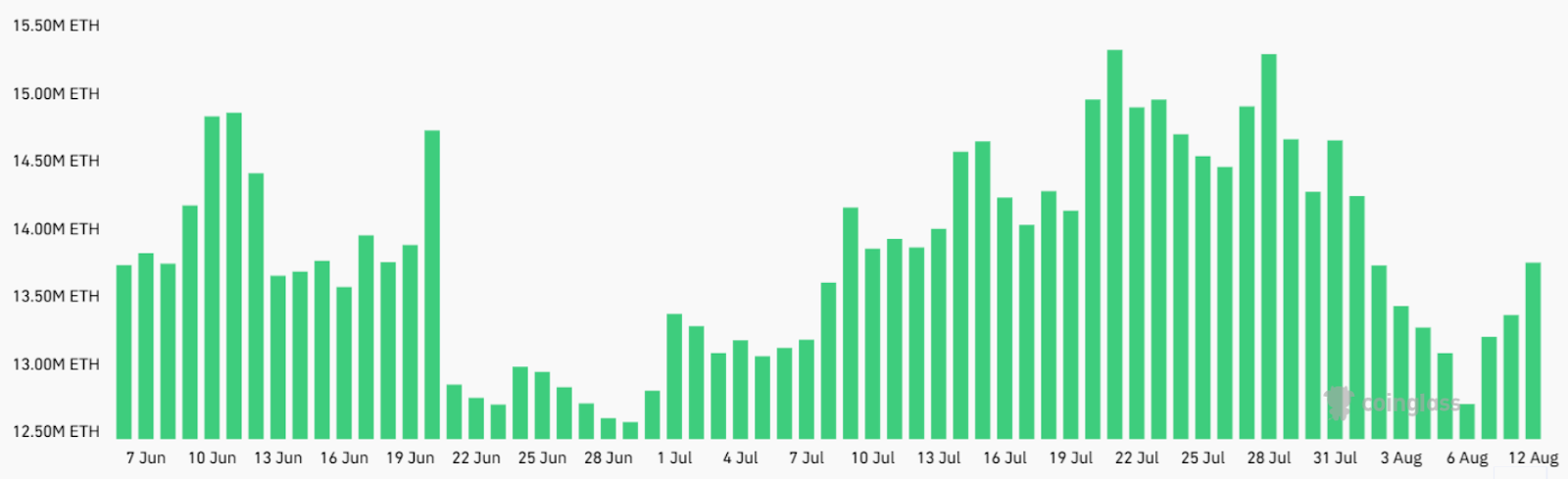
In derivatives, the annualized premium for ETH perpetual contracts is 11%, considered a neutral level. Readings above 13% would indicate high demand for leveraged long positions, something that was only seen last Saturday. Even with a 32% price jump in the last 10 days, the demand for leverage has not returned to the levels seen in previous cycles.
Analyzing monthly futures contracts, which typically trade at an annualized premium of 5% to 10%, the market is also showing caution. After reaching 11% on Monday, the indicator fell back to 8% on Tuesday. This suggests that, despite the significant increase, investors are still closely evaluating Ethereum's fundamentals and on-chain activity.
On-chain data is less optimistic. Total value locked (TVL) on Ethereum fell 7% over the past 30 days, from 25,4 million to 23,3 million ETH. Weekly base layer fees fell to $7,5 million, lower than Solana ($9,6 million) and Tron ($14,3 million).
This combination of increasing competition in layer 1, falling TVL, and low demand for leveraged positions raises questions about the sustainability of ETH's current appreciation, even with the 51% rise in the last month.
Disclaimer: The content of this article solely reflects the author's opinion and does not represent the platform in any capacity. This article is not intended to serve as a reference for making investment decisions.
You may also like
US chip stocks plunge, evaporating over $1 trillion in market value! Inflation exceeds expectations, reigniting rate hike prospects; AI infrastructure financing bottlenecks trigger valuation reassessment
With the September inflation data exceeding expectations and further strengthening the Fed's rate hike outlook—coupled with rare warnings from the CEOs of Broadcom and Intel about financing bottlenecks in AI infrastructure—the global AI-themed trade, centered on semiconductors, experienced a massive sell-off in the past week.
Defying the Market Downturn! Apple Joins the $5 Trillion Club
On Wednesday, the S&P 500 fell more than 1%, but Apple defied the trend, with its market capitalization officially surpassing $5 trillion, becoming the second company worldwide to reach this milestone after Nvidia. This market value breakthrough coincides with Cook stepping down and new CEO Ternus taking over. However, challenges such as Apple's shortcomings in AI and OpenAI's ambitions in hardware are creating undercurrents at the top of this $5 trillion summit.
CoreWeave Dilemma for Nvidia: Forced to Rescue or Stand By?
As both a shareholder of CoreWeave and its sole GPU supplier, Nvidia now faces a dilemma after the sharp decline in CoreWeave's stock price. If it intervenes, each rescue strengthens expectations of a safety net, raises the threshold for future rescues, and risks getting further entangled in this high-leverage game. If it does not intervene, CoreWeave's liquidity crisis will directly cut off demand for GPU purchases, simultaneously devaluing Nvidia's equity investment and severely damaging its market reputation.
US CPI Heats Up Across the Board, Triggering "Inflation Spiral" Alert; October Rate Hike Odds Once Hit 50%. "New Fed News Agency": Watch Waller's Speech This Week
After the CPI was released, the market-implied rate hike probability first rose to 50% before falling back to 40%. Wall Street generally believes that whether action will be taken in October still depends on how the Federal Reserve assesses inflation trends. "The New Fed News Agency" noted that, unlike in August when price increases were concentrated in certain items, the stronger-than-expected performance of September's core CPI was more broad-based, further reinforcing the case for a December rate hike. The speech by Waller on Friday morning Beijing time is his last public statement before the Fed's blackout period ahead of this month's meeting. Economists are warning about an "inflation spiral," with real purchasing power and midterm election pressures interweaving.
Crypto prices
More


