
Trump-backed American Bitcoin orders 16K Bitmain ASICs amid ongoing trade war

American Bitcoin, a Bitcoin (BTC) mining company backed by members of US President Donald Trump’s family, exercised an option to purchase up to 17,280 application-specific integrated circuits (ASICs), hardware for crypto mining, from Bitmain earlier this month.
The mining company purchased a fleet of 16,299 Antminer U3S21EXPH units from Bitmain, capable of 14.02 exahashes per second (EH/s) of computing power, for about $314 million, according to TheMinerMag.
The deal also excluded any potential price increases from the Trump administration’s sweeping trade tariffs and import duties, which will impact Bitmain mining hardware manufactured in China.
In response to the tariff pressures, Bitmain announced it will open its first ASIC production facility in the US by year’s end. The company also plans on opening a headquarters in either Florida or Texas.
Trade tariffs and other macroeconomic pressures have created a strain at all levels of the Bitcoin mining supply chain, as miners and hardware producer alike adjust their economic calculations in response to the shifting financial landscape.
Related: Jack Dorsey’s Block targets 10-year lifecycle for Bitcoin mining rigs
Mining industry responds to trade tariffs and economic uncertainty
The tariffs have spurred the leading mining hardware manufacturers to consider relocating at least a portion of their operations to the US to avoid import taxes slapped on their products.
Over 99% of all Bitcoin mining hardware is produced by three manufacturers: Bitmain; MicroBT; and Canaan, according to a study published by the University of Cambridge.
Bitmain is the largest mining hardware manufacturing company in the world by a wide margin, with about 82% of the total market share.
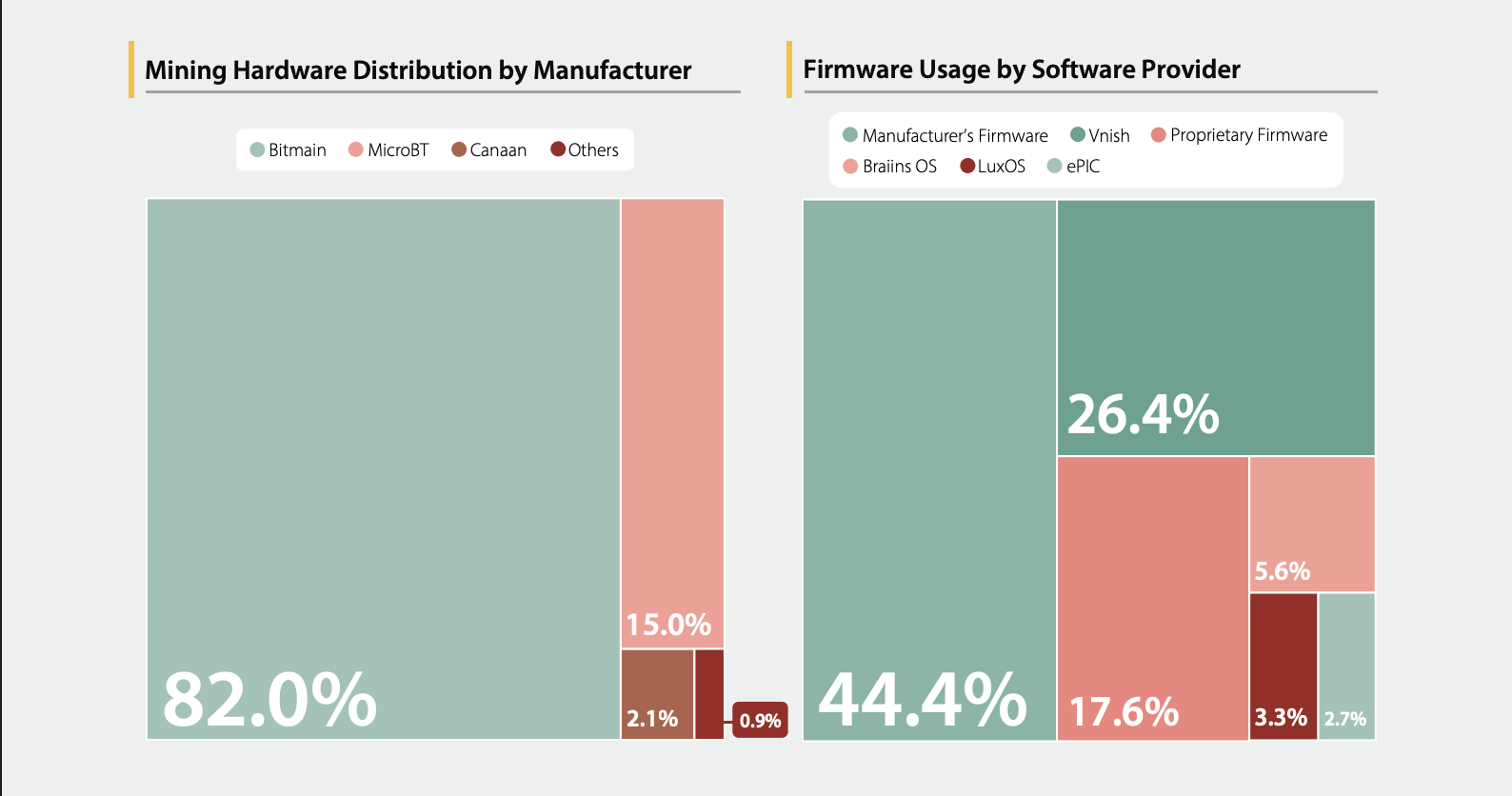
The Trump administration’s strategy of using trade tariffs to bring manufacturing back to the US has been met with mixed reactions.
Critics say the policies are inflationary in the long term and could backfire. Jaran Mellerud, CEO of BTC mining company Hashlabs, said the price increases from the tariffs could lead to a collapse in demand from US miners.
ASIC manufacturers will then have inventory, without demand, which they can export to other countries at cheaper prices, Mellerud said.
This would drive mining back to other countries and place US miners at a competitive disadvantage, contrary to the Trump administration’s goal of reshoring the crypto industry in the United States.
Magazine: US risks being ‘front run’ on Bitcoin reserve by other nations: Samson Mow
Disclaimer: The content of this article solely reflects the author's opinion and does not represent the platform in any capacity. This article is not intended to serve as a reference for making investment decisions.
You may also like
US CPI Heats Up Across the Board, Triggering "Inflation Spiral" Alert; October Rate Hike Odds Once Hit 50%. "New Fed News Agency": Watch Waller's Speech This Week
After the CPI was released, the market-implied rate hike probability first rose to 50% before falling back to 40%. Wall Street generally believes that whether action will be taken in October still depends on how the Federal Reserve assesses inflation trends. "The New Fed News Agency" noted that, unlike in August when price increases were concentrated in certain items, the stronger-than-expected performance of September's core CPI was more broad-based, further reinforcing the case for a December rate hike. The speech by Waller on Friday morning Beijing time is his last public statement before the Fed's blackout period ahead of this month's meeting. Economists are warning about an "inflation spiral," with real purchasing power and midterm election pressures interweaving.
The calm period in the US stock market is over! The S&P 500 ends its record of 53 consecutive trading days without a drop of over 1%. AI stock sell-off intensifies market concerns.
The S&P 500 Index fell by 1.1%, ending a streak of 53 consecutive trading days without a drop of 1% or more. This was the longest period of calm since January 2020.
Federal Reserve Beige Book: U.S. economy expands moderately but inflationary pressures intensify; AI boosts productivity curbing some corporate hiring demand
The latest Beige Book released by the Federal Reserve on Wednesday shows that overall economic activity in the United States continues to grow, but performance varies across regions. Consumer spending remains generally weak, and there has been little change in the labor market.
Overnight US Stocks | September Inflation Remains High, Major Indexes Decline, Coreweave (CRWV.US) Drops Over 15%
At the close, the Dow Jones Industrial Average fell by 47.96 points, or 0.09%, to 51,622.14 points; the S&P 500 Index dropped by 85.95 points, or 1.10%, to 7,719.50 points; and the Nasdaq Composite Index declined by 511.51 points, or 1.88%, to 26,692.87 points.
Crypto prices
More


