
Stellar Lumens Holds Firm as Network Growth Set Stage for Breakout

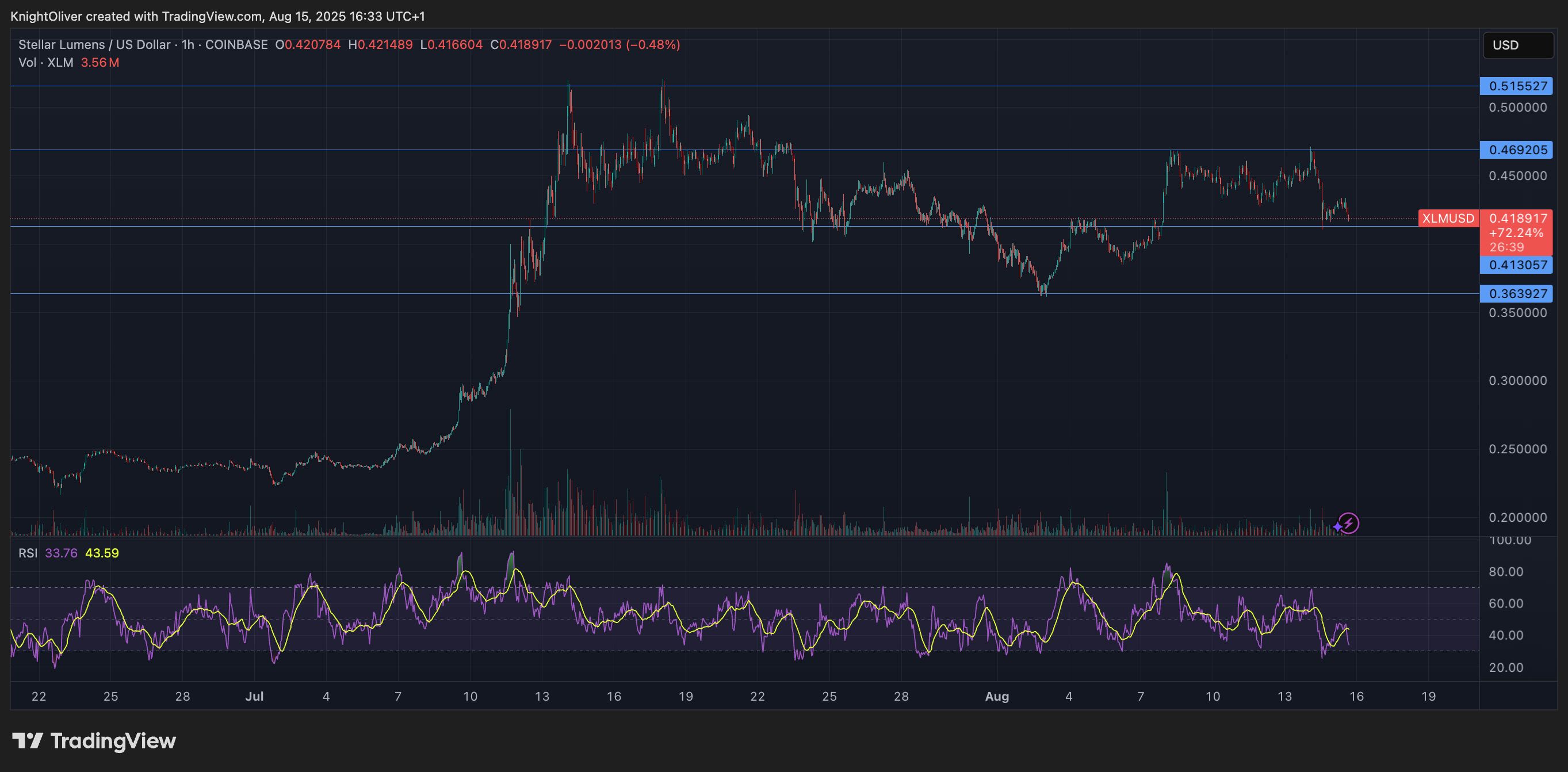
Stellar lumens (XLM) traded in a tight range over the past 24 hours, holding between $0.42 and $0.43 from Aug. 14 at 15:00 UTC through Aug. 15 at 14:00 UTC.
The token saw measured gains before late-session profit-taking pushed prices 1% lower to $0.43 in the final hour of trade. CoinDesk Data's technical analysis model suggests XLM is approaching a key resistance level at $0.50, with a breakout potentially targeting $0.60–$0.77, backed by strengthening network fundamentals and growing institutional participation.
On-chain metrics continue to paint a bullish picture. Stellar’s active enterprise wallets hit an all-time high of 9.69 million, with 5,000–6,000 new institutional addresses added daily.
Total value locked on the network jumped 80% to $150 million, reflecting a surge in corporate adoption. Traders are closely watching the $0.47–$0.50 zone, a potential trigger point for institutional short covering that could fuel the next leg higher.
Despite early pressure pushing XLM down to $0.42 in the first six hours of the session, buyers consistently emerged at that level, signaling strong institutional support.
Overnight, the token staged a steady recovery, retesting $0.43 before consolidating. In the final 60 minutes, heavy selling briefly drove prices back to $0.42, but a swift rebound and lighter volume suggest selling pressure may be easing, leaving room for renewed upside momentum.
Corporate Technical Indicators Signal Consolidation Phase
- Stellar established robust institutional support at $0.42 zone with consistent corporate buyer emergence during early session decline.
- Cryptocurrency tested resistance near $0.43 during overnight institutional trading before consolidating in upper price range.
- Trading volume peaked at 71.43 million during initial six-hour decline, indicating significant institutional participation and interest.
- Technical formation approaches critical resistance at $0.50 level, representing key institutional breakout threshold.
- Corporate momentum indicators suggest potential advancement toward $0.60-$0.77 institutional price target zones.
- Diminishing trading volume in final hour signals exhausted institutional selling pressure and market stabilization potential.
Disclaimer: The content of this article solely reflects the author's opinion and does not represent the platform in any capacity. This article is not intended to serve as a reference for making investment decisions.
You may also like
The S&P 500 ends its longest calm period in over six years, falling more than 1% for the first time in 53 trading days as AI trading loses momentum
The main reason for the decline in US stocks on Wednesday was the combination of higher-than-expected US September CPI and AI credit risk shocks. This downturn was particularly unfavorable for quantitative funds, as these funds have continued to increase their positions during a period of extremely low volatility, and the breaking of the calm period triggered adjustment pressure on their holdings. Currently, the decline remains moderate, with the VIX hovering around 17, below the typical 20 threshold indicating market stress.
Australia Unemployment Rate set to remain at a five-year high of 4.6% in September

Blackstone's AirTrunk Postpones $1.5 Billion REIT IPO: Yield Raised to 6% but No Takers, AI Infrastructure Financing Faces 5.2% US Treasury Yield
AirTrunk, a data center operator under Blackstone, has decided to postpone the listing of its $1.5 billion Singapore Real Estate Investment Trust (REIT) to the first or second quarter of 2027. Rising U.S. Treasury yields and increased market volatility have made investors more cautious; even raising the yield from 5.5% to around 6% has not boosted demand. High capital costs are becoming a major constraint on the expansion of AI infrastructure.
Crypto prices
More


