
SHIB’s Plunge Exposed: What’s Behind Meme Coin’s Bleeding Edge
- Shiba Inu (SHIB) fell to a multi-month low in August 2025, dropping 11.7% monthly amid high interest rates, reduced whale activity, and lower network engagement. - Whale holders (62% of SHIB supply) and halved token holding times indicate bearish pressure, with a $7.3B market cap trailing Dogecoin's $32.6B valuation. - Potential recovery catalysts include Shibarium's Layer 2 blockchain, metaverse land projects, and anticipated Fed rate cuts in 2025 to boost speculative demand. - Despite deflationary burn
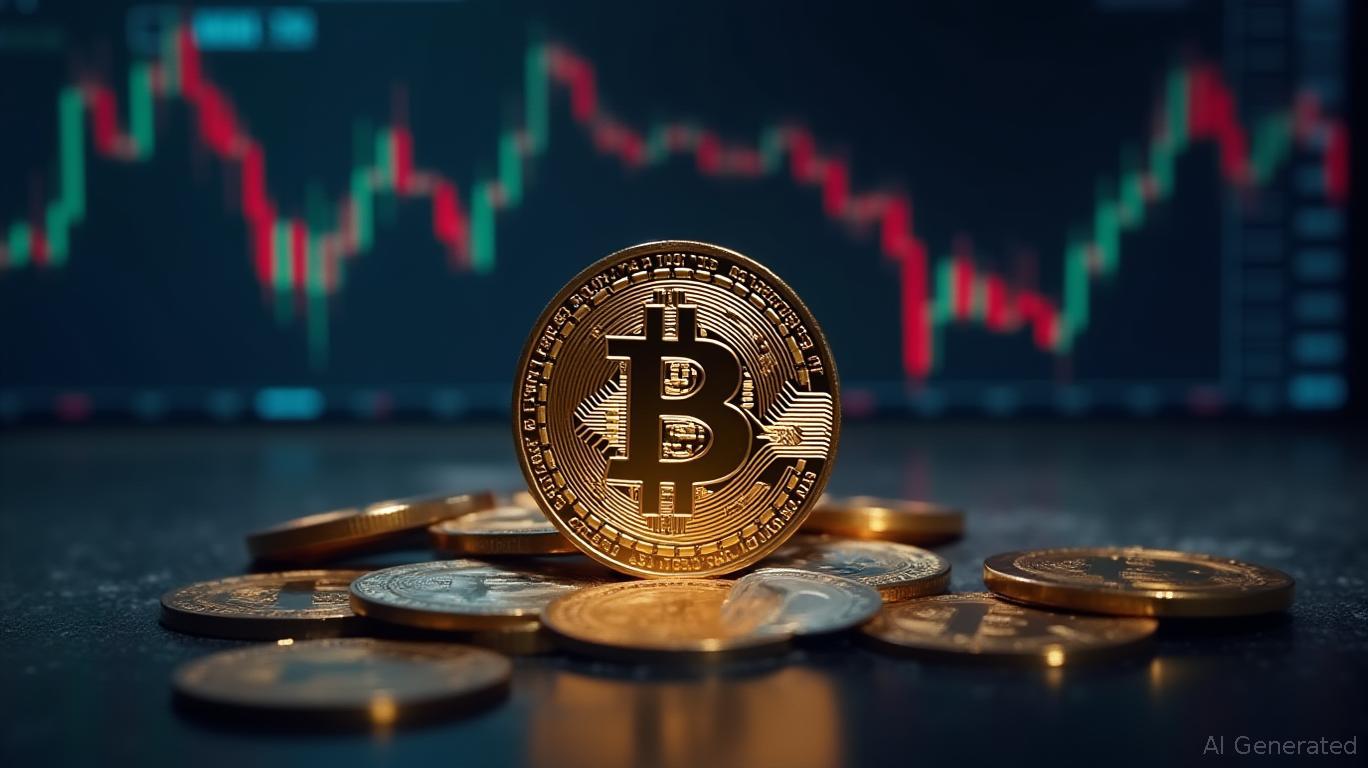
Shiba Inu (SHIB) has seen a significant decline in a key metric, pushing the token to a multi-month low as market conditions continue to weigh on meme coins. As of late August 2025, SHIB traded at approximately $0.00001243, reflecting a 2.9% drop in the last 24 hours and a 11.7% decline over the past month [2]. The broader crypto market, while down by just 0.30%, has underperformed compared to SHIB’s steep slide. With a market cap of around $7.3 billion, SHIB remains one of the more prominent meme coins, albeit far behind Dogecoin’s $32.6 billion valuation [1].
The recent downturn has been attributed to multiple factors, including elevated interest rates, reduced network activity, and a decline in whale activity. Whale holders, who control approximately 62% of SHIB’s circulating supply, have been trimming positions, contributing to the bearish trend [1]. Additionally, the token’s holding time has halved, signaling increased selling pressure and bearish sentiment [2]. On-chain data further indicates a rise in circulating supply and increased bearish power, both of which are bearish indicators for the token's near-term outlook.
Despite the challenging market conditions, Shiba Inu has not been entirely devoid of potential catalysts for a turnaround. The launch of Shibarium, a Layer 2 blockchain, has aimed to improve the network’s scalability and reduce transaction costs. Developers have also introduced updated staking models and developer-sponsored gas fees to incentivize growth on the platform. While progress has been slower than anticipated, these efforts could stabilize SHIB’s price if they attract more developers and users to Shibarium [1].
Another potential growth avenue lies in the development of Shiba Inu’s metaverse project, which includes over 100,000 plots of virtual land and uses SHIB as its primary currency. Although still in early stages, the project has the potential to boost network activity and attract a new user base. If successful, this could drive further adoption of the token as a virtual currency within the metaverse ecosystem [1].
Looking ahead, interest rate expectations remain a key factor for Shiba Inu’s future performance. Analysts anticipate at least one or two rate cuts by the Federal Reserve in 2025 as inflation cools, which could spur renewed investor interest in speculative assets like SHIB [1]. The token’s deflationary mechanism, through token burns, also provides a structural tailwind, as reduced supply could support price appreciation if demand increases.
Currently, SHIB remains a high-risk, high-volatility asset. While some analysts argue that the token’s ecosystem expansion and potential rate cuts could drive a rebound, investors should remain cautious. Market conditions and macroeconomic factors will play a decisive role in determining whether Shiba Inu can recover from its recent slump and regain investor confidence.
Source:
Disclaimer: The content of this article solely reflects the author's opinion and does not represent the platform in any capacity. This article is not intended to serve as a reference for making investment decisions.
You may also like
Institutions Reveal Changes in Oil Supply Pattern: US Sanctions Force Iran's Maritime Crude Exports to "Zero", Russian Exports Up 6% MoM
According to Vortexa data, Iran's seaborne crude oil exports have remained at zero since dropping in the second week of September and had not resumed as of October 5. The total amount of Iranian crude oil stranded on offshore tankers has decreased to about 83 million barrels, with around 43 million barrels trapped west of the Strait of Hormuz, making export difficult due to the US blockade. Excluding Iran, the crude oil flow in the Gulf region in September has recovered to over 81% of pre-war levels, mainly driven by the recovery of Saudi exports.
President of New York Federal Reserve, Williams: May raise interest rates once more within the year, no need for further tightening in 2027
John Williams, President of the Federal Reserve Bank of New York, said on Tuesday that he still considers it appropriate for the Federal Reserve to raise interest rates once more this year, but currently does not believe that the central bank needs to further increase rates in 2027.
Crypto prices
More


