
BTC Market Pulse: Week 39
Bitcoin rallied to $117k in anticipation of a Fed rate cut last week, before retreating to $115k under renewed selling pressure.
Overview
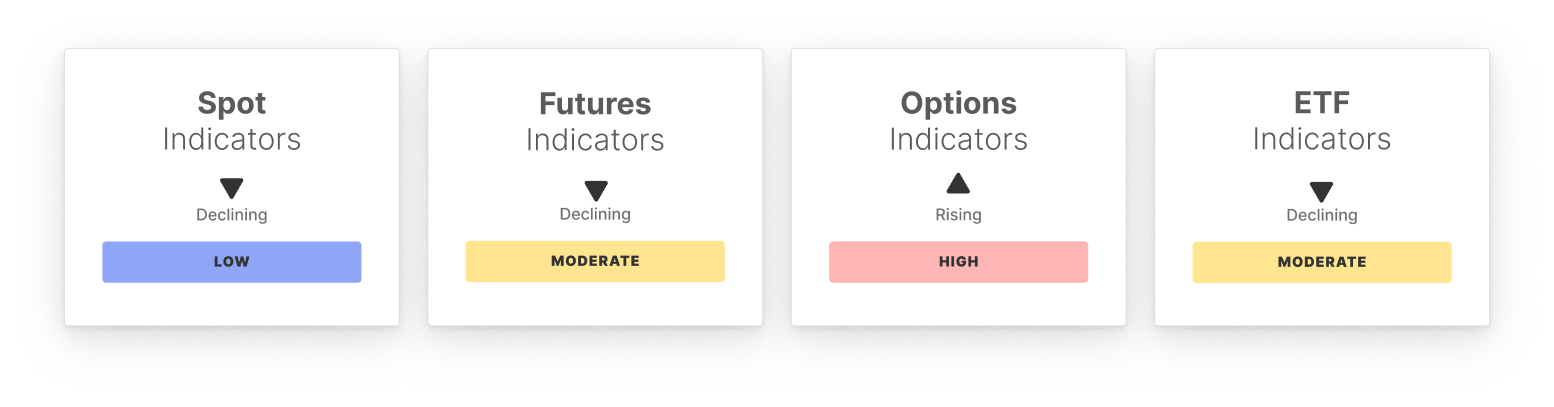
In the spot market, RSI eased from overbought levels, CVD fell sharply, and volumes slipped near the low band, signaling weakening demand and fragile participation despite recent strength.
The futures market showed mixed dynamics. Open interest held steady near highs, while funding rose modestly, pointing to cautious optimism. Yet, perpetual CVD plunged into heavy negative territory, reflecting aggressive sell-side pressure and distribution from leveraged traders.
In the options market, open interest broke above its high band, highlighting stronger participation. Volatility spreads widened sharply, showing rising uncertainty, while skew edged higher, reflecting mild downside hedging. Together, these point to heightened expectations for volatility but without strong bearish conviction.
US spot ETFs cooled after strong prior inflows. Netflows dropped sharply, trade volumes held steady, and MVRV eased slightly, signaling tempered institutional demand. Confidence remains intact, but the sharp slowdown hints at a pause in accumulation from TradFi participants.
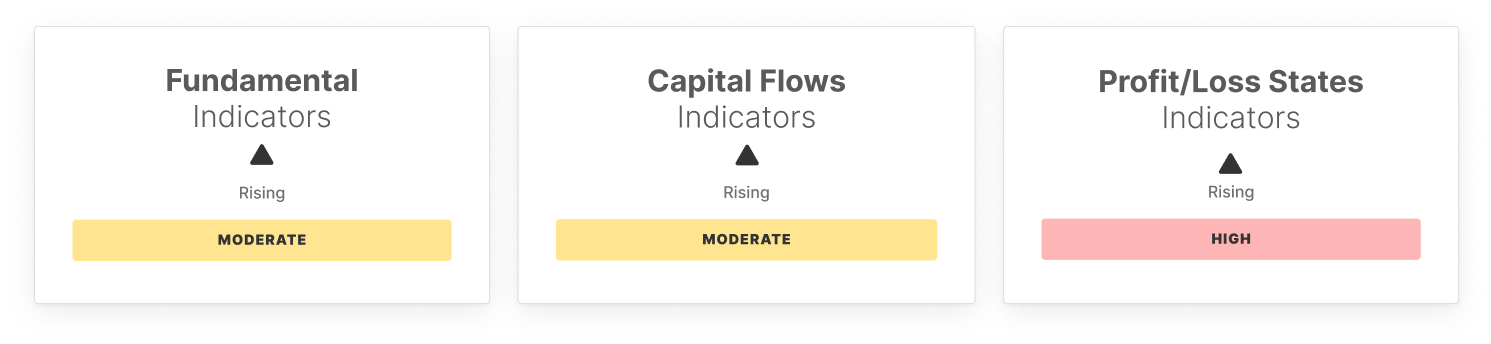
On-chain fundamentals showed mixed signals. Active addresses and transfer volume improved, signaling stronger engagement and rising capital flows. In contrast, fees declined, pointing to lower congestion and subdued speculative demand, suggesting participation is rising but with lighter transactional urgency.
Capital flows remained steady but cautious. Realized cap change eased slightly, STH/LTH ratios rose modestly, and hot capital share edged above range, signaling growing short-term activity. While the structure remains balanced, elevated short-term flows raise the risk of higher volatility.
Profit and loss states improved further. Supply in profit, NUPL, and realized P/L all climbed, reflecting broad investor profitability and active profit-taking. Sentiment appears resilient and cautiously bullish, though rising realization hints at growing risk of demand exhaustion.
In sum, the overall structure resembles a buy-the-rumor, sell-the-news pattern. Momentum carried Bitcoin higher into the Fed narrative, but weakening spot flows, heavy futures distribution, and softer ETF demand now weigh on the market. While profitability and engagement remain supportive, the risk of further cooling looms unless demand strengthens to absorb selling pressure.
Off-Chain Indicators
On-Chain Indicators

Don't miss out!
Smart market intelligence, straight to your inbox.
Subscribe nowPlease read our Transparency Notice when using exchange data .
Disclaimer: The content of this article solely reflects the author's opinion and does not represent the platform in any capacity. This article is not intended to serve as a reference for making investment decisions.
You may also like
Despite falling oil prices and dovish comments from Fed officials, US Treasury yields continue to rise
The wave of US Treasury sell-offs continues to spread, with the 30-year yield reaching a 24-year high of 5.621% and the 10-year yield rising to its highest level since 2002—oil price declines and dovish signals have both failed, and long-term rates remain unaffected. High yields are reshaping the structure of US equities; as the AI narrative becomes the market’s final pillar, any cracks could trigger a chain reaction of turbulence.
Morgan Stanley trading desk, dubbed the "most accurate in the past two years," turns bullish
The supporting logic encompasses five major pillars: unexpected macro trends, consumer resilience, low profit expectations, stabilized yields, and technical improvements. Since the previous shift on August 31, the Nasdaq 100 long and Russell 2000 short paired trades have accumulated gains of over 8%. This latest "bullish reversal" is even more convincing. Strategically, technology remains the core long position, but the hedging tool has shifted from shorting RTY to derivatives. Meanwhile, the risk of long-term interest rate hikes still persists.

Four major favorable factors emerge, international oil prices respond by falling
Crypto prices
More


