
Web3 Social Media App UXLINK Reportedly Suffered A $11 Million Hack

A suspected $11.3 million hack has rocked UXLINK, draining key assets and triggering a token crash. With no official response yet, investor confidence faces a steep challenge.
UXLINK’s token value is cratering after Cyvers reported a suspected $11.3 million hack. Hackers apparently stole UXLINK tokens worth $3 million alongside a host of other assets.
The platform confirmed that the breach occurred on their multi-signature wallet and hackers are transferring the funds to multiple CEX and DEXs.
Major UXLINK Hack
UXLINK is an ambitious project, aiming to create a new AI-powered social infrastructure for Web3 ecosystems. Since its launch in 2023, it gained a lot of notoriety, but a recent hack may cause real problems.
Cyvers reported a major suspected hack at UXLINK involving $11.3 million in suspicious transactions. Essentially, one address used delegateCall to remove the admin role, adding a new multisig owner with addOwnerWithThreshold.
This enabled nefarious actors to start draining assets.
Urgent Security NoticeWe have identified a security breach involving our multi-signature wallet, resulting in a significant amount of cryptocurrency being illicitly transferred to both CEXs and DEXs.Our team is working around the clock with both internal and external security…
— UXLINK (@UXLINKofficial) September 22, 2025
Apparently, this hack led to a total of $11.3 million in assets drained from UXLINK. $4 million was in USDT tokens, and other stolen assets include USDC, WBTC, and ETH.
One wallet also received UXLINK tokens worth around $3 million, and immediately began selling around $800,000 worth.
A Crisis in Confidence?
After the hack, this rapid sell-off led to a 1700%+ increase in transaction volume for the UXLINK token. Between the actual criminals and ambient panic selling in the market, this token’s value rapidly collapsed.
The token lost more than $70 million in market cap over the past hour.
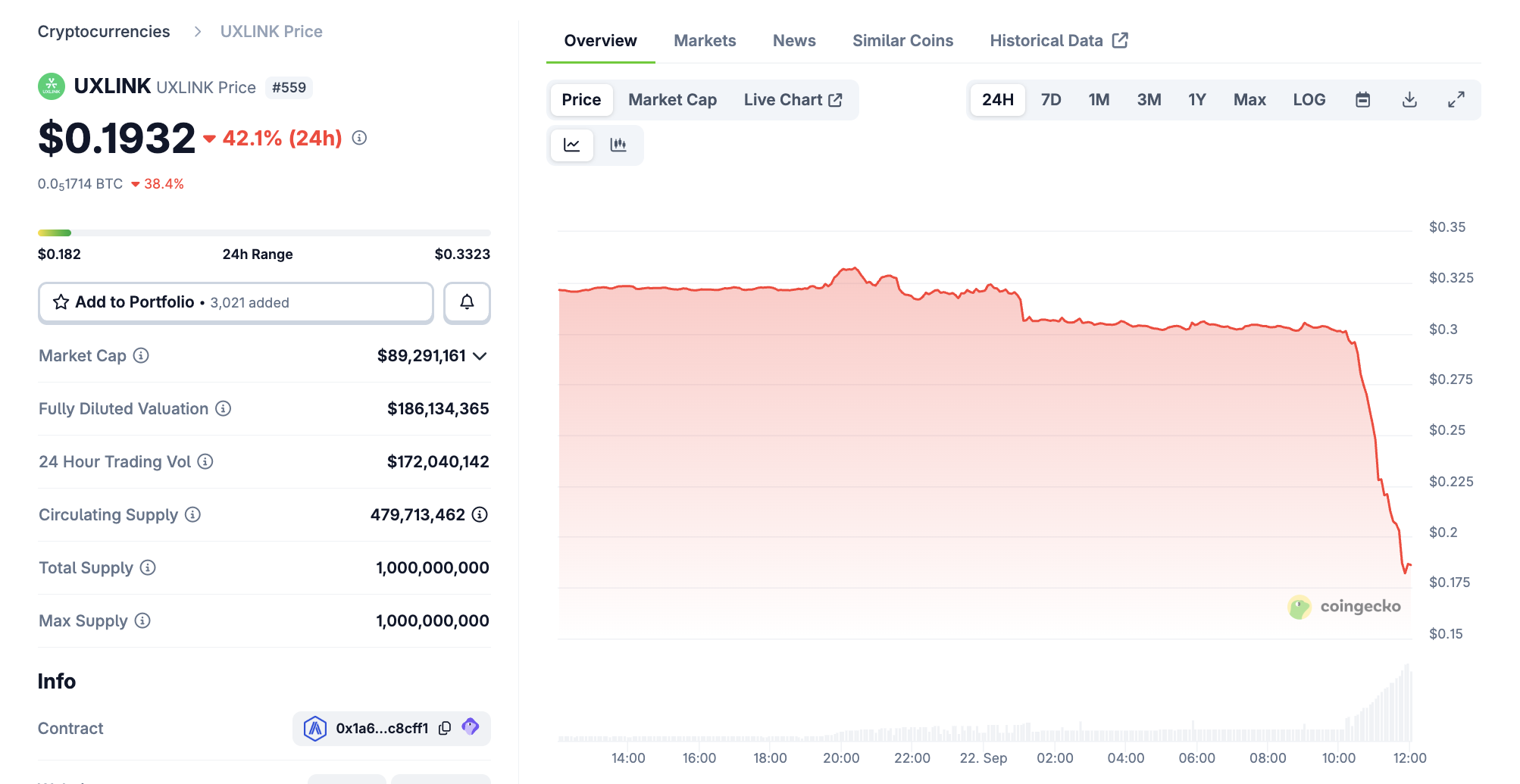 UXLINK Price Performance.
It’s unclear what percentage of the firm’s total assets were involved in this security breach, but that’s not the biggest concern. With intense sell pressure and liquidations, the firm will need to get ahead of this PR crisis to prevent a greater lack of confidence.
In situations like this, consumer trust can be much harder to replace than any lost tokens.
Disclaimer: The content of this article solely reflects the author's opinion and does not represent the platform in any capacity. This article is not intended to serve as a reference for making investment decisions.
You may also like
Despite falling oil prices and dovish comments from Fed officials, US Treasury yields continue to rise
The wave of US Treasury sell-offs continues to spread, with the 30-year yield reaching a 24-year high of 5.621% and the 10-year yield rising to its highest level since 2002—oil price declines and dovish signals have both failed, and long-term rates remain unaffected. High yields are reshaping the structure of US equities; as the AI narrative becomes the market’s final pillar, any cracks could trigger a chain reaction of turbulence.
Morgan Stanley trading desk, dubbed the "most accurate in the past two years," turns bullish
The supporting logic encompasses five major pillars: unexpected macro trends, consumer resilience, low profit expectations, stabilized yields, and technical improvements. Since the previous shift on August 31, the Nasdaq 100 long and Russell 2000 short paired trades have accumulated gains of over 8%. This latest "bullish reversal" is even more convincing. Strategically, technology remains the core long position, but the hedging tool has shifted from shorting RTY to derivatives. Meanwhile, the risk of long-term interest rate hikes still persists.

Four major favorable factors emerge, international oil prices respond by falling
Crypto prices
More


