
The wave of cryptocurrency liquidations continues! US Bitcoin ETF sees second highest single-day outflow in history

Due to the reassessment of Federal Reserve rate cut expectations and the fading rebound of the U.S. stock market, the crypto market continues to experience liquidations, with significant ETF capital outflows and options traders increasing bets on volatility. Institutions warn that technical support for bitcoin above $90,000 is weak.
Affected by the sweeping risk-averse sentiment in the market, investors have withdrawn nearly $900 million from bitcoin funds, and the bitcoin price has further fallen below the $100,000 mark.
This largest digital asset plunged as much as 2.8% during Friday's session, dropping below $96,000, then regained some ground, but is still down more than 20% from the record high set in early October.
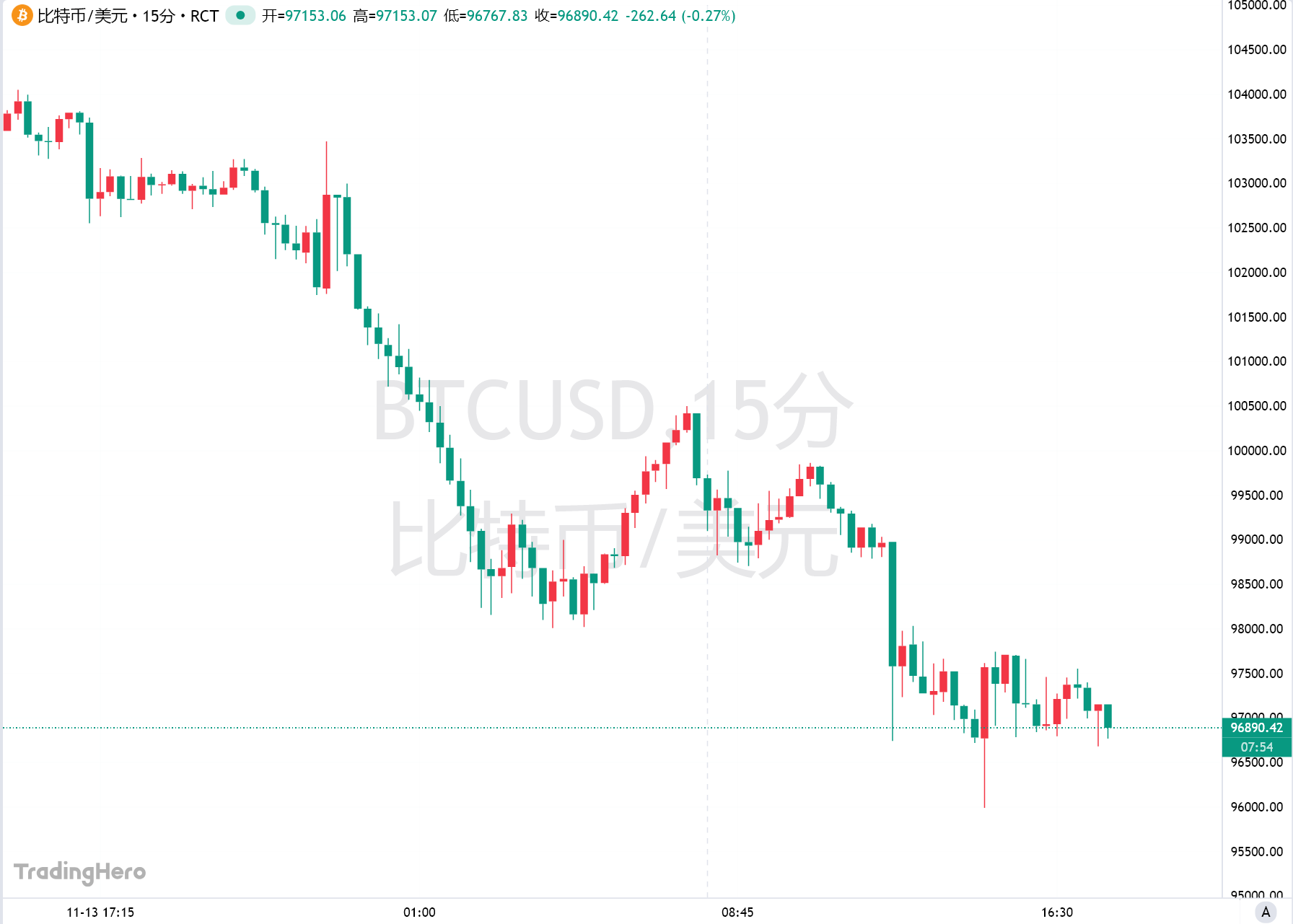
According to CoinGecko data, on October 10, the cryptocurrency market saw $19 billion in liquidations, causing the total market capitalization of all cryptocurrencies to evaporate by more than $1 trillion. Since then, the market has remained under pressure. CoinGlass data shows that the wave of liquidations continues, with leveraged crypto bets worth over $1 billion being closed out in the past 24 hours.
Meanwhile, bitcoin exchange-traded funds (ETFs) recorded a net outflow of about $870 million on Thursday, marking the second-largest single-day redemption since the launch of such funds.
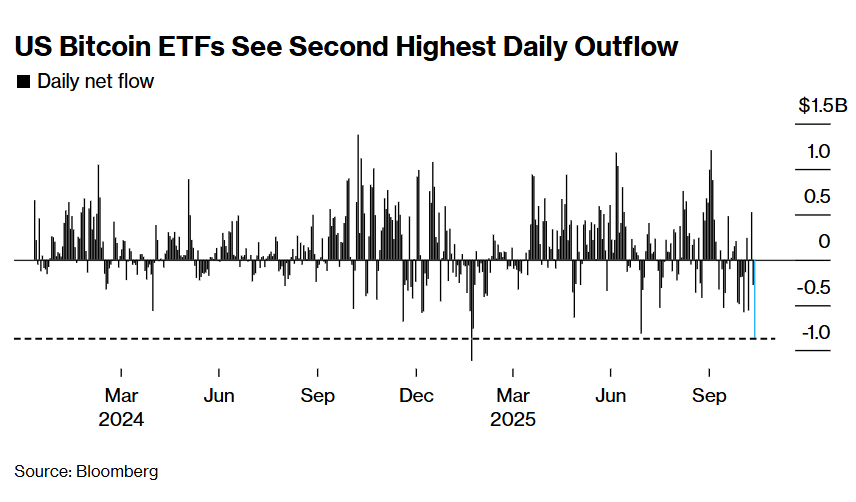 The US bitcoin ETFs saw the second-largest single-day outflow in history
 Earlier this week, US stocks briefly rebounded, buoyed by the positive news of the US government shutdown ending, but the rally quickly faded. With key economic data releases delayed, traders began to question whether the Federal Reserve has grounds for a short-term rate cut—a reassessment that is putting new pressure on riskier areas of the market.
“The current sell-off is entirely correlated with other risk assets, but given the higher volatility of cryptocurrencies, their declines are more pronounced,” said Max Gokhman, Deputy CIO of Franklin Templeton Investment Solutions. “Until institutions become more deeply involved in the crypto market and investment targets are no longer limited to bitcoin and ethereum, the correlation between crypto and macro risks will remain high.”
Market liquidity has also shrunk significantly. Kaiko data shows that market depth—the ability of the market to absorb large trades without significant price fluctuations—has dropped about 30% from this year's highs.
“Since President Trump took office, bitcoin has now turned downward, and the entire cryptocurrency market capitalization has given back this year's gains. From the current level to $90,000, (bitcoin) has limited technical support, and market sentiment may remain sluggish until further positive news emerges,” said SignalPlus partner Augustine Fan.
Nick Ruck of LVRG Research said that in the options market, traders are increasingly betting on volatility, with demand for neutral strategies such as straddles and strangles on the rise.
Disclaimer: The content of this article solely reflects the author's opinion and does not represent the platform in any capacity. This article is not intended to serve as a reference for making investment decisions.
You may also like
AI agents drive shift from XRP to stablecoins on XRP Ledger, BlackRock says
Why suspend RMPs? Explanation from New York Fed SOMA Manager Perli
"Agent vs US Treasury" — Who Will Dominate the US Stock Market?
The wave of AI Agents and US Treasury yields are splitting the US stock market into two worlds: Meta's release of the Muse model boosted its market value by $220 billion in a single week, propelling the Nasdaq's standout performance; however, excluding AI stocks, the S&P 500 actually fell 1% this week, with the number of new lows on the New York Stock Exchange surpassing new highs for nine consecutive days, signaling the near end of "breadth trading." Goldman Sachs bluntly stated that this is a "frustrating cat-and-mouse game" between the stock market and interest rates—any breakout can be snuffed out by the bond market at any time, so equity holders must short US Treasury bonds to hedge simultaneously.
Hopes for a ceasefire between the US and Iran encounter obstacles again! Trump rejects Iran's seven-day proposal; inflation pressure under $100 oil prices remains difficult to ease
Trump rejects a ceasefire with Iran, and it is expected that bombings will occur again after the midterm elections. The president doubts whether Tehran will meet his demands.
Crypto prices
More


