
XRP: Why Are Traders Abandoning Ship Despite the Price Rise?

XRP shows an increase of 0.85% in 24 hours, trading at 2.22 dollars this Friday, compared to 2.20 dollars the day before. However, the daily volume collapses. A contrasting situation that raises questions: is this rise sustainable or a sign of fatigue in the crypto market?

In brief
- XRP progresses by 0.85% in 24 hours, but its trading volume collapses by 31.87%, revealing a paradox.
- XRP’s market capitalization reaches $133.6 billion thanks to a 13.76% rise over 7 days, driven by ETFs.
- Analysts are divided: some see a market maturation, others a correction risk if volume does not recover.
XRP up 13.76% in 7 days: what are the drivers of this progress?
The crypto XRP has gained 13.76% in a week, bringing its market capitalization to 133,623,097,058.04 dollars. This performance is partly explained by technical advances: crossing the psychological resistance of 2.20 dollars attracted opportunistic buyers. Indicators like RSI and MACD, although mixed, show slight improvement, supporting this momentum.
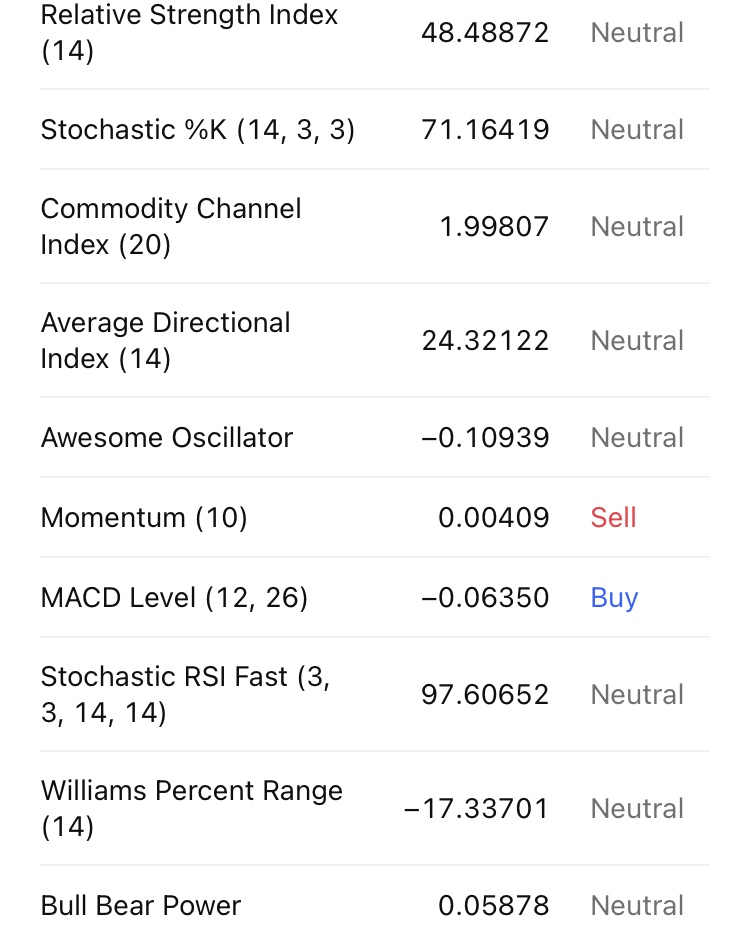 XRP indicators.
On the fundamental side, the growing adoption of Ripple solutions, such as ETFs and partnerships around XRP Ledger, plays a key role. Institutional investors are beginning to take an interest in this crypto, seen as a stable asset in a volatile market. Finally, the macroeconomic context, marked by expectations of interest rate cuts, favors risky assets like XRP.
Crypto: Volume Down on XRP… A Warning Signal for Traders?
XRP’s trading volume drops to $2,688,684,811.77 , a decrease of 31.87%, which might seem worrying.
This analysis nuances the interpretation of the volume drop: rather than disinterest, it could reflect a shift toward more stable and institutional investments. However, historical precedents remind us that similar divergences have sometimes preceded corrections, justifying increased vigilance in the crypto market.
What Can We Expect from XRP Crypto in the Coming Days?
Three scenarios emerge. In an optimistic context, if institutional flows confirm, XRP could target 2.50 dollars. Conversely, a volume that remains low and deteriorating indicators could bring the price back to 1.90 dollars. The most likely scenario remains consolidation between 2.20 and 2.30 dollars, awaiting a new catalyst.
The next few hours will be crucial, with key levels to watch: 2.20 dollars as support and 2.24 dollars as resistance. For investors, vigilance is essential, especially in a market as volatile as cryptos.
With a 0.85% increase in 24 hours but a 31.87% drop in volume, XRP offers a contrasting picture. Does this divergence reflect an opportunity or a risk? A paradox that places XRP in Bitwise’s 2026 crypto winning quartet . To be closely followed.
Disclaimer: The content of this article solely reflects the author's opinion and does not represent the platform in any capacity. This article is not intended to serve as a reference for making investment decisions.
You may also like
APT breaks resistance, CRYPTO ME targets $4 if support at $0.75 holds
Multiple Factors Weigh In, Intensifying U.S. Treasury Sell-Off! 5-Year Yield Breaks 5% for the First Time Since 2007, 10-Year Yield Surpasses 5.1%
The stronger-than-expected U.S. September PMI, international crude oil prices returning above $100, and Fed governors signaling possible rate hikes have all negatively impacted the bond market. The disappointing 5-year Treasury auction has further worsened market sentiment. The psychological barrier of a 5% yield on the 10-year U.S. Treasury is losing its significance as a "ceiling," with the market now starting to discuss a potential 6%. In addition to rate hike expectations, fiscal and supply pressures are also driving up long-term bond yields.
According to reports, the Trump administration considered a 90-day diesel export ban, but this was later denied, with the US Secretary of Energy openly opposing it.
On Wednesday, according to Politico, the Trump administration was preparing a 90-day ban on diesel exports. Shortly after, Reuters reported that the United States was not preparing to implement such a ban. On the same day, the U.S. Secretary of Energy stated that banning diesel exports would "definitely not work," as it would force refineries to cut production, thereby driving up gasoline and jet fuel prices. After Politico's report, U.S. diesel futures fell by more than 7% before rebounding slightly, but the losses were not fully recovered.
Glassnode Has Turned Bullish on Bitcoin—They Revealed the Level They’re Waiting For
Crypto prices
More


