
Vitalik Buterin Sounds Alarm: Ethereum Governance Imbalances Threaten Core Principles

Quick Breakdown
- Vitalik Buterin warns centralized control in Ethereum clients and L2s threatens network security and decentralization.
- Recommends diverse client adoption, L2 coordination standards and community veto powers to restore balance.
- Published on December 30, 2025, the document addresses growing concerns over staking dominance and sequencer centralization.
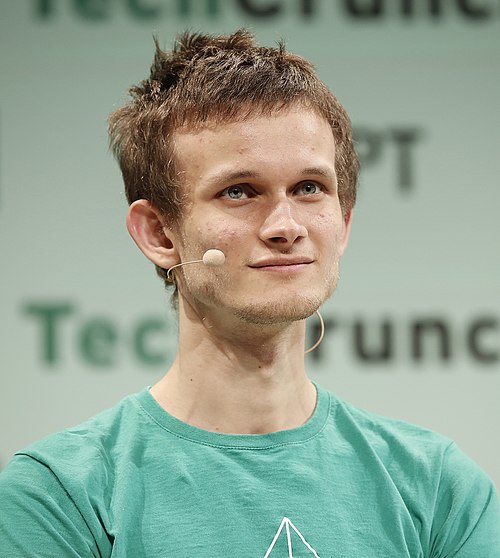
Ethereum co-founder Vitalik Buterin released a comprehensive post detailing governance imbalances within the network. Centralized entities now exert excessive influence over protocol upgrades, client diversity and Layer 2 operations. Buterin calls for structural reforms to prevent single points of failure that could undermine the network’s core principles.
 Source
:
Google
Source
:
Google
The analysis highlights three key risks. First, client centralization sees over 60% of staked ETH controlled by a few teams like Prysm and Geth. A coordinated attack or outage from these could halt the chain. Second, L2 sequencers operated by entities like Optimism and Arbitrum create censorship vulnerabilities. Third, opaque upgrade processes favour insiders over broad community input.
Centralization Risks Mount Amid Growth
Ethereum’s validator set has exploded past 1 million nodes since the Shanghai upgrade. Yet, staking pools like Lido command 30%+ of total stake, amplifying risks from shared infrastructure. Buterin notes recent incidents where client bugs affected 25% of validators, exposing the fragility. L2s now process 90% of Ethereum transactions, but 80% of those rely on three providers for sequencing. This concentration enables potential transaction censorship or data withholding, eroding trustless settlement guarantees.
Buterin proposes concrete fixes. Boost client diversity by funding Lighthouse and lesser-known teams, targeting client dominance below 33%. Mandate L2 interoperability standards via ERC-7935 for shared sequencing. Empower the community with veto rights on upgrades via quadratic funding signals from platforms like Gitcoin. These steps distribute power without slowing innovation.
Path Forward: Balanced Decentralization Blueprint
Implementation starts with client teams committing to shared security audits and rapid bug fixes. L2 operators should adopt decentralized sequencers like those in Espresso or Astria within 12 months. Ethereum Foundation resources could fund these transitions by drawing on protocol revenue streams.
Buterin stresses urgency. Without action, Ethereum risks regulatory capture or competitive displacement by rivals like Solana. Historical parallels to Google’s search monopoly underscore the need for proactive balance. The post aligns with prior writings on low-risk DeFi as Ethereum’s revenue backbone, tying governance to sustainable growth.
Ultimately, Buterin stresses that true trustlessness requires simplifying the Ethereum protocol itself, ensuring more people can understand and audit the system to combat the risks of complexity and reliance on a small circle of experts
Disclaimer: The content of this article solely reflects the author's opinion and does not represent the platform in any capacity. This article is not intended to serve as a reference for making investment decisions.
You may also like
Highlights of the U.S. Stock Market This Week: Intensive Speeches from Federal Reserve Officials, Middle East Situation and China-U.S. Summit Influence the Market
This week, U.S. stock market investors will focus on the trajectory of interest rates, tensions in the Middle East, the U.S.-China summit and technology-related topics, as well as calls to slow down the development of artificial intelligence (AI), while weighing whether major stock indexes can reach new historical highs.
Korean media reports that "Besant Mentor" Druckenmiller will visit Korea for the first time and will discuss investment with SK Hynix, Samsung Electronics, and Doosan.
This is Druckenmiller's first public visit to South Korea, focusing on the two main themes of AI and energy. He will be inspecting Samsung and SK Hynix, which hold key positions in AI supply chain bottlenecks such as HBM and semiconductor materials, as well as Doosan Enerbility, which is involved in nuclear power and gas turbines. It is worth noting that he has reduced his AI holdings to 20% of what they were six months ago; this visit is interpreted as a strategic shift from broad investments to the precise selection of core targets.
Applovin CEO: The "Darkest Hour" of a 92% Stock Price Crash and "Self-Salvation"
AppLovin's CEO reviewed the company's history: when its stock price plummeted by 92% in 2022 and its market value shrank to $3.8 billion, he stopped roadshows, initiated a $6 billion buyback, and quietly completed a technological upgrade from regression models to deep learning. Afterwards, the stock price rose from $9 to $750, and the market value peaked at $250 billion. He also revealed that the company expects to generate about $6 billion in cash this year, with an EBITDA profit margin of 84%.
Crypto prices
More


