
USD: Europe Sells Bonds, Financial Nuclear Bomb

Europe may put "selling US Treasury bonds" on the table as a weapon, as a countermeasure regarding the Greenland issue. This is the hot rumor that swept through the global financial markets this week and has sparked widespread discussion in foreign media. Whether or not Europe actually sells US Treasuries, the mere "possibility" is enough to draw the attention of all investors.
In my view, for Europe, even if it's not "selling US Treasuries" but simply "not buying US Treasuries," the impact would be a pro plus version of "de-dollarization" in 2025, comparable to a financial nuclear bomb.
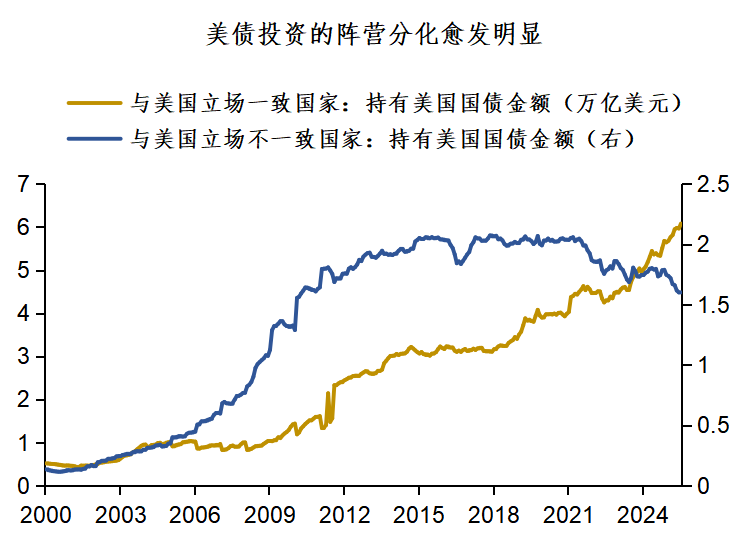
During the reciprocal tariff period last year, the financial markets saw a wave of hype around "de-dollarization." But in fact, I believe the term "de-dollarization" is not very accurate. What actually happened last year was a "polarization between the Western and Eastern blocs." As shown in the chart below, countries aligned with the US continued to increase their holdings of US Treasuries (the Western bloc) last year, while, conversely, countries not aligned with the US continued to reduce their US Treasury holdings (the Eastern bloc).
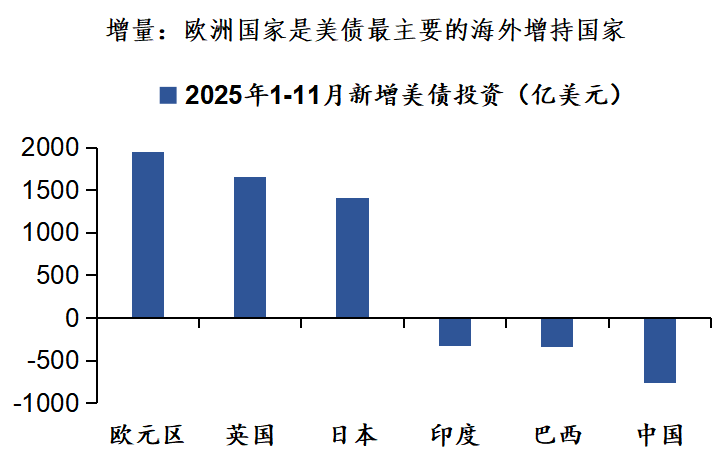
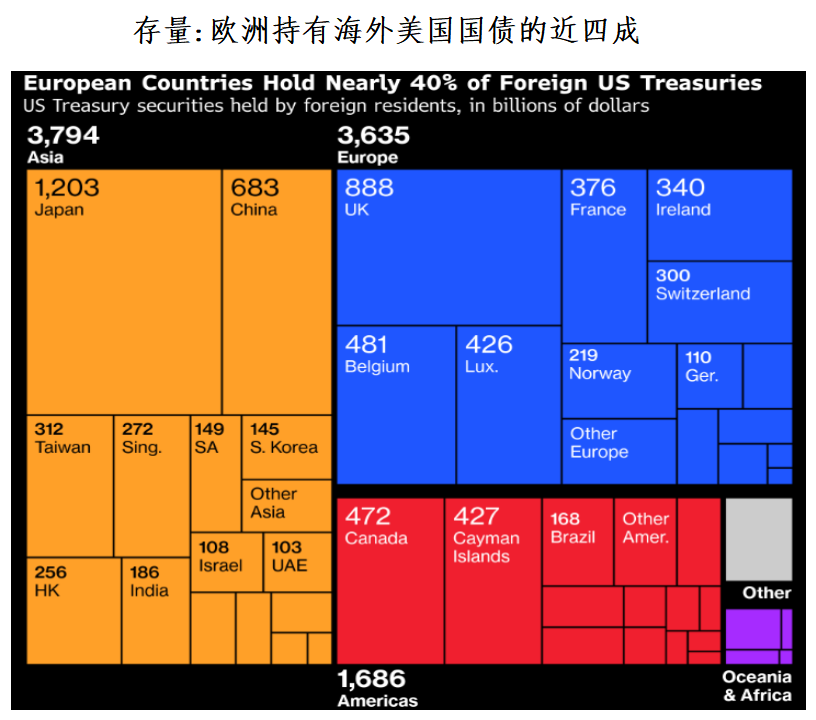
Specifically, from January to November last year, eurozone countries increased their US Treasury investments by $190 billion, and the UK added $160 billion. In other words, Europe increased its US Treasury holdings by at least $350 billion last year, making it the largest overseas investor in US Treasuries. This is what I mentioned above—if Europe even just stops buying US Treasuries, the impact is already nuclear-level.
There are also some opinions now that since this is such a big deal, Trump will definitely TACO.But just as even if the Russia-Ukraine war ends, Eastern Europe cannot return to the past; even if China and the US resolve tariffs, G2 cannot return to the past; even if the US and Europe shelve the Greenland issue, NATO cannot return to the past. For a super financial hegemon like the US dollar, even the appearance of some cracks is something to be wary of.

From a financial market perspective, there are several points worth paying attention to:
1. Look at the Asian and European sessions of the US dollar and pay attention to Real Money flows in the forex market. If Asian and European funds begin to adjust their asset allocations, Real Money will definitely respond, and the market will reflect a lot of information;

2. Gold will benefit the most and may experience a wave of price increases. For related opinions, refer to "Gold: The Prelude to a Wave." I believe that besides Poland, there will likely be more European countries joining the ranks of official gold buyers.

To sum up today's sharing:
1. As the largest overseas investor in US Treasuries, for Europe, even just "not buying US Treasuries," the impact would be a pro plus version of "de-dollarization" in 2025, comparable to a financial nuclear bomb.
2. Some believe that since this is such a big deal, Trump will definitely TACO. But just as even if the Russia-Ukraine war ends, Eastern Europe cannot return to the past; even if China and the US resolve tariffs, G2 cannot return to the past; even if the US and Europe shelve the Greenland issue, NATO cannot return to the past. For a superpower like the US dollar, even the appearance of some cracks is something to be wary of.
3. On the investment side, you can look at the Asian and European sessions of the US dollar and pay attention to Real Money flows in the forex market, as the market will reflect a lot of information. Gold will benefit the most and may experience a wave of price increases.
BFC Exchange Talk
Accompanying you in 2026
Welcome to leave us a message in the background
Communicate with us
Disclaimer: The content of this article solely reflects the author's opinion and does not represent the platform in any capacity. This article is not intended to serve as a reference for making investment decisions.
You may also like
Japan’s Foreign Exchange Intervention “Drains Liquidity”? Overseas Holdings of US Treasuries in July Fall to Nine-Month Low, China’s Holdings Hit Lowest Level Since 2008
According to a report from the U.S. Department of the Treasury, overseas holdings of U.S. Treasury bonds in July decreased by $50.4 billion compared to the previous month. Japan, the top holder of U.S. debt, reduced its holdings by $12.8 billion, marking a third consecutive monthly decline and reaching a new low not seen for over a year. China, the third-largest holder, cut its U.S. debt holdings by $15.4 billion, marking a second consecutive monthly decrease. The United Kingdom, the second-largest holder, bucked the trend by increasing its holdings by $58.4 billion, reaching a new record high previously set in May. France and Canada saw the largest reductions in holdings in July, decreasing by $41.5 billion and $30 billion, respectively.
Upcoming Crypto Presales Explained: How Stage Pricing Works and Why MemeToro’s Entry Price Rises
White House Criticizes Fed's Interest Rate Hike Decision as "Quite Regrettable," Trump Urges Rates Be Cut Below 1%
White House spokesperson Kush Desai stated, "From the administration's perspective, today's interest rate hike by the Federal Reserve is rather disappointing and lacks particularly convincing economic justification." When asked whether President Trump still believes in the independence of the Federal Reserve Chairman, Desai responded, "Of course."
Crypto prices
More


