
AUD: Either Believe Early or Don't Believe at All

The recent Popular Trade Unwind in global financial markets has served as a vivid practical lesson for investors. A trade is like a racetrack; if you participate in a crowded track, you must be prepared for the possibility of losing an entire month's gains in just a day or two. Similar events have occurred in markets like the Japanese yen in the past...
There is nothing new under the sun. Numerous bloody unwind cases have taught us one thing—when it comes to sector investing (sector trading), either believe early or don't believe at all; it's best not to believe halfway through.

A derivative question is: in the current G7 currency market, which position is the most crowded? Obviously, it's the Australian dollar. No matter how bullish you are on the AUD's fundamentals, one issue cannot be ignored—the AUD long position is crowded.
For example, CME’s FX futures position data shows that the current net long position ratio for AUDUSD is at 4%, a relatively high level over the past year. Meanwhile, AUDUSD’s 25D RR implied volatility is also at a historically high level, reflecting strong bullish sentiment towards the Australian dollar in the FX market.
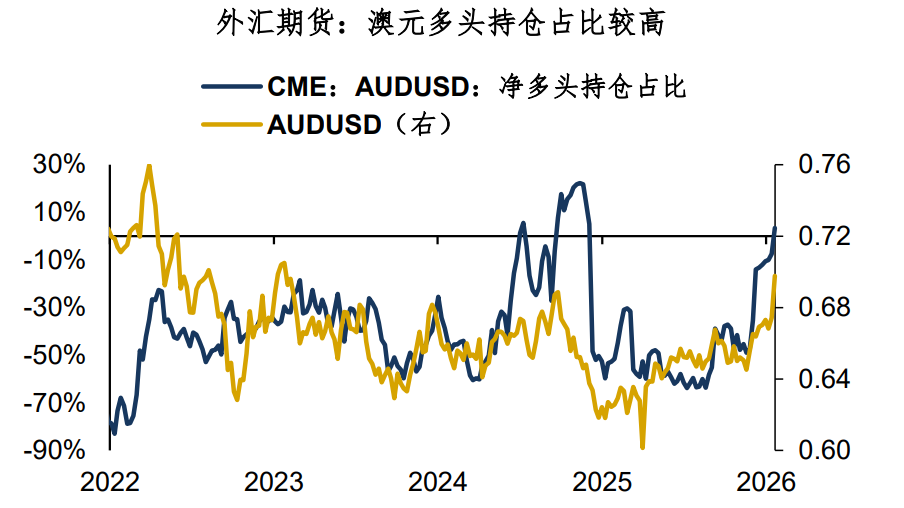
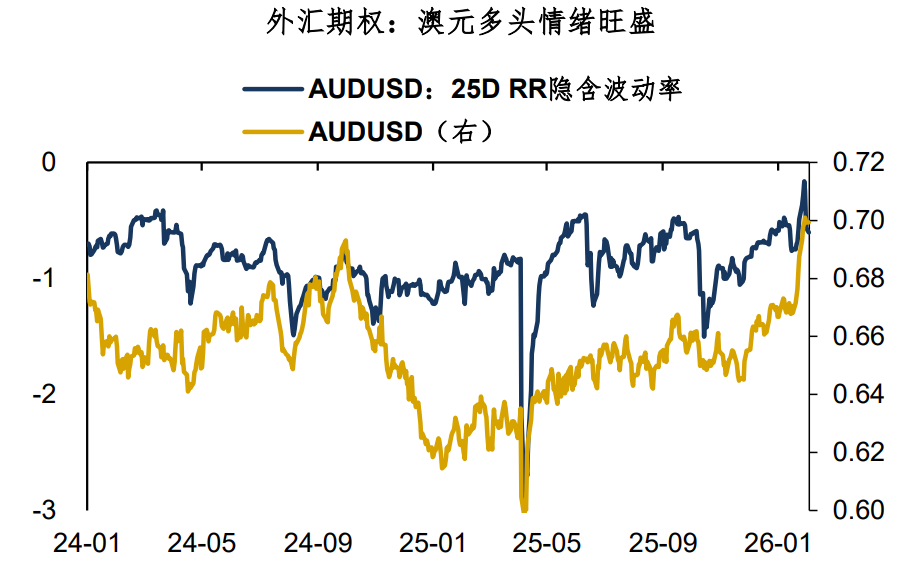
Why is the FX market so bullish on the AUD? Aside from the “commodity currency” reason, an important factor is: there are strong rate hike expectations for the AUD. BBG data shows that the market is pricing in a 70% probability of a 25bp rate hike by the RBA on February 3, with another 25bp hike expected later in the year (around August). Meanwhile, the 2Y Australian bond and policy rate spread has reached 60bp, the highest since 2022, which clearly reflects significant rate hike expectations.
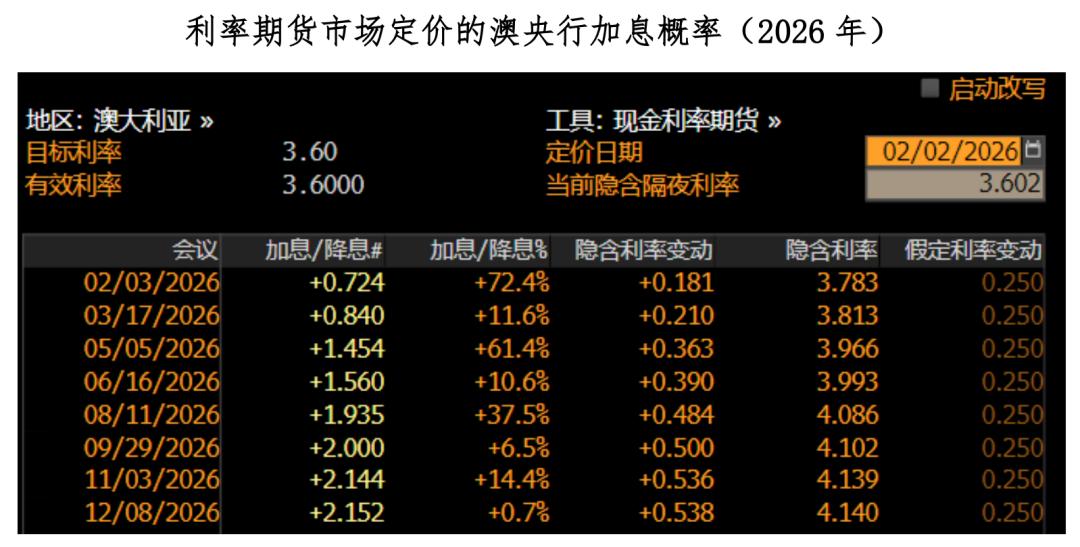
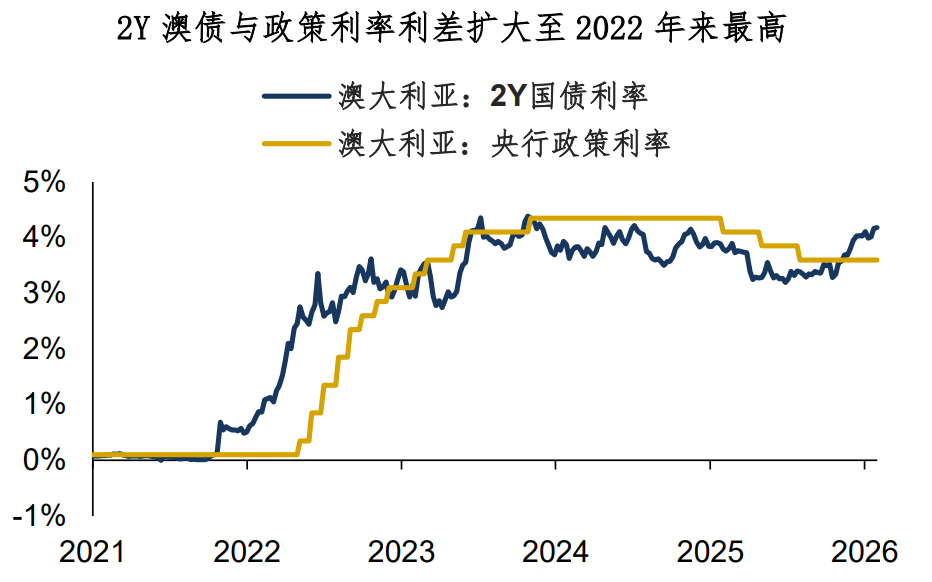
However, can the RBA really raise rates quickly? Currently, RBA officials have indicated that rate cuts are off the table, but they are not setting a predetermined path for rate hikes. The RBA’s policy framework is quite similar to the Fed's “data dependency + risk management.” I am inclined to think that, given the cautious and wait-and-see stance of G7 central banks in the first half of the year, the RBA may not provide a very clear policy signal at the upcoming rate meeting. A “dovish hike” or a “hawkish hold” is the more likely scenario.
So, how should we view the AUD? Once again, either believe early or don't believe at all; it's best not to believe halfway through.
To summarize today’s discussion:
1. In the current G7 currency market, which position is the most crowded? Clearly, it’s the AUD. From the perspectives of FX futures positions and FX options implied volatility, bullish sentiment toward the AUD is quite crowded;
2. Why is the FX market so bullish on the AUD? Beyond the “commodity currency” factor, a crucial reason is the strong rate hike expectations. The 2Y Australian bond and policy rate spread has reached 60bp, and the market expects two rate hikes in February and August. However, with G7 central banks maintaining a cautious, wait-and-see attitude in the first half of the year, the RBA may not provide a very clear policy signal at the upcoming meeting. A “dovish hike” or a “hawkish hold” is more likely;
3. How to view the AUD? As stated before, when it comes to sector investing (sector trading), either believe early or don't believe at all; it's best not to believe halfway through.
Disclaimer: The content of this article solely reflects the author's opinion and does not represent the platform in any capacity. This article is not intended to serve as a reference for making investment decisions.
You may also like
Tonkeeper rebrands to Keeper, adds support for 6 major blockchains
SUI trades near key $0.67 support as technical indicators suggest mixed outlook
"Messi of the AI World" gets another bullish call! Palantir (PLTR.US) long-term bulls reiterate trillion-dollar valuation logic, while "big shorts" and retail investors disagree
Dan Ives reiterates the trillion-dollar valuation theory for Palantir, but prominent bear Michael Burry and retail investor sentiment remain pessimistic.

Tonight the Fed rate hike is almost certain; the market is closely watching Waller's remarks: will a signal of continued rate hikes be released?
What the market truly cares about is: the dot plot will reveal how many more rate hikes are expected this year, and whether Waller will send signals of ongoing tightening. Citi predicts this will be a “dovish hike”; Goldman Sachs bluntly states that this rate hike lacks sufficient economic basis; Standard Chartered believes the hike itself is a policy mistake. If there’s a signal of aggressive consecutive hikes, it could trigger market turmoil; the most dangerous tail risk is an unexpected pause, which could spark a credibility crisis and sharp equity sell-off.
Crypto prices
More


