
Jim Chanos Slams Bitcoin Play Strategy For Bragging About Stability Of Preferred Shares: 'Can You Imagine Any Other CEO With A Plunging Stock…'

Veteran short seller Jim Chanos slammed Strategy Inc. (NASDAQ:MSTR) for touting the stability of its perpetual preferred shares on Wednesday, even as its main stock continues to get hammered.
Chanos Takes Fresh Dig At Strategy
Chanos reacted to a Bloomberg interview where Strategy CEO Phong Le described the firm’s Perpetual Stretch Preferred Stock closing at $100 as the “story of the day” and “exactly how it was engineered to perform.” Michael Saylor, Executive Chairman of Strategy, echoed the point.
However, Chanos, a scathing critic of Strategy’s business model, was not convinced.
“Can you imagine any other CEO with a plunging stock saying, ‘The story of the day is that our junk debt is still trading at par,'” he said.
Can you imagine any other CEO with a plunging stock saying, "The story of the day is that our junk debt is still trading at par!"
— James Chanos (@RealJimChanos) February 11, 2026
Saylor’s Strategy Under Pressure?
Strategy’s financials have indeed been hammered due to Bitcoin ongoing downturn. The company’s Class A shares have plunged more than 16% year to date and over 60% in the past year.
Strategy's market valuation stands at $41.99 billion, while its Bitcoin holdings are valued at worth $48.17 billion. This means that the stock is trading at a discount to its net asset value.
However, the company executives have consistently defended their business model.
Saylor said earlier this week that the Strategy won't sell Bitcoin even if it crashes to $8,000, pledging to refinance debt instead. He added that the company has 2.5 years of cash to cover dividends and debt without raising money.
Chanos’ MSTR Arbitrage Trade
Chanos made headlines for his strategic arbitrage trade of shorting MSTR stock while going long on Bitcoin over what he viewed as an unjustified premium on the stock relative to its BTC holdings.
Chanos believed the premium would dilute over time as the company continued to issue common equity. In November, his firm exited its hedged trade, noting that the trade had "largely played out."
Price Action: At the time of writing, BTC was exchanging hands at $67,337.82, down 1.39% in the last 24 hours.
MSTR shares fell 0.06% in after-hours trading after closing 5.21% lower at $126.07 during Wednesday’s regular trading session.
The stock shows weak price momentum across short, medium, and long terms, earning a very low Momentum ranking in Benzinga’s Edge Stock Rankings.
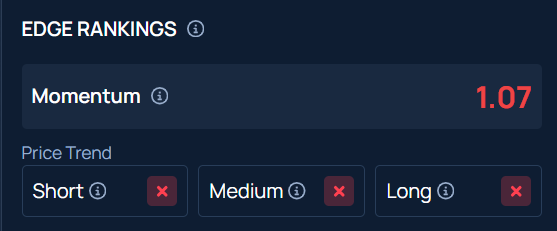
Photo Courtesy: Who is Danny on Shutterstock.com
Disclaimer: The content of this article solely reflects the author's opinion and does not represent the platform in any capacity. This article is not intended to serve as a reference for making investment decisions.
You may also like
Intel CEO: CPU only meets 50% of demand, 14A to start production in Q1 next year, new architecture may reduce inference power consumption to 1/15 of GPU
Intel CEO Pat Gelsinger stated that the era of AI agents has triggered an explosion in CPU demand, and Intel is currently able to meet only about 50% of its customers' supply needs, with several tech giant CEOs calling to secure supply. In terms of manufacturing process, the 18A node is now in full mass production, while the 14A node will begin production in the first quarter of next year. By opening up factory data, yield rates are improving by about 7% annually. Additionally, he is advancing neuromorphic computing to address energy consumption bottlenecks and expects quantum computing to have a substantial industrial impact within 3 to 5 years.
Reportedly, the US urges Japan to "increase" defense spending; Tokyo considers a 3.5% GDP target, bond market and yen come under pressure first
Under pressure from the United States, Japan is considering setting a new medium-term defense spending target, planning to increase its defense expenditure to 3.5% of GDP to align with NATO and other U.S. allies.

The logic of "cheap yen financing" is changing! Funds are reallocating "carry trades" as Swiss franc and Swedish krona compete for the funding currency position
The appeal of yen financing has diminished, and carry traders have recently turned their attention to the franc and the krona. With the yen’s recent surge making it a less reliable investment option, currencies such as the Swedish krona and Swiss franc are becoming primary funding choices for carry trades.

Crypto prices
More


