
Bitcoin miner MARA buys majority stake in AI data center firm Exaion

MARA Holdings has completed the purchase of a majority stake in French computing infrastructure operator Exaion, deepening its push into artificial intelligence (AI) and cloud services.
The deal, first agreed in August 2025 with EDF Pulse Ventures, gives MARA France a 64% stake in Exaion after required regulatory approvals were secured, the Bitcoin miner said in a Friday announcement. French energy giant EDF will remain a minority shareholder and continue as a customer of the business.
The investment also creates a broader alliance. NJJ Capital, the investment vehicle of telecom entrepreneur Xavier Niel, will acquire a 10% stake in MARA France as part of a partnership with MARA.
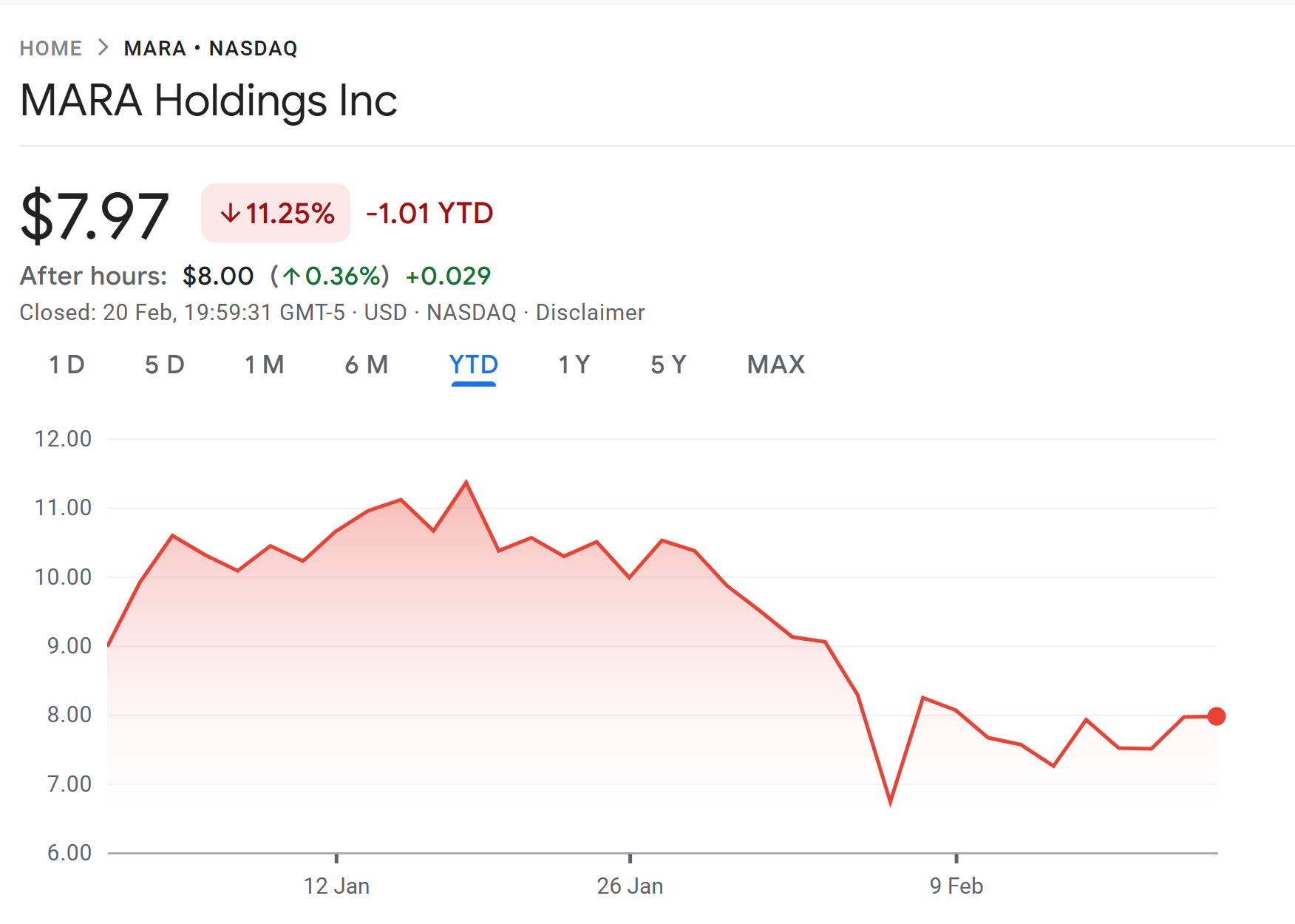 MARA shares are down 17% YTD. Source:
Governance of Exaion will reflect the new ownership structure. The company’s board will include three representatives from MARA, three from EDF Pulse Ventures and one from NJJ, alongside Exaion’s chief executive and co-founder. Niel and MARA CEO Fred Thiel will both hold seats on the board.
Related:
Bitcoin miners pivot to AI amid pressure
Bitcoin mining companies are increasingly turning to AI and data center computing as pressure on mining economics grows. After the 2024 halving cut block rewards and rising network difficulty squeezed margins, several publicly traded miners began adopting a hybrid model, keeping mining as a source of cash flow while building steadier revenue from AI cloud and high-performance computing services.
HIVE Digital Technologies is one example of the shift. The company reported strong results even during weaker Bitcoin prices, supported by expanding AI operations. CoreWeave has also moved from crypto mining to become a major AI infrastructure provider after GPU mining demand fell.
Other firms, including TeraWulf, Hut 8, IREN and MARA, are also repurposing mining facilities and energy capacity into AI data centers.
In November last year, CleanSpark announced plans to raise roughly $1.13 billion in net proceeds, up to $1.28 billion if additional notes are purchased, through a $1.15 billion senior convertible note offering to fund expansion of its Bitcoin mining and data center operations.
Related:
Bitcoin mining difficulty jumps 15%
Meanwhile, Bitcoin’s mining difficulty rose about 15% to 144.4 trillion on Friday, reversing an 11% drop earlier in the month, the steepest decline since China’s 2021 mining ban. The earlier fall followed severe winter storms across the United States that disrupted power grids and temporarily forced many miners offline, sharply reducing hash rate.
While the higher difficulty reinforces Bitcoin’s security, it also raises the computing effort needed to mine new blocks, adding further margin pressure on operators already dealing with rising costs.
Magazine:
Disclaimer: The content of this article solely reflects the author's opinion and does not represent the platform in any capacity. This article is not intended to serve as a reference for making investment decisions.
You may also like
Bitcoin drops below $80,000 as crypto ignores Asian tech rally, Fed meeting begins

"We've seen this pattern before!" Major short seller explains: Why short the AI newcomer CoreWeave
Seawolf Capital, founded by three traders who inspired "The Big Short," has established a short position on CoreWeave, citing concerns over high capital consumption, the uncertain economic lifespan of GPUs, and the expansion of competing chip supplies, which pose risks to CoreWeave’s business model. More critically, CoreWeave will require continuous financing of tens of billions of dollars in the future, and if financing costs rise or access to capital is hindered, its operations will become unsustainable. This short position is not a bet against the AI industry itself, but rather on CoreWeave’s ability to secure financing and manage capital costs.

Why Is Bitcoin Stuck Near $80K as Strategy Diverts $205M to Preferred-Share Buybacks?

The rebound in the UK stock market faces the "budget test"! Tax increases, government bond yields, and consumer pressure affect market sentiment
As global investors regain confidence in the UK market, the Autumn Budget to be announced this Wednesday will serve as a major test for the country's stock market.

Crypto prices
More


