
Bitcoin price analysis sees new short squeeze as open interest nears $25B

Bitcoin (BTC) is due a classic “short squeeze” as open interest hits five-week highs, says new analysis.
Key points:
Bitcoin is seeing a combination of rising open interest and negative funding rates.
The result could punish short positions, with funding rates at the most negative since early February.
Large-scale Bitcoin speculators are net long BTC again.
Bitcoin short squeeze likelihood “increasing”
In one of its “Quicktake” blog posts on Saturday, onchain analytics platform CryptoQuant said that Bitcoin was “crowded” with short positions.
“BTC is flowing out of exchanges while funding rates remain strongly negative, creating an increasingly crowded short positioning environment where the potential for a short squeeze is building,” contributor CoinNiel summarized.
After BTC/USD passed $73,000 on Friday, traders appeared eager to trap those entering the market who were betting on continued price upside. Funding rates stayed negative on exchanges, while open interest grew to $24.2 billion — its highest since early March.
“Since March, negative funding has become more frequent, and throughout April it has remained in negative territory without flipping positive,” the post continued.
“This indicates that short positions dominate the market, with shorts paying longs, and such extreme positioning can act as a trigger for a reversal through forced liquidations.”
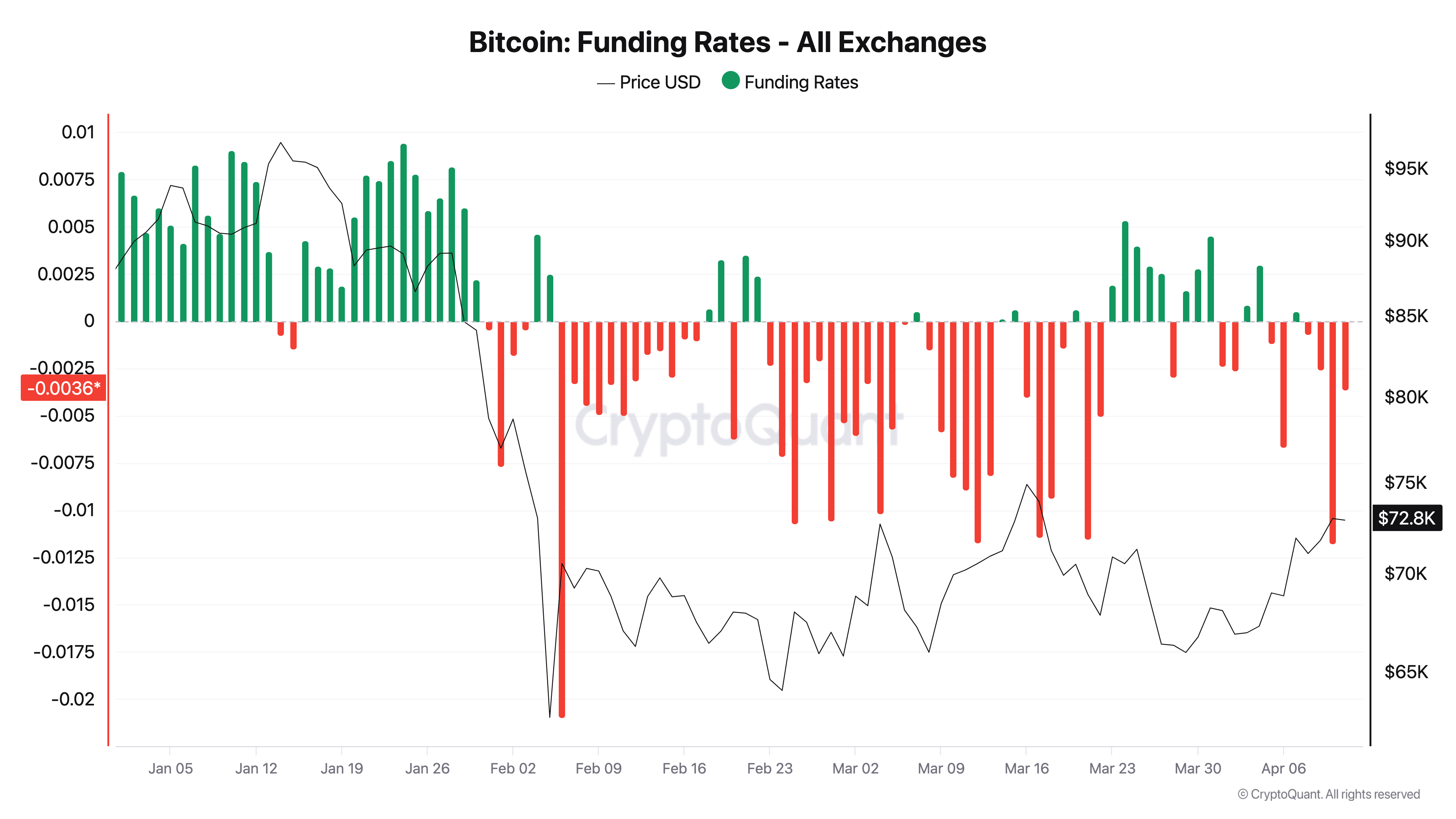 Bitcoin funding rates. Source: CryptoQuant
CoinNiel said that the combination of rising open interest and negative funding rates “suggests that leveraged short positions have been rapidly accumulating.”
“The slight decrease does not yet indicate a meaningful deleveraging phase,” he acknowledged.
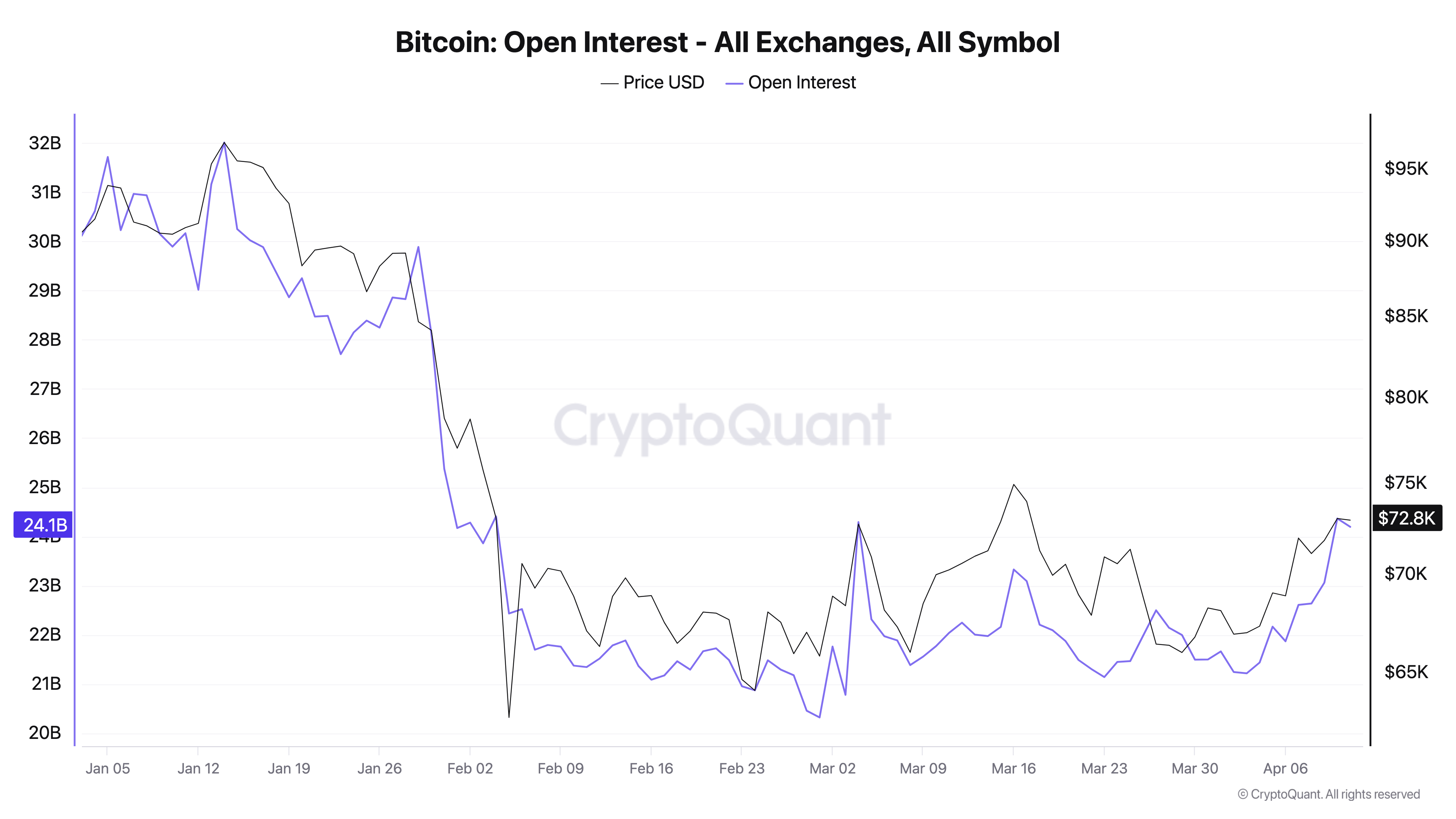 Bitcoin open interest. Source: CryptoQuant
Fellow contributor Gaah agreed, noting that funding rates had hit their deepest negative value since Bitcoin’s dip to multiyear lows at the start of February.
“Caution is needed when establishing positions in current range, since it represents an area of buying demand,” he wrote in a further Quicktake post.
“Bears trapped? Likelihood of a short squeeze is increasing.”
Trader: Bitcoin speculators copying 2023 rebound
Earlier, Cointelegraph reported on short liquidations staying modest despite the BTC price upside.
Related: Bitcoin analysis sees $55K BTC price 'iron bottom' by December 2026
Data from CoinGlass showed that over the 24 hours to the time of writing, cross-crypto liquidations totaled less than $100 million.
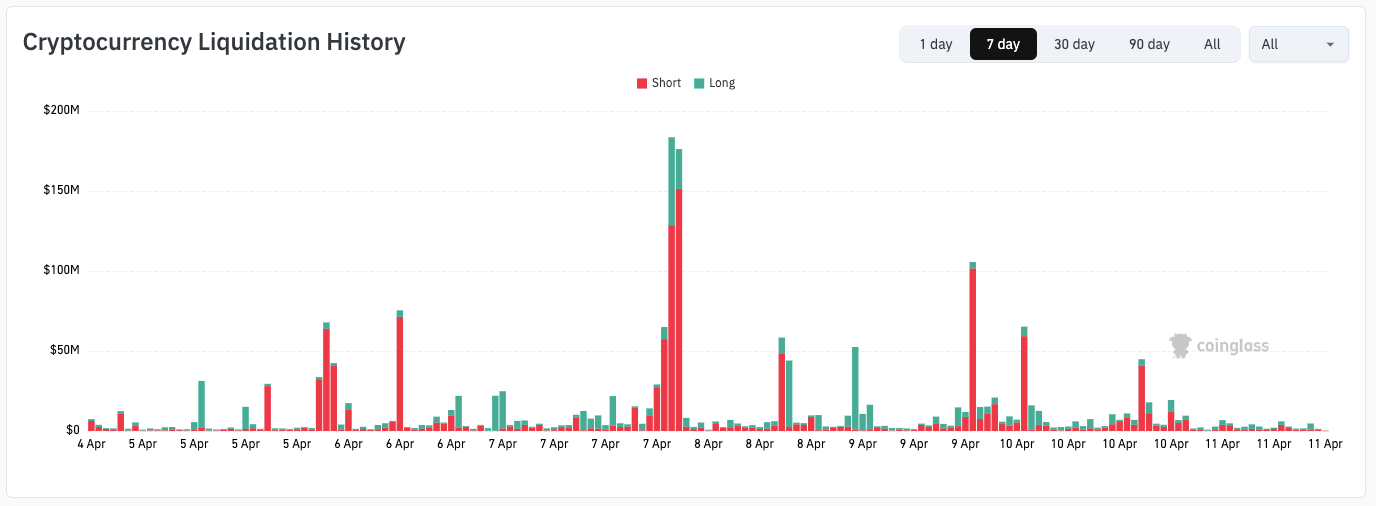 Crypto liquidation history (screenshot). Source: CoinGlass
Sentiment among market participants, meanwhile, has gradually begun to favor fresh upside, with targets including $80,000 and higher.
On Saturday, crypto trader Michaël Van de Poppe eyed increasing belief in a BTC price rebound among large-volume speculators.
“Speculators are net long on Bitcoin. Very similar to previous cases where we've seen the same before a big breakout in 2023,” he wrote in a post on X.
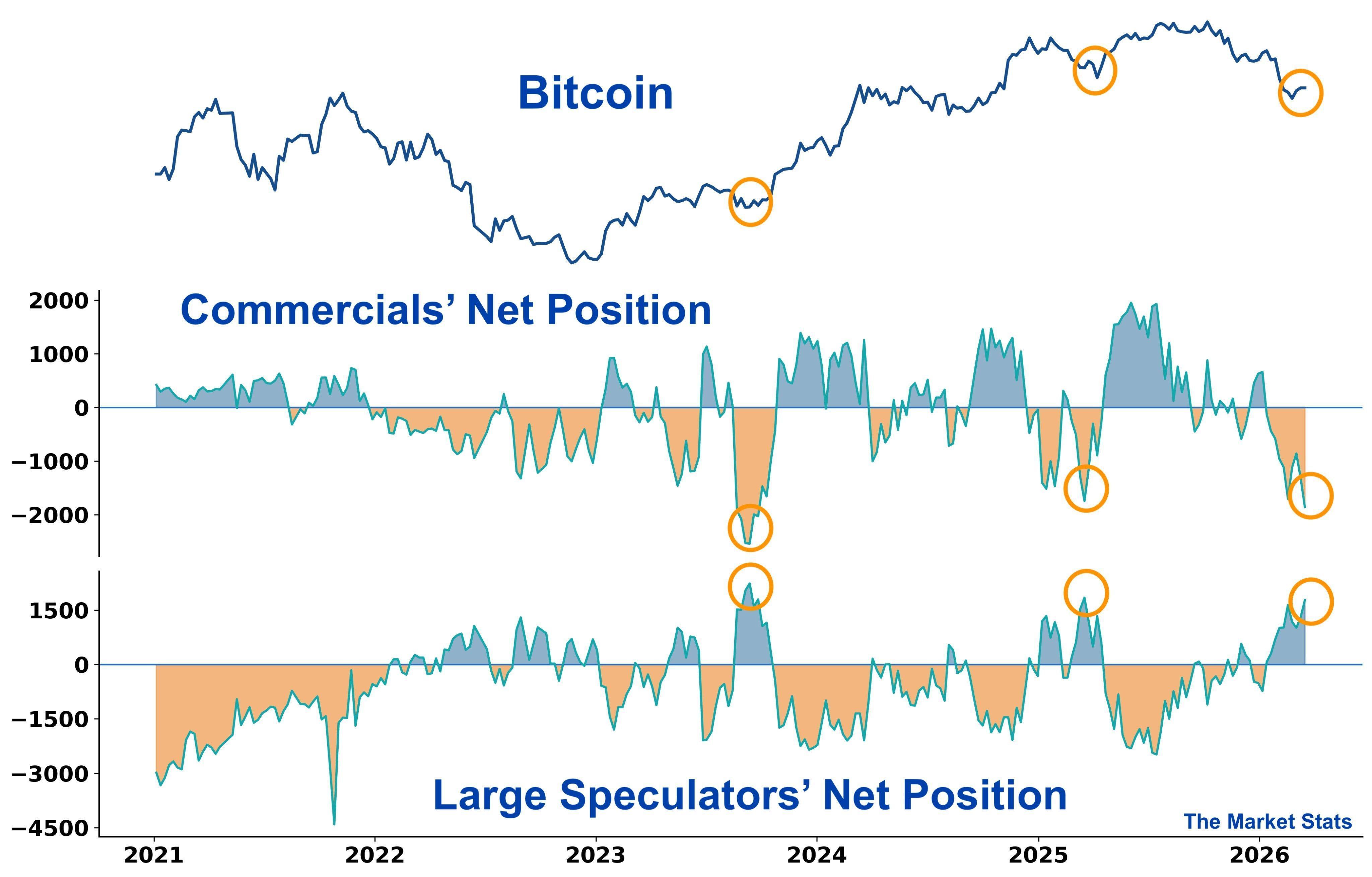 Bitcoin investor positioning. Source: Michaël Van de Poppe/X
Disclaimer: The content of this article solely reflects the author's opinion and does not represent the platform in any capacity. This article is not intended to serve as a reference for making investment decisions.
You may also like
AI Trading Faces Setbacks Again as Investors Rediscover the Safe-Haven Value of US Treasuries
Investors are increasingly questioning the previously widespread Wall Street trading logic: going long on large technology stocks while shorting defensive markets pressured by concerns that AI-related spending will reignite inflation.
AI "stumbles," US Treasuries "feast"! Global "Capital Battle"—the market gives its answer
AI giants' massive capital expenditures have triggered a market trust crisis, with the Nasdaq recording its worst two-week performance in recent years, and a basket of AI-related stocks plunging 4.9% in a single week. Meanwhile, US Treasury bonds have made a strong reversal, with the 10-year yield falling below 5% and bond ETFs attracting $58 billion in a single month. The expansion of AI and government deficit financing are simultaneously competing for limited capital, fundamentally rewriting the logic of the era of cheap capital.
Nearly monopolizing "Hormuz oil shipping"! This Korean shipowner becomes "overnight rich," previously stockpiling 73 second-hand supertankers worth $6 billion
In September this year, Korea's HMM (Hyundai Merchant Marine) alone accounted for nearly 40% of the oil transit volume through the Strait of Hormuz, and in the first 10 days of October, this figure surpassed 50%, with the single-month oil transport volume exceeding the combined total of shipowners from Saudi Arabia, Kuwait, and the UAE. By engaging in high-premium "relay trade," it has made enormous profits from sky-high charter rates. The driving force behind this is a stake endorsement from the world's largest shipowner, MSC. Currently, its fleet consists of 162 vessels, making it the world's largest oil tanker operator.

Gold falls below $4,000, yen rises to resistance level, market becomes picky about 'safe-haven assets'
Gold fell below $4,000 this week, hitting a three-month low, diverging from US Treasury yields despite heightened global risk aversion. Analysts attribute gold's weakness to the fading speculative sentiment over the past year and rising expectations of interest rate hikes. Meanwhile, the yen, with its 40% undervaluation, has become Goldman Sachs' top choice as a hedging tool, quietly reshaping the landscape of traditional safe-haven assets.
Crypto prices
More


