
New Zealand Dollar rebounds against USD as markets price in further RBNZ rate hikes

NZD/USD trades around 0.5880 on Thursday at the time of writing, up 0.28% on the day after ending a three-day decline. The pair's rebound is supported by expectations of a more restrictive monetary policy in New Zealand, although caution remains warranted due to ongoing tensions in the Middle East.
The New Zealand Dollar (NZD) continues to draw support from recent comments by Reserve Bank of New Zealand (RBNZ) Governor Anna Breman, who indicated that the Official Cash Rate could be increased sooner and by more than previously expected. The central bank believes that inflation risks linked to the Middle East conflict, rising input costs and weak growth justify a cautious approach. Markets are now pricing in multiple rate hikes throughout the year.
However, the Kiwi's upside potential may remain limited as investors continue to favour safe-haven assets. Iranian Foreign Minister Abbas Araghchi said on Wednesday that no tangible progress had been made in negotiations aimed at ending the hostilities. He also warned that any Israeli attack on Beirut could trigger a full-scale resumption of the conflict.
At the same time, United States (US) President Donald Trump stated that Washington was in the middle of final negotiations to end the war with Iran. Despite these remarks, markets remain cautious due to the lack of concrete progress and the ongoing exchange of missile and drone strikes among the parties involved.
The US Dollar (USD) remains under pressure, with the US Dollar Index (DXY) trading lower around 99.20 as investors await upcoming US economic data releases. Initial Jobless Claims are due on Thursday ahead of the May Nonfarm Payrolls (NFP) report on Friday.
According to market expectations, the US economy is projected to have added 85K jobs in May, while the Unemployment Rate is expected to remain unchanged at 4.3%. These figures could influence expectations regarding the future policy path of the Federal Reserve (Fed) and are likely to be the main catalyst for NZD/USD in the near term.
Disclaimer: The content of this article solely reflects the author's opinion and does not represent the platform in any capacity. This article is not intended to serve as a reference for making investment decisions.
You may also like
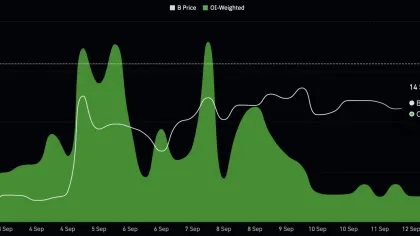
BUILDon rallies as holders hit record 87,320 – Can B extend its gains?
Goldman Sachs Hedge Fund Chief: "Zero-Day Options" Suppress U.S. Stock Volatility, Technology and Energy Remain the Best Choices
The S&P 500 has experienced intraday fluctuations of less than 1% for 27 consecutive trading days, marking the longest period of low volatility since the pandemic. Goldman Sachs warns that this "calm" is the result of zero-day options strategies forcibly locking in the market, and once a catalyst emerges, the compressed volatility energy will be released all at once. Meanwhile, expectations for a rate hike in September are rising, market sentiment has dropped to its lowest point of the year, and fiscal sustainability risks loom large—is this pot of heating water going to boil for much longer?
Balancer eyes wind-down after restructuring fails to revive revenue
Is a new wave of sell-offs approaching? The ultimate rival of the AI bull market emerges—The "global anchor of asset pricing" breaks through the 5% super threshold
After the 10-year US Treasury yield breaks back above the critical 5% mark, it is more likely to usher in a period of high-level tug-of-war and accelerated asset differentiation. Especially before energy shocks and the significantly eased large-scale expansion of the US fiscal deficit, the conditions to quickly replicate the sharp yield decline seen at the end of 2023 are not yet fully in place.

Crypto prices
More


