
Bernstein says bitcoin's 'boring cycle' doesn't undermine store-of-value thesis despite $2.6B ETF outflows in 2026

The long-term store-of-value thesis for bitcoin remains unchanged despite a slower capital allocation cycle and a reduction in retail momentum this year, according to analysts at Bernstein.
The research and brokerage firm pointed to bitcoin net inflows from exchange-traded funds and treasury companies totaling about $12 billion so far in 2026, compared with roughly $60 billion in 2025, with ETFs accounting for $2.6 billion in net outflows over the same period, implying inflows have been driven by treasury companies.
"In a market completely dominated by retail's obsession with AI, mere $2.6 billion outflows YTD are almost encouraging," the analysts led by Gautam Chhugani wrote in a note to clients on Monday. "Bitcoin being boring this cycle should not be held against it and does not take away from the long term 'store of value' thesis, in our view."
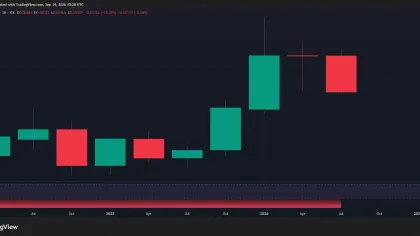
Bitcoin rose about 1% over the past 24 hours to trade above $63,000 early Monday, but remains roughly 50% below its all-time high of $126,000 set in October last year.
The benchmark cryptocurrency fell to its lowest level in more than two months over the past week, pressured by continued outflows from spot Bitcoin ETFs, Strategy’s $2.5 million BTC sale, and renewed macro uncertainty linked to escalating U.S.–Iran tensions.
Bitcoin’s institutional base case
According to Bernstein, the institutional base for bitcoin has expanded across wealth management platforms, broker-dealers, private banks, pension funds, and sovereign wealth funds. Glassnode data cited in the note shows that 61% of the circulating bitcoin supply has remained inactive for more than one year.
Corporate treasury accumulation has provided the primary offset to ETF liquidations, led by Strategy. The company has raised $7.5 billion through its STRC preferred product in 2026 to fund the acquisition of approximately 100,000 BTC, the analysts noted. Strategy's $53 billion bitcoin position covers the STRC's $1.2 billion annual cash dividend by more than 30 times, they added.
Retail investors have crowded into AI this cycle, the analysts said, leaving bitcoin with a "healthier market structure" of diversified ownership across corporate treasuries, wealth platforms, pension funds, and sovereign funds.
While bitcoin flows have moderated, capital has migrated toward digital asset infrastructure linked to real-world asset tokenization, with platforms like Hyperliquid seeing elevated volume growth in tokenized equities and commodities markets, the analysts added.
Gautam Chhugani maintains long positions in various cryptocurrencies. Bernstein or its affiliates may receive compensation for investment banking services from Strategy.
Disclaimer: The content of this article solely reflects the author's opinion and does not represent the platform in any capacity. This article is not intended to serve as a reference for making investment decisions.
You may also like
Trump Opposes AI "Guardrails": Congress Pushes Legislation for Restrictions, Deepening Bipartisan Divide
U.S. President Trump opposes setting guardrails for artificial intelligence (AI), putting him at odds with a growing number of bipartisan lawmakers. As the midterm elections approach, voters' concerns about AI safety have intensified their doubts about this technology.

Is the AI server a feast or just a valuation bubble? Evercore ISI downgrades HPE.US to "market perform," share price plummets over 10%.
Evercore ISI downgraded Hewlett Packard Enterprise (HPE.US) from "Outperform" to "In-line," citing that following a significant increase in stock price, the risk-reward ratio has become more balanced.

UK weighs tokenized gold reforms – Here’s why the timing matters for crypto
Crypto prices
More


