

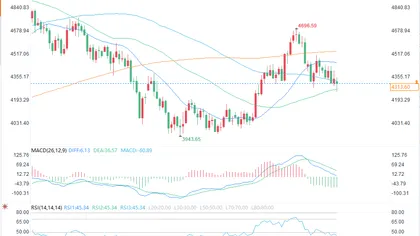
Stellar’s native token XLM has triggered a closely watched technical signal in its short-term chart. A death cross formed after the 50-period moving average on the two-hour chart fell below the 200-period moving average. The market is now focused on whether the price will rebound or see further declines after this formation.
XLM loses 18 percent in a week after death cross
By:Cointurk
Bitget offers one-stop trading for cryptocurrencies, stocks, and gold. Trade now!
A welcome pack worth 6200 USDT for new users! Sign up now!
Momentum fades after strong surge
This development comes on the heels of a dramatic rally that XLM experienced at the end of May. The token soared by 103 percent following reports that DTCC, a major infrastructure provider at the core of Wall Street settlements and custody, plans to expand on the Stellar blockchain.
The confirmation of a short-term death cross for XLM came as the 50-period moving average on the two-hour chart dropped below the 200-period moving average.
However, these gains proved short-lived. After reaching $0.297 on May 30, XLM pulled back, with selling pressure emerging on the short-term charts. As of press time, the token had dropped 6 percent in the past 24 hours to $0.184, bringing its weekly loss to 18 percent. Weakness across the broader crypto market ahead of key economic data contributed to the retreat.
Key support and resistance levels
As XLM declined, Stellar also slipped below the $0.188 mark, which lines up with the 200-day moving average on the daily chart. The next critical level highlighted by technical analysis is the daily 50-period moving average. If XLM fails to stay above this threshold, the price could move toward the lower band of its current trading range.
Conversely, a sustained recovery above $0.188 could open the door for XLM to test $0.21. Clearing this level may bring the $0.27 to $0.29 range back into focus for the market.
Protocol 27 update schedule clarified
Stellar developers have also shared key dates for the network’s upcoming Protocol 27 upgrade. The stable release of Stellar Core went live on June 5. The RPC and Galexie versions are expected on June 10. SDK releases are slated for between June 5 and June 11, while the Horizon update is scheduled for June 12. The protocol will roll out to the testnet on June 18, and the mainnet upgrade vote is planned for July 8.
One of the highlights of the update is the addition of delegated authentication for private accounts. Known as CAP-0071-01, this feature enables smart contract-based accounts to delegate authentication logic to another address.
Mini glossary: Delegated authentication allows an account to transfer transaction approval authority to another address under specified rules. This technical structure supports more flexible security and authorization scenarios, especially in smart contract accounts.
Push for quantum-secure architecture
Developers have also announced the Quantum Preparedness Plan, aiming to transition the Stellar network to quantum-secure cryptography. The roadmap anticipates that by the end of 2027, every Stellar account will be able to add a quantum-safe signer through a native protocol upgrade while keeping the same address and transaction history intact.
Institutional wallets are expected to adopt quantum-safe signing mechanisms via Soroban contract accounts by 2026. This timeline signals an active period for the network, with both technical updates and long-term security planning underway.
0
0
Disclaimer: The content of this article solely reflects the author's opinion and does not represent the platform in any capacity. This article is not intended to serve as a reference for making investment decisions.
Understand the market, then trade.
Bitget offers one-stop trading for cryptocurrencies, stocks, and gold.
Trade now!
You may also like
BTC, ETH, XRP, ZEC consolidate near highs as breakout levels approach
Cointurk•2026/09/15 00:39
As chip stocks plummet, "cybersecurity software" surges across the board, CrowdStrike and Palo Alto Networks hit new highs
CrowdStrike surged 13.8% in a single day to a record high, while Palo Alto Networks soared 13%. The software ETF outperformed the semiconductor ETF by more than 10 percentage points in a single day, marking the largest gap in history. Analysts believe that regardless of the pace of AI development, security demand will only continue to rise. Capital is accelerating its rotation from computing hardware to security software, with segments such as identity management and data governance expected to benefit first.
华尔街见闻•2026/09/15 00:16
Altman can afford to wait, but Masayoshi Son can't: OpenAI will not go public this year, exposing a $20 billion gap and a credit weakness for SoftBank.
OpenAI has postponed its public listing, putting its largest external shareholder, SoftBank, in a liquidity crisis. This week, SoftBank is conducting a roadshow in New York, seeking to issue $10-20 billion in bonds to repay the $40 billion bridge loan previously borrowed to increase its investment in OpenAI. According to Bloomberg estimates, SoftBank faces a funding gap of at least $20 billion, and the yield on its existing U.S. dollar bonds has already exceeded 8.5%, with pricing approaching junk status.
华尔街见闻•2026/09/15 00:16
Meeting postponed, gold price drops rapidly
汇通财经•2026/09/14 23:36
Crypto prices
More
Bitcoin
BTC
$77,945.41
+1.51%

Ethereum
ETH
$2,514.85
+1.22%

Tether USDt
USDT
$0.9998
+0.01%

BNB
BNB
$718.98
-0.02%

XRP
XRP
$1.42
+5.45%

USDC
USDC
$0.9999
-0.00%

Solana
SOL
$102.59
+2.96%

TRON
TRX
$0.3374
-0.36%

Hyperliquid
HYPE
$80.32
+3.17%

Zcash
ZEC
$1,162.55
+9.48%
How to buy BTC
Bitget lists BTC – Buy or sell BTC quickly on Bitget!
Trade now
Become a trader now?A welcome pack worth 6200 USDT for new users!
Sign up now