
Iran escalates tensions in the Gulf with attacks on Bahrain, Kuwait, and Jordan following US action.

- Iran responds to US attacks in the Strait of Hormuz.
- Bahrain, Kuwait, and Jordan activate defense systems.
- Geopolitical tension puts pressure on global markets and Bitcoin.
The conflict between Iran and the United States took a new turn on Wednesday after Tehran launched attacks against countries in the Persian Gulf, in response to the American military offensive carried out hours earlier against Iranian facilities near the Strait of Hormuz.
According to Jordanian authorities, five Iranian missiles were intercepted by the country's defense system. At the same time, Bahrain activated emergency s and Kuwait mobilized its air defenses to neutralize what it described as "hostile aerial targets."
The escalation comes after US forces conducted a series of attacks against Iranian military positions. According to the US Central Command (Centcom), the operation was carried out after the downing of an AH-64 Apache helicopter that was patrolling the Strait of Hormuz region.
In a statement released on the social network X, Centcom stated that the attacks constituted an act of self-defense. According to the American military, the action targeted air defense systems, ground control stations, and surveillance radars located near the important maritime route.
The incident raises further doubts about the survival of the ceasefire between Washington and Tehran. Although the agreement formally remains in effect, the clashes recorded in recent months increase the distance between the parties and reduce the prospects for a diplomatic solution in the short term.
The current president of the United States, Donald Trump, declared that a military response was necessary after the incident involving the American helicopter. In a post on Truth Social, he stated that the two military personnel involved in the episode survived without injury.
“The two pilots involved in the attack are safe and unharmed,” Trump wrote. “However, the United States must necessarily respond to this attack.”
On the Iranian side, the Tasnim news agency reported that the country would respond to American military actions. Despite this, Tehran has not officially claimed responsibility for the downing of the aircraft. The state broadcaster IRIB stated that no offensive operations had been carried out in the strait in the 24 hours prior to the incident.
Prior to the US bombings, Iranian Foreign Minister Abbas Araghchi had signaled a firm stance against the foreign military presence in the region.
"Foreign forces near our territory are at constant risk due to human error, accidents, or potentially being caught in crossfire," Araghchi said.
“To reduce the risk, the best solution is for them to leave,” said Araghchi, adding: “We prefer the language of diplomacy, but we also speak other languages.”
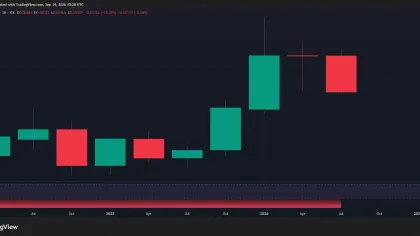
Tensions are also reverberating in global financial markets. Increased geopolitical risk in the Middle East is keeping investors attentive to the potential impacts on oil, international trade, and risk assets, including Bitcoin and other cryptocurrencies.
Disclaimer: The content of this article solely reflects the author's opinion and does not represent the platform in any capacity. This article is not intended to serve as a reference for making investment decisions.
You may also like
Trump Opposes AI "Guardrails": Congress Pushes Legislation for Restrictions, Deepening Bipartisan Divide
U.S. President Trump opposes setting guardrails for artificial intelligence (AI), putting him at odds with a growing number of bipartisan lawmakers. As the midterm elections approach, voters' concerns about AI safety have intensified their doubts about this technology.

Is the AI server a feast or just a valuation bubble? Evercore ISI downgrades HPE.US to "market perform," share price plummets over 10%.
Evercore ISI downgraded Hewlett Packard Enterprise (HPE.US) from "Outperform" to "In-line," citing that following a significant increase in stock price, the risk-reward ratio has become more balanced.

UK weighs tokenized gold reforms – Here’s why the timing matters for crypto
Crypto prices
More


