
Machine intelligence exposes flaw in Zcash protocol, says creator Eli Ben-Sasson

A critical vulnerability in Zcash’s privacy protocol sat undetected for four years. It took an AI model to finally spot it.
Eli Ben-Sasson, co-founder of Zcash, revealed that researcher Taylor Hornby, working with Anthropic’s Claude Opus 4.8, identified a soundness bug in the Orchard shielded payment circuit on May 29. The flaw could have allowed unlimited counterfeiting of ZEC, the protocol’s native token, without detection.
What went wrong, and how AI caught it
The bug traced back to an under-constrained circuit element within Zcash’s Orchard zero-knowledge proof system. That element allowed arbitrary false inputs to be fed into elliptic curve multiplication operations, effectively bypassing the mathematical checks that are supposed to guarantee transaction integrity.
Orchard has been live since its activation in 2022. That means this vulnerability existed in production for roughly four years, surviving multiple rounds of human auditing.
Hornby’s use of Claude Opus 4.8 as part of a targeted audit represents something genuinely new. Ben-Sasson endorsed this approach, calling for broader adoption of AI-assisted discovery and formal verification methods across the protocol.
The emergency response
Once the bug was confirmed, the Zcash development community moved fast. An emergency soft fork went live on June 1, just three days after discovery. A full hard fork, designated NU6.2, followed on June 3, completing the patch.
No evidence of mainnet exploitation was found. The ZEC supply cap remained intact, and forensic analysis confirmed no one had abused the flaw before the patch landed.
Market fallout and investor reaction
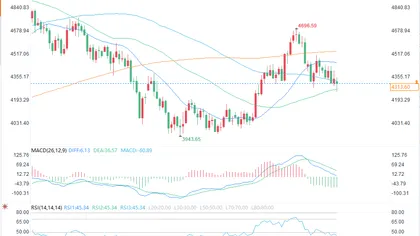
ZEC dropped between 30% and 48% following the disclosure, as traders processed the implications of a four-year-old bug capable of unlimited counterfeiting.
For context, Zcash launched in 2016 and has undergone multiple network upgrades and third-party security reviews since then. Orchard itself was introduced as an improvement over the earlier Sapling circuit, designed to offer better privacy and efficiency.
Ben-Sasson’s advocacy for formal verification — using mathematical proofs to guarantee that code behaves as intended — is the right instinct. In the interim, AI-assisted auditing may be the most practical layer of defense available.
Disclaimer: The content of this article solely reflects the author's opinion and does not represent the platform in any capacity. This article is not intended to serve as a reference for making investment decisions.
You may also like
As chip stocks plummet, "cybersecurity software" surges across the board, CrowdStrike and Palo Alto Networks hit new highs
CrowdStrike surged 13.8% in a single day to a record high, while Palo Alto Networks soared 13%. The software ETF outperformed the semiconductor ETF by more than 10 percentage points in a single day, marking the largest gap in history. Analysts believe that regardless of the pace of AI development, security demand will only continue to rise. Capital is accelerating its rotation from computing hardware to security software, with segments such as identity management and data governance expected to benefit first.
Altman can afford to wait, but Masayoshi Son can't: OpenAI will not go public this year, exposing a $20 billion gap and a credit weakness for SoftBank.
OpenAI has postponed its public listing, putting its largest external shareholder, SoftBank, in a liquidity crisis. This week, SoftBank is conducting a roadshow in New York, seeking to issue $10-20 billion in bonds to repay the $40 billion bridge loan previously borrowed to increase its investment in OpenAI. According to Bloomberg estimates, SoftBank faces a funding gap of at least $20 billion, and the yield on its existing U.S. dollar bonds has already exceeded 8.5%, with pricing approaching junk status.
Meeting postponed, gold price drops rapidly
The "first metaverse stock" bets on "AI-powered game creation"! Roblox (RBLX.US) competes for creator economy dividends, shares surge nearly 13%
On September 11, after Roblox announced new tools for game developers and features for players at its developer conference, the company's stock price rose by more than 12% on Monday.

Crypto prices
More


