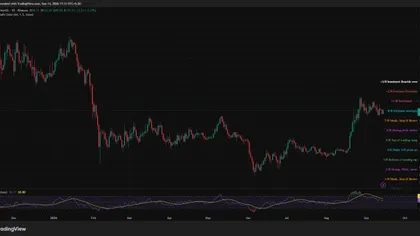
Recently, the gold price has shown a notable rebound. As of the time of publication by Jiemian News on June 17, spot gold reported at $4,339.59/oz, up 0.19%. On June 10, spot gold fell to a recent low of $4,023.1/oz, followed by a significant rebound, with an increase of 7.87%.
Facing the gold price
"
roller-coaster
"
market volatility and the resulting risk exposures,
recently, banks
have been intensively upgrading the risk control systems of their precious metals businesses. They have tightened their business boundaries on multiple fronts, such as raising margin ratios, implementing dynamic quota management, adjusting business thresholds and fee rates, as well as tightening up trading limit restrictions, to prevent client forced liquidation risk and protect against their own operational losses.
Since June, in terms of margin requirements, for delegated individual precious metals deferred trading (such as Au (T+D)), ICBC and CCB
have recently
raised the margin from 100% to 120%, and ABC has followed suit. Previously, ICBC, ABC, and CCB had lifted the margin ratio for individual precious metals deferred trading from 80% to 100%.
Apart from raising the margin ratio,
dynamic quotas are becoming a normalized risk management tool. ICBC implements dynamic quota management for its 'Ruyi Gold Accumulation' business on weekends and public holidays, while CCB
applies
dynamic trading quota management to "
CCB Gold
";
after the quota is used up for the day, further purchases cannot be made.
It is worth noting that as gold prices fall back from high levels, some banks have made reverse adjustments to the entry barriers and risk ratings of their gold accumulation business, reflecting differentiated and refined risk management strategies.
Recently,
ICBC adjusted
the product risk level of its 'Ruyi Gold Accumulation'
service from R3 to R2—medium to low risk, with the corresponding customer risk tolerance rating adjusted to C2—prudent and above. This relaxation is in contrast to the tighter measures implemented in January. At that time, due to sharp fluctuations in international gold prices, many banks collectively controlled risks by increasing minimum purchase amounts, raising risk ratings, and restricting certain clients’ trading permissions.
On May 25
,
China Construction Bank (CCB) issued a new version of the Personal Gold Accumulation Service Client Rights and Risk Disclosure Statement, clarifying adjustments to the product risk level name and client risk tolerance level name. Before and after the adjustment, the risk level of personal gold accumulation business remains R4, but the name changes from
"
relatively high risk
"
to
"
medium-high risk
"
.
Since the beginning of this year, gold price volatility has intensified. At the start of 2026, gold repeatedly reached new highs. However, after suddenly breaking through the historical high of $5,598/oz, gold prices abruptly pulled back—on January 30, spot gold prices plunged by over 12% in a single day, dropping below $4,700/oz in trading, marking the biggest one-day drop in 40 years.
In February, market sentiment quickly recovered. On February 4, the London spot gold price returned above $5,050, and on February 13, further rebounded to $5,042, though intraday saw many "roller-coaster" style plunges. Since March, gold prices have generally been in a volatile downtrend. On June 11, spot gold fell below the $4,100 mark.
"
The long-term drivers supporting gold remain. While central bank demand is intermittent, the trend is unchanged; therefore, price corrections offer good buying opportunities.
"
Kuang Zheng, Chief Investment Officer for Private Banking & Wealth Management, HSBC China, told Jiemian News.
Overall,
foreign institutions are bearish on or lowering
gold
price targets in the short term due to a strong dollar, elevated US bond yields, and expectations for eased geopolitical tensions, but mid- and long-term expectations remain optimistic, thanks to central bank gold purchases and de-dollarization providing structural support.
Among them,
Citibank
showed a sharp change in attitude towards gold prices:
on June 12, it lowered its 3-month gold price target to $4,000/oz, but then quickly reversed on June 16, raising the 3-month target to $4,500/oz, viewing the previous drop as a
"
price reset
"
rather than the end of the bull market, and maintaining a bullish forecast of $5,000 for the next 6–12 months.
Morgan Stanley sharply lowered its expectations, cutting its 2026 H2 target from $5,700 to $5,200, citing cooled Fed rate cut expectations and high real rates, which have compressed valuations for non-interest-bearing assets.
Meanwhile, Goldman Sachs
firmly maintains its year-end 2026 gold price target of $5,400/oz, believing central bank buying and medium-term rate cut expectations support further upside.
Although JP Morgan has lowered its short-term annual average price forecasts, it still maintains a positive year-end target, anticipating gold may reach $6,000 by the end of 2026 and that the 2027 average price could rise further to $6,263, viewing the current sluggishness as only a phase of consolidation.