
Before the market opens, a thought-provoking report from foreign media

Source: Wall Street Intelligence Circle
Media deliberately “raises the bar.”
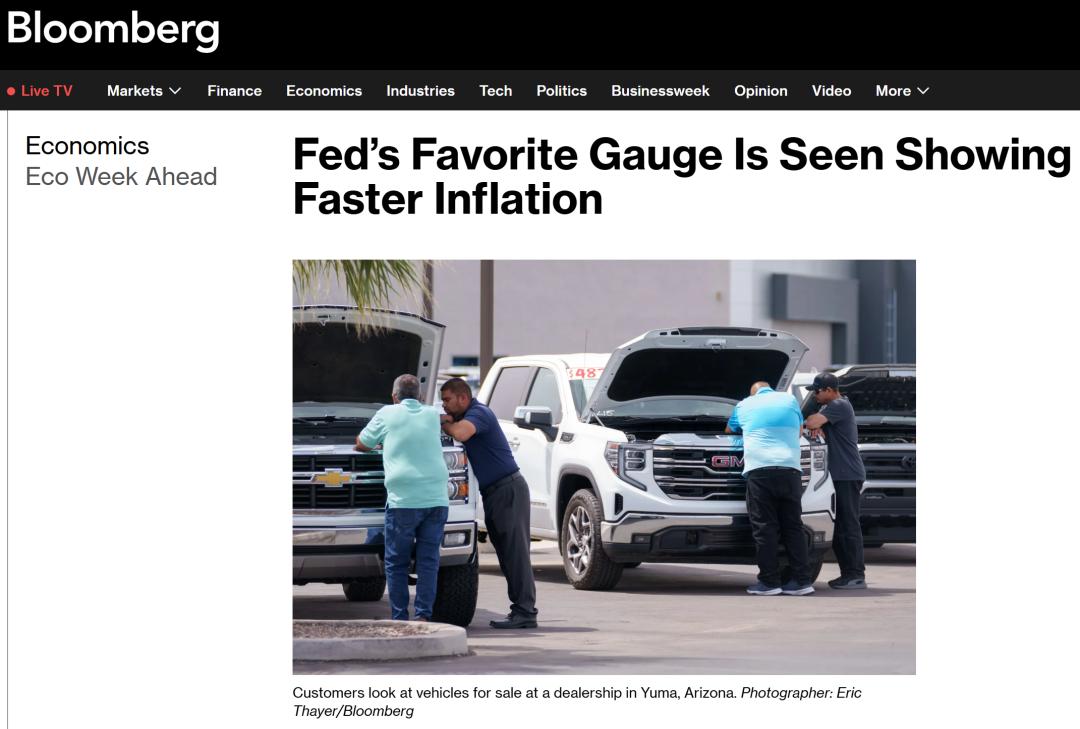
Before Monday’s market open, Bloomberg published an article titled “Fed’s Favorite Gauge Shows Inflation Accelerating” (title sets the tone directly). The Core PCE Price Index for May, to be released this Thursday, is expected to show both month-on-month and year-on-year increases, which could intensify the need for rate hikes.
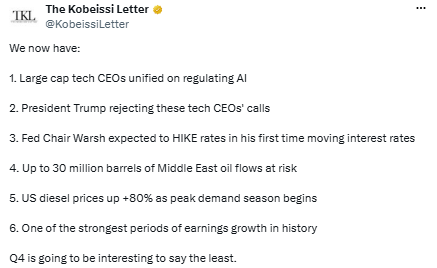
First, this data is the Fed’s most closely watched inflation indicator (to be released next Thursday) and will undoubtedly be the most anticipated event of the week. The new Chair, Walsh, scared the market on his very first appearance, making the market more sensitive to economic data going forward. In the coming two months, the true direction of the global market might not be determined by the Middle East or AI, but by one seemingly dull figure: PCE. This is because it decides a much bigger question—whether 2026 will be a year of “renewed rate hikes.”
Second, according to Bloomberg’s forecast, the PCE will continue to rise month-on-month in May, and the year-on-year growth rate will pick up again. If this turns out to be the case, then the data will be of significant importance. For Wall Street traders, Bloomberg itself is a part of the expectation formation mechanism—before the official release of the data, traders engage in a round of hype, first trading on the “expected bad news.” What the market really trades may not be the data itself, but expectations. When everyone knows the bad news, the bad news itself becomes less scary.
It is worth noting that prior to the data’s release, the media have raised expectations, making it less likely that the actual data will surpass those expectations. As a result, the shock to the market once the data is released will be much smaller—this report is helping the market “digest the negative” in advance.
The PCE next week may not be as important as people imagine; what truly deserves vigilance is the next two months, due to lagged effects from oil price shocks. The data released for June may only be the start. It will be the July and August figures that truly reveal whether rising energy prices have fully spread to the service sector, rent, and wages.
Next Thursday is not the answer, but a beginning.
Disclaimer: The content of this article solely reflects the author's opinion and does not represent the platform in any capacity. This article is not intended to serve as a reference for making investment decisions.
You may also like
Strive lifts bitcoin holdings to 25,000 BTC after $36 million purchase
Fed Set to Raise Rates This Week, Signal Another Hike Later in 2026, UBS Says
Vitalik Buterin’s AI warning could become crypto’s next bearish catalyst in Q4
Bitcoin rebounds above $77,500 as MVRV momentum oscillator signals bullish shift
Crypto prices
More


