
Opera's MiniPay launches Visa debit card for stablecoin spending

MiniPay has launched a Visa debit card that allows users in selected markets across Africa, Latin America, Southeast Asia and Europe to make purchases using stablecoins.
According to Tuesday's announcement, the card is powered by Gnosis Pay's infrastructure, enabling users to pay directly from their MiniPay wallets while merchants receive local currency through Visa's network.
MiniPay said it has grown to more than 16 million activated wallets across 65 countries since launching in 2023, with much of its adoption concentrated in Africa and other emerging markets.
The card can be added to Apple Pay and Google Pay, while eligible users in some markets will receive cashback rewards denominated in stablecoins USDt and USDC, as well as Tether Gold.
MiniPay is a stablecoin wallet owned by Opera, the Nasdaq-listed software company best known for its web browser. Built on the Celo blockchain, the wallet focuses on payments, transfers and savings using dollar-backed stablecoins.
Stablecoins see adoption in emerging markets
The launch comes as stablecoins gain traction in emerging markets. In Latin America, a recent Bitso report found that dollar-backed stablecoins overtook Bitcoin as the most-purchased crypto asset among the exchange's users in 2025, with USDC and USDT accounting for a combined 40% of purchases.
Adoption is also accelerating among businesses in the region. Bitso reported that stablecoin transaction volumes among its institutional clients rose 81% year-on-year in the first half of 2026, while banks and licensed payment providers accounted for more than 60% of new business customers added during the period.
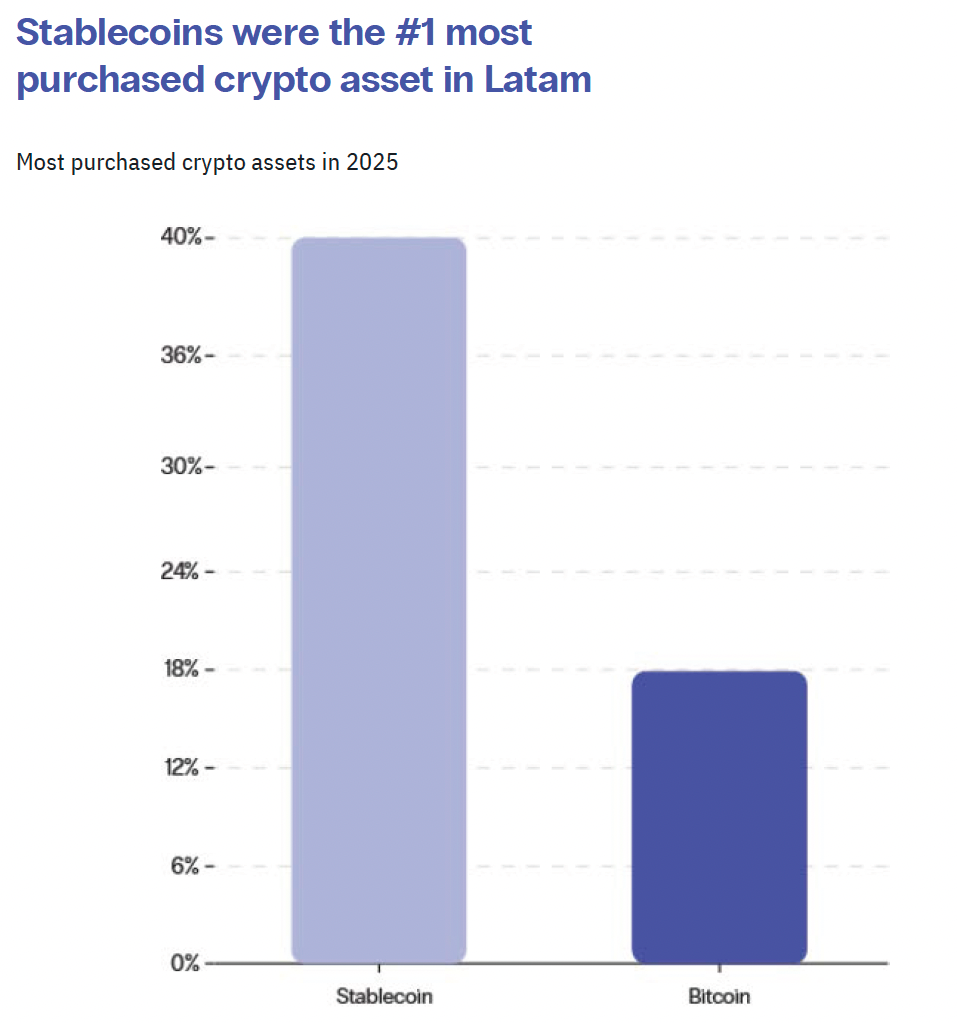
Bitso's "Stablecoin Landscape in Latin America report for the first half of 2026." Source: Bitso
Africa has also emerged as a key growth market for stablecoin issuers seeking to expand payment and remittance services.
In March, Circle partnered with African fintech Sasai to expand USDC-powered cross-border payments across the region. The partnership integrates USDC into Sasai's existing payments infrastructure, which supports cross-border transfers, enterprise payments and consumer wallets.
Last week, Ripple acquired a stake in Flutterwave, a $3.3 billion fintech operating in 35 African countries, with plans to integrate RLUSD and other blockchain-based payment tools.
The growth in stablecoin payments has coincided with a broader expansion of the market. According to DefiLlama data, the total value of stablecoins in circulation has risen to roughly $315 billion, up from about $250 billion a year ago.
Disclaimer: The content of this article solely reflects the author's opinion and does not represent the platform in any capacity. This article is not intended to serve as a reference for making investment decisions.
You may also like
Eight Highlights of Anthropic IPO Prospectus: Astonishing Growth, but Risks are Obvious
The Anthropic prospectus reveals several highlights: a large-scale enterprise customer base with over 1,900 customers generating more than one million dollars in revenue; as of June 2026, revenue has increased by 1,368% year over year, far surpassing the growth rate of computing costs; positive operating cash flow; and all seven co-founders remain with the company. The company also acknowledges risks, including concentrated supply from TSMC and potential memory chip shortages as significant concerns. October ARR data will be additionally disclosed in a revised version of the document.

Selling Chips, Leasing, Providing Residual Value Support: Broadcom (AVGO.US) Teams Up with Wall Street's Four Giants to Raise $63 Billion to "Inject Funds" for Anthropic's Chip Procurement
Broadcom has reached a $63 billion deal with Bank of America, Blackstone Group, Citigroup, and Morgan Stanley to provide funding for the purchase of chips for AI model developer Anthropic PBC. The transaction is conducted through a newly established special purpose company, which has secured financial commitments from these firms to purchase Broadcom chips and lease them to Anthropic.
The Biggest Winner in the AI Fundraising Frenzy: Goldman Sachs Remains the King of Wall Street
In a single day, three AI mega financing deals totaling over $210 billion took place, and Goldman Sachs’ name appeared in each one: co-leading Meta’s $95 billion stock offering, exclusively overseeing the $40 billion chip financing structure for SpaceX, and serving as the lead bookrunner for Anthropic’s IPO. The AI financing supercycle is reshaping the competitive landscape on Wall Street, with Goldman Sachs taking the lead in turning relationship advantages into real money.
Anthropic may secure the "largest IPO in the stock market," but may not achieve "investment grade in the bond market"
The prospectus reveals that the company is already burdened with $6.2 billion in current liabilities, and its uninitiated lease commitments have soared from $50 billion to $321 billion, with an additional $77 billion in hidden borrowing options. The off-balance-sheet "chip financing" structure it has built in partnership with Broadcom is considered a potential counterparty risk due to circular trading. In comparison, SpaceX made a clear commitment to an investment-grade credit rating and successfully completed a $25 billion bond issuance. Anthropic, however, has barely mentioned an investment-grade credit rating, making it difficult for bond market buyers to price its offerings.
Crypto prices
More


