
This morning, the market panicked for only 20 minutes

—The “dead calm” after 20 minutes into the trading session is not because the market lacks direction, but rather because capital has chosen to keep all chips steady, holding back until Wednesday’s Waller speech and Thursday’s Nonfarm Payrolls.
There were minor surprises when global markets opened on Monday:
- Oil prices opened with a gap to the upside, then quickly gave back some gains;
- The dollar index opened lower, then promptly recovered its losses;
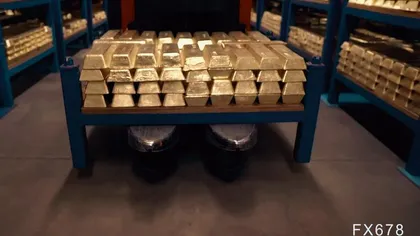
- Gold prices opened lower and then continued to decline rapidly;
- US stock futures performed best, jumping at the open and continuing higher, testing the intraday highs seen last Friday.
First, this time there is no apparent logic to the market moves; it’s not the familiar “escalating conflict leads to higher oil, everything else drops.” Oil prices gapped up at the open due to tit-for-tat retaliatory actions between the US and Iran over the weekend. On the other hand, US stock futures rose because both sides agreed to pause military actions and will meet on Tuesday in Doha (according to Axios citing unnamed US officials).
Second, all the volatility was concentrated in the first 20 minutes after the opening, after which the market sank into a state of dead calm. In just 20 minutes, both bulls and bears quickly priced in both “the weekend conflict” and “Axios’s exclusive report about the Doha meeting.” For the rest of the session, the market is likely to evolve along the lines of “emotional recovery dominates, awaiting Tuesday’s Doha meeting.”
However, what will really impact the market still depends on—economic data and Federal Reserve officials’ remarks. This Wednesday (21:30 GMT+8), Fed Chair Waller will deliver his second speech in office at the ECB Forum, and on Thursday (20:30 GMT+8), the US will release Nonfarm Payrolls data. Based on timing, by Waller’s Wednesday speech, the Fed will have already seen the initial Nonfarm data for Thursday evening. According to Powell’s “pre-emptive stability” logic, if the Nonfarm report is expected to trigger market declines, the Fed would deliver market-friendly commentary the day before (to cushion the blow). The opposite also holds. But now it’s Waller calling the shots; the first time, he used hawkish communication to shift market expectations. For the second time, he will need to answer whether that hawkish stance was a one-off or signals a new communication framework. (Wall Street Intelligence Community)
Disclaimer: The content of this article solely reflects the author's opinion and does not represent the platform in any capacity. This article is not intended to serve as a reference for making investment decisions.
You may also like
As global tungsten prices surge, U.S. mining company Almonty Industries (ALM.US) quickly acquires a tungsten mine in Rwanda to ease supply shortages.
U.S. mining company Almonty Industries has signed a tungsten mining agreement in Rwanda, expanding Western supply.

Novo Nordisk (NVO.US) renamed to "Novo" for a fresh start—Can multi-line breakthroughs dispel the shadow over its stock price?
Danish pharmaceutical company Novo Nordisk (NVO.US) has launched a comprehensive rebranding centered around the shorter name "Novo." The company will use "Novo" in daily brand promotion, but its legal name will remain Novo Nordisk A/S.

High interest rates are not the "end" of US stocks? Is profitability the real key?
JPMorgan believes that profit growth is the key factor determining the resilience of U.S. stock valuations. Data since 1950 shows an "inverted U-shaped" relationship between the 10-year U.S. Treasury yield and S&P 500 valuations. Based on current profit levels, yields would need to reach about 5%-6% to significantly compress valuations. As long as profit growth remains above 15%, there is still room for valuations to be re-rated. If the yield curve steepens in a bear market, cyclical sectors such as energy and financials will benefit more; if it flattens, technology stocks will have a relative advantage.
Crypto prices
More


