
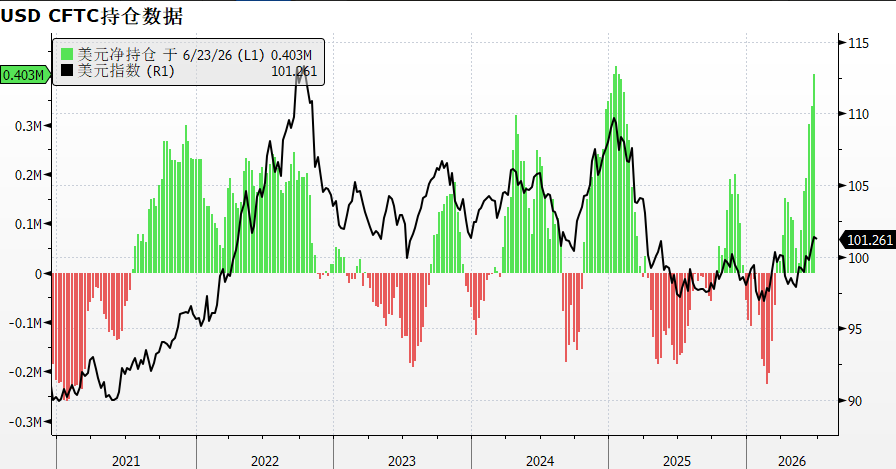
Crowded US dollar long positions

Morning FX
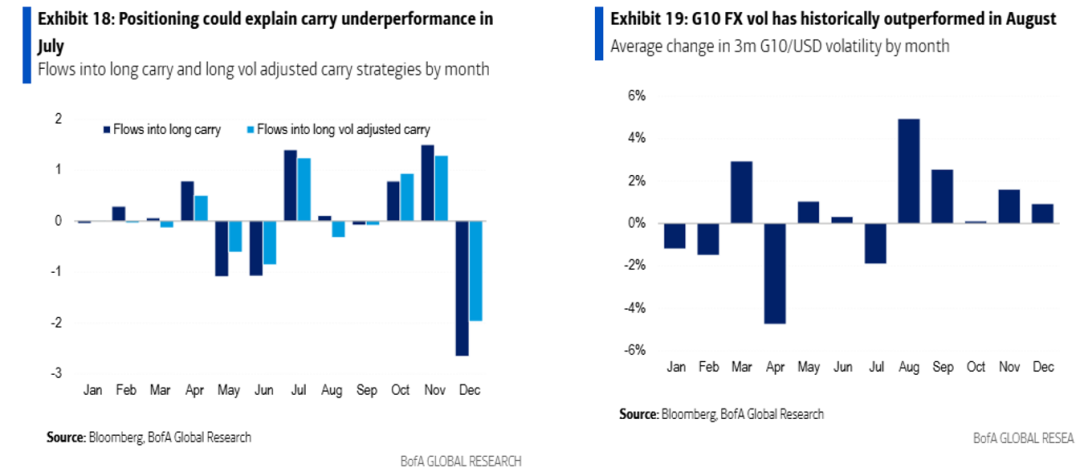
2. Oil prices retreat, rate hike expectations difficult to sustain
The main driver of this round of USD strength is the market's preemptive pricing of the Federal Reserve’s hawkish stance,The Dollar Index’s performance is highly correlated with the Fed’s rate hike expectations for the coming year.
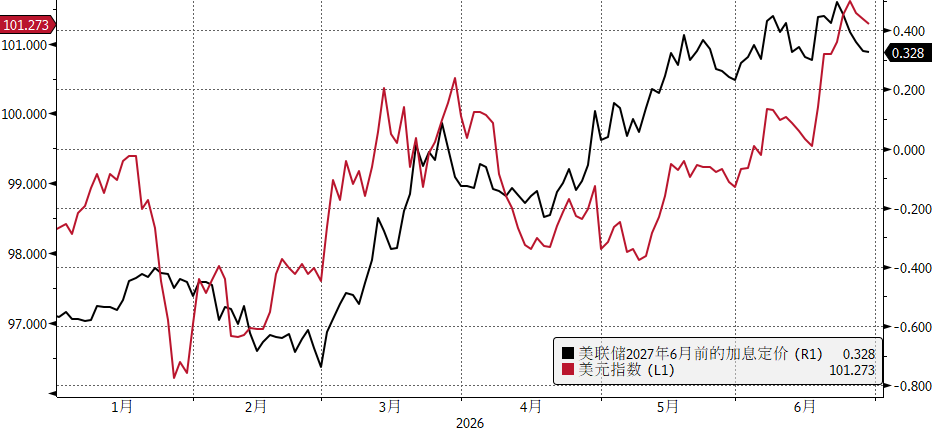
Currently, the market is pricing in 1.3 Fed hikes for this year, with a 75% probability of a hike before September, which has retreated from post-FOMC June highs. However, the fall in USD rates still lags behind the sharp decline in oil prices.The drop in oil will gradually ease inflation, diminishing the necessity for the Fed to hike rates,and the rate support logic for USD continues to weaken.
3. Economic data enters a seasonal weakening window
U.S. Nonfarm Payrolls face a seasonal soft patch in June–July. On one hand, school summer breaks mean temporary departure of public education jobs, while many women exit the labor market to care for children over the holidays; on the other hand, auto manufacturers and other factories hold mass shutdowns and repairs in July, with workers temporarily off-duty. As a result, summer employment data naturally faces seasonal downside noise, and high-frequency indicators such as JOLTS and ISM Manufacturing may all weaken.
4. AI bullishness is fully priced in, marginal benefit decreasing
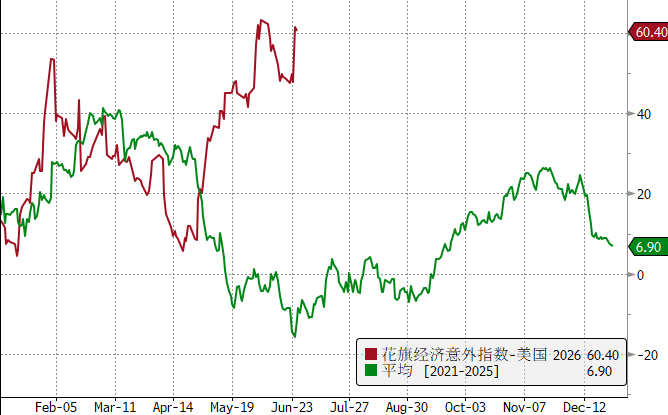
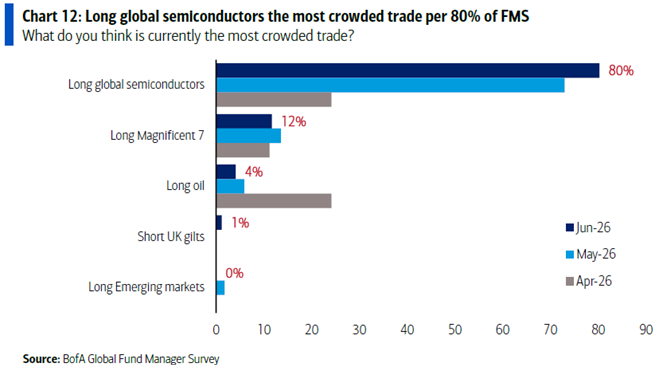
The long-term logic supporting USD is that AI drives U.S. productivity higher, but in the short term, this benefit has already been priced in to the strong USD.According to BofA’s June investor survey, 80% of institutions believe going long global semiconductors is the most crowded trade right now. Whenvolatility in tech stocks rises, it may dampen foreign capital's motivation to keep flowing into USD assets.
5. Geopolitical risk premium supporting USD continues to fall
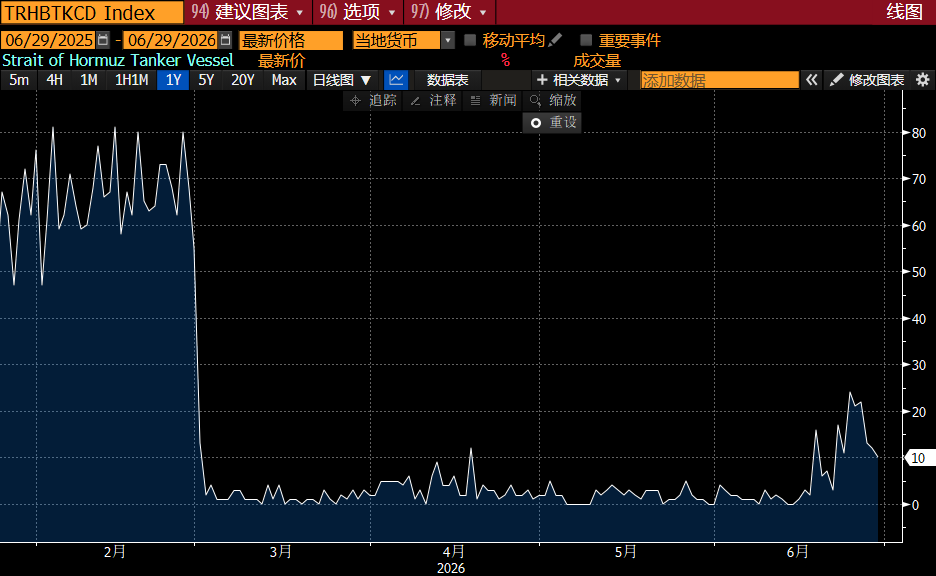
With the US and Iran reaching a ceasefire memorandum, Middle East tensions have cooled significantly, Hormuz Strait shipping activity has returned to about 30% of normal, and the wider region’s shipping has recovered to 60% of normal. The previous geopolitical risk premium that supported a stronger USD is rapidly dissipating.
Summary:
Currently,USD long positions are rather crowded; factors such as falling oil prices, seasonally weaker economic data over summer, fully priced-in AI optimism, and fading geopolitical risk are resonating, leading to increasing short-term pressure for a pullback at these elevated levels.
Disclaimer: The content of this article solely reflects the author's opinion and does not represent the platform in any capacity. This article is not intended to serve as a reference for making investment decisions.
You may also like
High interest rates are not the "end" of US stocks? Is profitability the real key?
JPMorgan believes that profit growth is the key factor determining the resilience of U.S. stock valuations. Data since 1950 shows an "inverted U-shaped" relationship between the 10-year U.S. Treasury yield and S&P 500 valuations. Based on current profit levels, yields would need to reach about 5%-6% to significantly compress valuations. As long as profit growth remains above 15%, there is still room for valuations to be re-rated. If the yield curve steepens in a bear market, cyclical sectors such as energy and financials will benefit more; if it flattens, technology stocks will have a relative advantage.
The "Outlier" Investment Art in the New Era of Berky

Chevron (CVX.US) explores alternative hedging for Middle East supply disruptions: targets Argentina and the Mediterranean to drive global LNG growth, seeks deal with India
Chevron is focusing on Argentina and the Mediterranean region, seeking global growth in liquefied natural gas, and plans to reach an agreement with India.

Expert Drops a Bullish Yet Scary Prediction for ETH Price in 2027, $10,000 ATH to $800 Black Swan Event?

Crypto prices
More


