
Strong employment signals are clear; can Nonfarm Payrolls boost the US Dollar Index?

Morning FX
1. Fundamentals: The pattern of strong US vs weak Europe continues to deepen
This week is a big one for the release of US employment data, and the White House seems eager to showcase its achievements: On Monday evening Hassett said “indicators show the jobs report will be strong once again,” while on Tuesday evening Bessent stated, “If the June employment data is very strong, I won’t be surprised,” directly signaling to the market that US employment is robust. Perhaps due to this early reveal, the market barely reacted to the better-than-expected JOLTS on Tuesday and the below-expectation ADP on Wednesday.
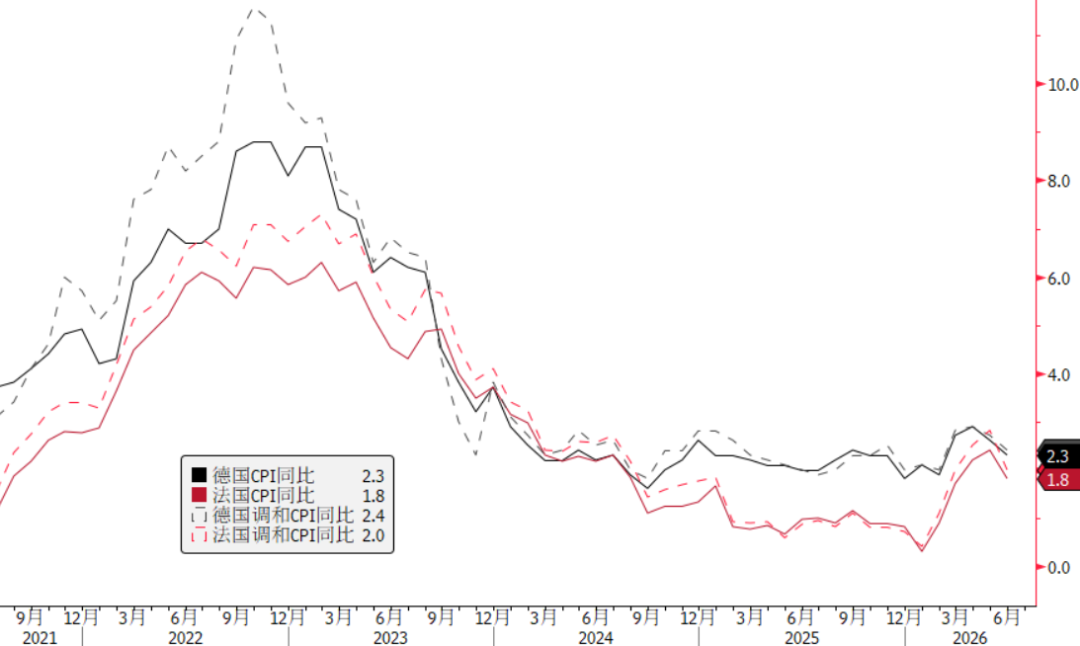
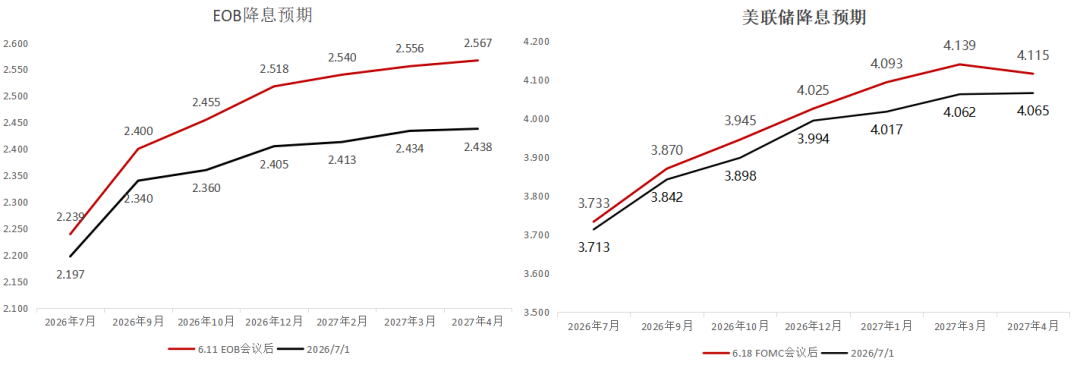
Meanwhile, the situation in Europe is far from optimistic. The German and French CPI data released on Tuesday and the Eurozone CPI released yesterday all came in below expectations. The impact from the June oil price drop has become apparent quickly, and the European Central Bank’s rate hike expectation for this year has dropped from 37 basis points after the June 11 meeting to 22 basis points now.
2. US Dollar Index struggles to rise—what is the market hesitating about?
As mentioned in our discussion on crowded dollar longs, the current US dollar bullish positions are already relatively crowded, and for the Dollar Index to continue rising, the market’s conviction in a stronger dollar must be higher than at any point in the past decade. From this perspective, the Dollar Index may either consolidate just below the 102 resistance level, or once it breaks above 102 and longs reach record highs, this could trigger a significant rally.
The pullback in European CPI may not be an isolated case. With oil prices dropping significantly in June, global CPI may have passed its peak and started to decline. If this trend is reflected in the US CPI data to be released on July 14, then falling US interest rates and narrowing spreads with non-US assets could lead the Dollar Index lower.
3. Can non-farm payrolls push the Dollar Index above 102?
Scenario 1 (20%): Non-farm payroll combination is much better than expected, especially with average hourly earnings exceeding forecasts—this situation is most likely to push US rates and the Dollar Index higher. But due to the advance signaling from the White House, the market’s psychological threshold has already been raised. This likely requires job additions to exceed 200,000 (market expects 110,000), the unemployment rate to remain the same or decrease, and average wage growth above 0.4% month-on-month to serve as the catalyst for the Dollar Index to break out upward.
Scenario 2 (70%): Non-farm payroll combination is only slightly better than expected or meets expectations, leading to little market reaction and continued consolidation of the Dollar Index below 102.
Scenario 3 (10%): Non-farm payroll combination is below expectations. Considering both Hassett and Bessent have stated that it will not be weak, this outcome is very unlikely. If it does occur, it suggests not only that the US economy is not as strong as thought, but also calls into question the credibility of the White House officials, potentially triggering a second blow to dollar credibility and pushing the Dollar Index down toward 100.
[June US Non-Farm Payroll Prediction]
Prediction objective: US non-farm payrolls added in June (market estimate: 110,000, previous: 172,000). Leave your prediction in the comments. The top 5 whose predictions are closest to the actual number will receive a Morning FX custom T-shirt, while ranks 6–10 will win a canvas bag. Hurry and submit your answer in the comments!
Disclaimer: The content of this article solely reflects the author's opinion and does not represent the platform in any capacity. This article is not intended to serve as a reference for making investment decisions.
You may also like
High interest rates are not the "end" of US stocks? Is profitability the real key?
JPMorgan believes that profit growth is the key factor determining the resilience of U.S. stock valuations. Data since 1950 shows an "inverted U-shaped" relationship between the 10-year U.S. Treasury yield and S&P 500 valuations. Based on current profit levels, yields would need to reach about 5%-6% to significantly compress valuations. As long as profit growth remains above 15%, there is still room for valuations to be re-rated. If the yield curve steepens in a bear market, cyclical sectors such as energy and financials will benefit more; if it flattens, technology stocks will have a relative advantage.
The "Outlier" Investment Art in the New Era of Berky

Chevron (CVX.US) explores alternative hedging for Middle East supply disruptions: targets Argentina and the Mediterranean to drive global LNG growth, seeks deal with India
Chevron is focusing on Argentina and the Mediterranean region, seeking global growth in liquefied natural gas, and plans to reach an agreement with India.

Expert Drops a Bullish Yet Scary Prediction for ETH Price in 2027, $10,000 ATH to $800 Black Swan Event?

Crypto prices
More


