
Is the "Spring" Behind Gold's Rebound About to Break?

After last year's surge and setting new all-time highs at the beginning of this year, gold prices have started to decline. Gold has not only given back all the gains from earlier this year but is now down over 7% from the beginning of the year. Why is this happening?
The first blow to this precious metal comes from technical factors.
Specifically, due to heightened market volatility, CME Group raised the margin requirements for COMEX gold futures at the start of February. Higher margins mean traders need to commit more capital, which triggered positions to be liquidated and put downward pressure on gold prices.
The second blow comes from the conflict between the United States and Israel versus Iran.
In theory, geopolitical uncertainty should increase demand for safe-haven assets, but disruptions in the Strait of Hormuz triggered an energy crisis, which in turn pushed inflation higher. According to S&P Global Ratings data, the current overall U.S. CPI has risen to 4.2%, the Eurozone is at 3.2%, and emerging markets in total stand at 4.8%—up roughly 1.5 percentage points since the start of the year.
With inflation clearly above central banks’ targets, policymakers’ statements have become tougher; at the same time, some central banks such as the European Central Bank have already begun to raise interest rates.
Unlike bonds, deposits, or dividend-paying stocks, gold itself does not generate any yield. When yields rise, the opportunity cost of holding non-yielding assets also increases. In addition, a strong U.S. dollar continues to suppress gold.
Now, with the partial reopening of the Strait of Hormuz, oil prices are declining and gasoline has become cheaper. So, shouldn’t gold be rallying?
The problem is that the end of war doesn’t mean inflationary pressures will disappear overnight. This process takes several months. Therefore, the market is currently not anticipating a Fed rate cut this year, but rather pricing in one or possibly even two rate hikes. This is also why U.S. Treasury yields have been slow to fall.
Another obstacle gold faces is the strong rally in AI-related equities. This is likely to continue attracting capital flows into the stock market rather than the precious metals market, similar to what happened during previous oil price surges.
To sum up, merely ending the Middle East conflict may not be enough to trigger a "gold spring" rebound. The economic aftereffects from the Strait of Hormuz disruptions could last for several months, causing central banks to remain cautious or even passive regarding rate cuts.
Meanwhile, financial markets are forward-looking. By the time inflationary pressures subside and central banks begin to soften their tone, much of the positive impact may have already been priced into gold.
Disclaimer: The content of this article solely reflects the author's opinion and does not represent the platform in any capacity. This article is not intended to serve as a reference for making investment decisions.
You may also like
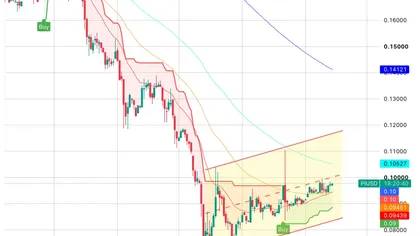
Pi Network Price Prediction: Can PI Hold Its Wedge Breakout Before the Upgrade?
As AI controversies escalate, hedge funds buy tech stocks at the fastest pace in 15 months
Hedge funds have recorded net purchases of US TMT stocks on 10 out of the past 11 trading days, rebuilding tech long positions at the fastest pace in 15 months. However, an AI policy storm has struck at the "worst possible time"—calls by AI giants to slow down development have been rejected, and regulatory uncertainty has directly hit Asian tech stocks such as Softbank. As the tech sector's bullish run coincides with Super Central Bank Week, the sector now faces a severe test.
Apple Pre-sale Tracker: iPhone 18 Pro Series Shows Weak Overseas Demand Signals, Duo Review Positive but Hardware Lags Behind
According to a survey by Jefferies, after the launch of the iPhone 18 Pro, delivery wait times in the four major markets—the US, UK, Germany, and Japan—have shortened by 5 to 11 days compared to last year, with no wait time in the US. Given stable production capacity, this is a clear sign of weak demand. Although the China and Hong Kong markets have performed better against the trend, there are still suspicions of speculative stockpiling. The new foldable Duo has been praised for its software experience, but its $2,000 price tag comes with a 254-gram body and dual-camera setup, leaving its hardware lagging significantly behind Android competitors. Jefferies maintains an "underperform" rating, with a target price implying a 21% downside from the current level.
SUI holds $0.71 support as analysts cite key buy signal, eyes on possible recovery
Crypto prices
More


