
Hyperliquid records largest crypto buyback at $283M since January

Hyperliquid has cemented its position as crypto’s most aggressive token buyer, recording a single buyback of $283 million, the largest in the industry since the start of 2026. The decentralized perpetual exchange has now crossed $1.1 billion in cumulative buybacks.
The protocol isn’t doing this out of generosity. It’s a mechanical system: 97-99% of Hyperliquid’s trading fees flow directly into open-market purchases of HYPE tokens, which are then burned.
The buyback machine in numbers
The Assistance Fund, approved by validators in December 2025, operates as a continuous demand engine for HYPE tokens.
From January to October 2025 alone, the protocol spent $645 million on buybacks. Quarterly figures tell the acceleration story: $316.76 million in Q3 2025, $255.05 million in Q4 2025, and $192.25 million in Q1 2026. Monthly averages have ranged between $65 million and $85 million during earlier periods.
Over 44 million HYPE tokens have been acquired through the program so far. That represents roughly 4.4% of the total supply permanently removed from circulation.
Hyperliquid has generated over $1.16 billion cumulatively, with nearly the entire sum directed toward HYPE token acquisitions.
Eight projects join the buyback trend
Eight crypto projects have now conducted buybacks that outstrip their supply growth since January 2026. That $283 million single buyback exceeds what many protocols generate in total revenue across an entire year.
What this means for investors
Because buybacks are tied to trading fees rather than discretionary decisions by a core team, investors can model future demand based on trading volume. If the platform generates fees, HYPE gets bought and burned.
With 4.4% of total supply already removed and the program showing no signs of slowing, HYPE’s circulating supply is shrinking at a meaningful pace. For context, Bitcoin’s supply growth from mining is roughly 0.8% annually.
The model’s health depends entirely on Hyperliquid maintaining its trading volume dominance. Any sustained decline in perpetual trading activity would directly reduce the buyback rate.
Disclaimer: The content of this article solely reflects the author's opinion and does not represent the platform in any capacity. This article is not intended to serve as a reference for making investment decisions.
You may also like
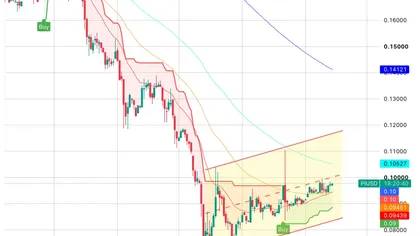
Pi Network Price Prediction: Can PI Hold Its Wedge Breakout Before the Upgrade?
As AI controversies escalate, hedge funds buy tech stocks at the fastest pace in 15 months
Hedge funds have recorded net purchases of US TMT stocks on 10 out of the past 11 trading days, rebuilding tech long positions at the fastest pace in 15 months. However, an AI policy storm has struck at the "worst possible time"—calls by AI giants to slow down development have been rejected, and regulatory uncertainty has directly hit Asian tech stocks such as Softbank. As the tech sector's bullish run coincides with Super Central Bank Week, the sector now faces a severe test.
Apple Pre-sale Tracker: iPhone 18 Pro Series Shows Weak Overseas Demand Signals, Duo Review Positive but Hardware Lags Behind
According to a survey by Jefferies, after the launch of the iPhone 18 Pro, delivery wait times in the four major markets—the US, UK, Germany, and Japan—have shortened by 5 to 11 days compared to last year, with no wait time in the US. Given stable production capacity, this is a clear sign of weak demand. Although the China and Hong Kong markets have performed better against the trend, there are still suspicions of speculative stockpiling. The new foldable Duo has been praised for its software experience, but its $2,000 price tag comes with a 254-gram body and dual-camera setup, leaving its hardware lagging significantly behind Android competitors. Jefferies maintains an "underperform" rating, with a target price implying a 21% downside from the current level.
SUI holds $0.71 support as analysts cite key buy signal, eyes on possible recovery
Crypto prices
More


