
Canada: Trade risks and persistence – RBC

Royal Bank of Canada (RBC) economists Claire Fan and Nathan Janzen assess the implications of the U.S. decision not to extend CUSMA (Canada-United States-Mexico Agreement) on July 1st. They stress that the agreement still runs to 2036 with scheduled negotiations, and see outright termination as unlikely if economic logic prevails. They note reduced tariff risks, highlight Rules of Origin as a likely focus, and flag ongoing trade uncertainty.
CUSMA longevity and trade risk outlook
"The U.S. decision on July 1st to not extend CUSMA doesn’t end the agreement."
"The deal still doesn’t expire until 2036 with pre-scheduled negotiations over the next decade designed to increase the likelihood that it lasts beyond that deadline."
"Near-term trade risks for Canada remain, but we continue to view outright termination of CUSMA as unlikely if economic reasoning holds."
"In the (unexpected) event that CUSMA were to falter, the tariff rate that would replace it and the share of exports impacted have declined."
"Trade uncertainty is likely to persist regardless of outcome."
(This article was created with the help of an Artificial Intelligence tool and reviewed by an editor.)
Disclaimer: The content of this article solely reflects the author's opinion and does not represent the platform in any capacity. This article is not intended to serve as a reference for making investment decisions.
You may also like
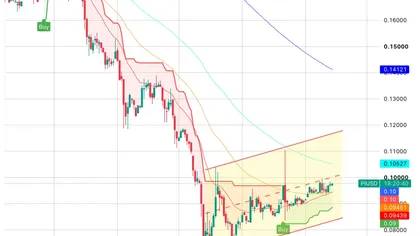
Pi Network Price Prediction: Can PI Hold Its Wedge Breakout Before the Upgrade?
As AI controversies escalate, hedge funds buy tech stocks at the fastest pace in 15 months
Hedge funds have recorded net purchases of US TMT stocks on 10 out of the past 11 trading days, rebuilding tech long positions at the fastest pace in 15 months. However, an AI policy storm has struck at the "worst possible time"—calls by AI giants to slow down development have been rejected, and regulatory uncertainty has directly hit Asian tech stocks such as Softbank. As the tech sector's bullish run coincides with Super Central Bank Week, the sector now faces a severe test.
Apple Pre-sale Tracker: iPhone 18 Pro Series Shows Weak Overseas Demand Signals, Duo Review Positive but Hardware Lags Behind
According to a survey by Jefferies, after the launch of the iPhone 18 Pro, delivery wait times in the four major markets—the US, UK, Germany, and Japan—have shortened by 5 to 11 days compared to last year, with no wait time in the US. Given stable production capacity, this is a clear sign of weak demand. Although the China and Hong Kong markets have performed better against the trend, there are still suspicions of speculative stockpiling. The new foldable Duo has been praised for its software experience, but its $2,000 price tag comes with a 254-gram body and dual-camera setup, leaving its hardware lagging significantly behind Android competitors. Jefferies maintains an "underperform" rating, with a target price implying a 21% downside from the current level.
SUI holds $0.71 support as analysts cite key buy signal, eyes on possible recovery
Crypto prices
More


