
North Korea-linked hackers steal $643M in crypto in H1 2026

North Korean hackers walked away with $643 million in stolen crypto during the first six months of 2026. That’s 66% of all crypto lost to theft and exploits this year, a dominance so complete it makes every other hacking group look like amateurs by comparison.
The total haul across all crypto crime in H1 2026 came to $972 million across 207 incidents. North Korea’s Lazarus Group and its associated subgroups were responsible for the lion’s share, funneling proceeds toward the regime’s nuclear weapons program. Two attacks in April alone accounted for $577 million of the total.
Two attacks, twelve minutes, half a billion dollars
The biggest hits came in rapid succession last month. On April 1, the Drift Protocol lost roughly $285 million in what amounted to a masterclass in social engineering. Attackers compromised protocol signers and executed the entire theft in approximately 12 minutes.
Then on April 18, KelpDAO got hit for approximately $292 million through a LayerZero bridge exploit. That attack has been attributed to TraderTraitor, a known Lazarus subgroup that specializes in targeting cross-chain infrastructure. Between the two incidents, North Korean actors pocketed more than half a billion dollars in less than three weeks.
Fewer dollars, more attacks
The $972 million in total H1 2026 losses is less than half the $2.3 billion lost during the same period in 2025. The record number of incidents, 207 in just six months, tells a different story. Attackers aren’t slowing down. They’re just shifting strategy, opting for targeted infrastructure attacks on DeFi protocols and cross-chain bridges rather than spraying and praying across dozens of smaller targets.
The stolen funds largely remain unrecovered. North Korean operators have become adept at laundering proceeds through bridges, mixing services, and other obfuscation techniques that make tracing and freezing assets extraordinarily difficult once the initial theft window closes.
And $643 million only captures what came from direct hacks and exploits. It doesn’t include revenue generated through phishing schemes, fake job postings, and other social engineering campaigns that North Korean operatives run in parallel.
A $6 billion problem that keeps compounding
North Korean state-backed groups have now accumulated over $6 billion in crypto thefts since 2017, according to cumulative tracking data. The Lazarus Group’s evolution over the past nine years has seen what started as relatively crude exchange hacks mature into a sophisticated operation that deploys social engineering, custom malware, supply chain compromises, and deep knowledge of DeFi protocol architecture.
What this means for investors
The concentration of losses in DeFi protocols and bridge infrastructure should be a wake-up call for anyone parking significant capital in decentralized platforms. Two protocols lost nearly $600 million combined because their signer security and bridge architecture weren’t hardened against nation-state attackers.
Before committing funds to any DeFi protocol, investors should be asking pointed questions about multisig configurations, signer operational security practices, and whether the protocol has undergone recent security audits that specifically model state-sponsored threat scenarios.
Disclaimer: The content of this article solely reflects the author's opinion and does not represent the platform in any capacity. This article is not intended to serve as a reference for making investment decisions.
You may also like
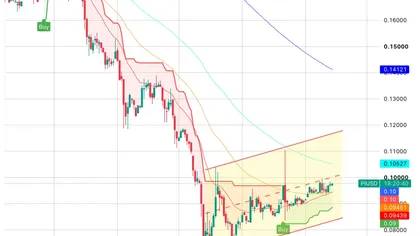
Pi Network Price Prediction: Can PI Hold Its Wedge Breakout Before the Upgrade?
As AI controversies escalate, hedge funds buy tech stocks at the fastest pace in 15 months
Hedge funds have recorded net purchases of US TMT stocks on 10 out of the past 11 trading days, rebuilding tech long positions at the fastest pace in 15 months. However, an AI policy storm has struck at the "worst possible time"—calls by AI giants to slow down development have been rejected, and regulatory uncertainty has directly hit Asian tech stocks such as Softbank. As the tech sector's bullish run coincides with Super Central Bank Week, the sector now faces a severe test.
Apple Pre-sale Tracker: iPhone 18 Pro Series Shows Weak Overseas Demand Signals, Duo Review Positive but Hardware Lags Behind
According to a survey by Jefferies, after the launch of the iPhone 18 Pro, delivery wait times in the four major markets—the US, UK, Germany, and Japan—have shortened by 5 to 11 days compared to last year, with no wait time in the US. Given stable production capacity, this is a clear sign of weak demand. Although the China and Hong Kong markets have performed better against the trend, there are still suspicions of speculative stockpiling. The new foldable Duo has been praised for its software experience, but its $2,000 price tag comes with a 254-gram body and dual-camera setup, leaving its hardware lagging significantly behind Android competitors. Jefferies maintains an "underperform" rating, with a target price implying a 21% downside from the current level.
SUI holds $0.71 support as analysts cite key buy signal, eyes on possible recovery
Crypto prices
More


