-
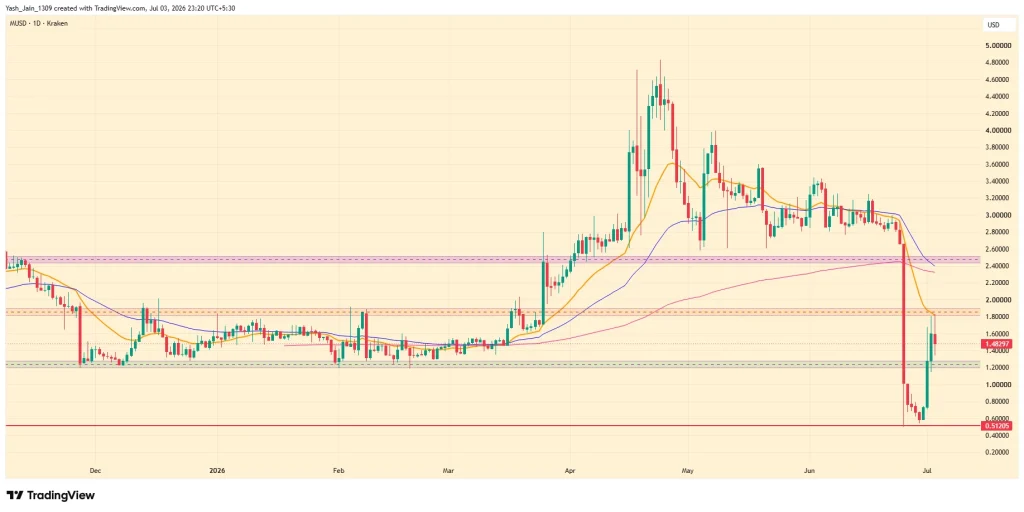
Memecore fell 82% in seven days before rebounding sharply from $0.51.
-
The foundation denied protocol issues, treasury sales, or operational problems.
-
A $10 million buyback program shifted market attention back to the project.
The Memecore price didn’t just fall last week. It fell through floors traders assumed were made of concrete. Between June 22 and June 29, the token collapsed by roughly 82%, slicing through major support levels with alarming speed. The reaction across the industry was immediate and brutal.
Scam accusations surfaced. Pump and dump theories spread rapidly. Insider selling allegations became the market’s most favorite explanation.
Then something unexpected happened. The same asset that crashed to $0.51 suddenly found buyers. By July, the M price had surged to$1.80 before cooling slightly to around $1.39 today, leaving traders wondering what exactly changed in less than three days.
Memecore’s Official Statements Begin Calming Investors
The first response post crash came on June 30. The official account on X issued a security warning by highlighting fake websites and projects impersonating Memecore, specifically pointing to an unrelated project operating on the Solana network using the same name.
The team also warned users against phishing websites promoting fake rewards or airdrops and urged investors to rely only on official communication channels. That post didn’t stop the speculation, but it changed the conversation.
Foundation Denies Selling During Crash Period
Shortly afterward, the foundation addressed the market panic directly. According to the statement, no protocol issues, infrastructure failures or operational disruptions had been identified. The foundation also stated that it had not sold tokens during the volatility and the treasury operations remained normal throughout the selloff.
Instead, the team said that a large amount of selling pressure entered markets within a short timeframe, with many transactions reportedly executed as market orders rather than traditional limit orders.
Buyback Program Changes Market Narrative Quickly
Then came the announcement that grabbed attention. On July 2, the foundation approved a strategic treasury buyback program worth at least $10 million. The initiative forms part of its treasury management and ecosystem support strategy, with repurchased tokens destined for the foundation treasury wallet.
Importantly, the organization said it would not disclose execution timing or methods in order to reduce front-running and speculative trading.
Now, as the story has unfolded, whether that explains the recovery or merely coincided with it remains open for debate.
But, what isn’t debatable is that the Memecore price went from being written off by much of the market to becoming one of crypto’s most weekly comeback stories in less than a week.