
After the weak nonfarm payroll, what's the outlook for 10-year US Treasury bonds?

In June, the U.S. nonfarm payrolls increased by 57,000, lower than the market expectation of 113,000; the April and May figures were revised downward by a combined 74,000. On the surface, this is data that appears positive for U.S. Treasury bonds and negative for the dollar, but the market reaction was not entirely aligned with this view: On July 2, the yield on the U.S. 2-year Treasury note fell from 4.17% to 4.14%, while the 10-year rose from 4.48% to 4.49%, and the 2s10s spread widened from 31bp to 35bp. In other words, the market indeed bought into the short end, but did not simultaneously buy the long end. The first implication of weaker nonfarm payrolls is a diminished need for continued rate hikes, rather than an immediate shift to recession trades.
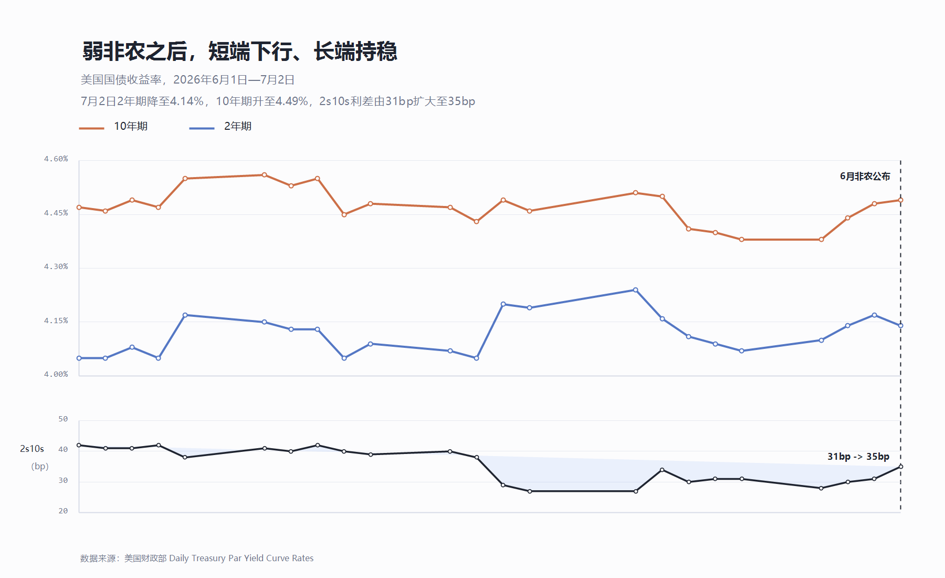
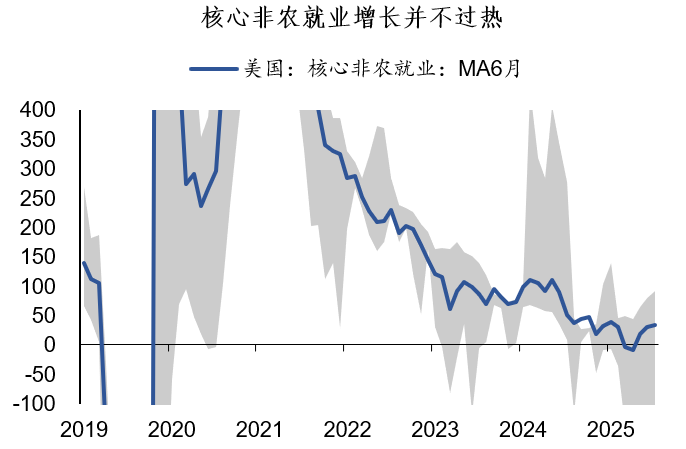
The decline at the short end is not hard to understand: the significant slowdown in nonfarm job additions, coupled with the downward revisions to the previous two months, shows that the labor market is not overheating. For the 2-year yield, the most direct trade is a lower tail risk of further rate hikes by the Federal Reserve. In other words, weak nonfarm data primarily reduces the probability of an "immediate hike" or "one more hike".
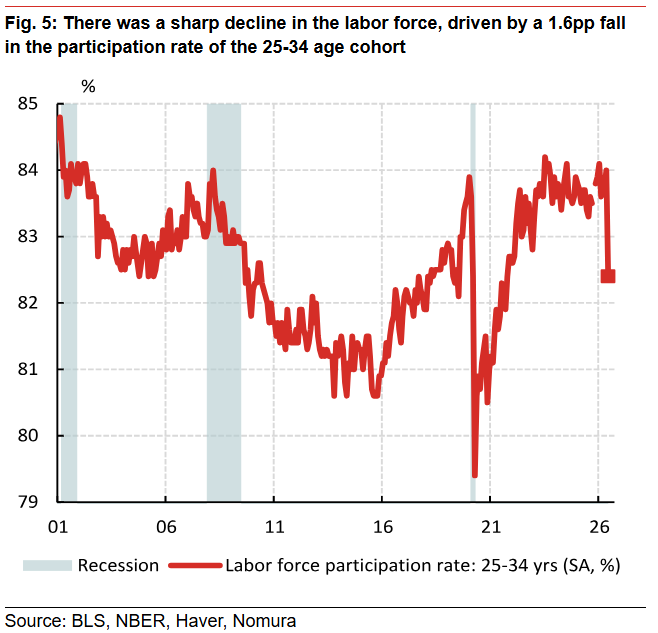
However, this data is not weak enough for the market to instantly jump to recession pricing. There are many temporary factors in the report: reduced employment in leisure and hospitality due to earlier hiring, and a 1.6 percentage point drop in the participation rate among the 25-34 age group. The message to the Federal Reserve is that it can be a little less hawkish and more patient, rather than needing to immediately shift to easing.
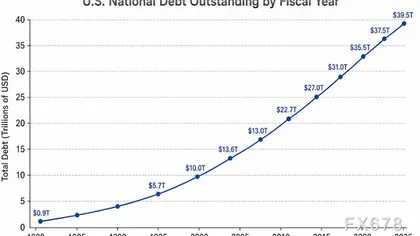
A single month of weak nonfarm payrolls only indicates a marginal slowdown in job creation, which is not enough to prove that long-term growth and the real interest rate center will quickly move lower,which is precisely why the 10-year yield did not move down significantly. At the same time, fiscal financing, Treasury supply, and capital spending such as on AI data centers are still generating financing demand. Weaker private sector credit does not mean an overall decline in U.S. total financing demand; government and AI investments are still supporting the center of long-term rates.
Therefore, after the weak nonfarm payrolls, the market is not pricing in an overall downward shift of the yield curve. With reduced hike expectations, the short end benefits more directly, while the 10-year only experiences lighter upward pressure and has not yet confirmed a trend reversal; a choppy view is maintained.
Looking ahead, CPI is the main data point to watch. If June’s CPI comes in significantly below expectations, the 10-year has a chance to test the 4.35%–4.40% range; if core inflation remains around 0.3% or higher, the yield may return above 4.50%.In the medium term, only when labor market cooling spreads to rising layoffs and weaker consumption, along with falling inflation, will the downside for the long end truly open up.
Disclaimer: The content of this article solely reflects the author's opinion and does not represent the platform in any capacity. This article is not intended to serve as a reference for making investment decisions.
You may also like
Solana breaks resistance, holds above $100 as analysts target $147
Swiss Franc weakens as US Dollar gains on Fed rate hike odds
From "chasing the light" to "going upstream toward the light"! Morgan Stanley asserts: In the tsunami of computing power, fiberglass fabric and copper foil ignite a super cycle in materials.
Morgan Stanley's latest research report points out that the global frenzy of AI infrastructure expansion is shifting from downstream GPU and wafer foundry to a comprehensive upstream spread in critical base material sectors.

Crypto prices
More


