
The "Tragedy" of Precious Metals Liquidity

Since the beginning of this year, precious metals have shown a noticeably weaker trend. Recently, after breaking below the annual line, there have been further signs of accelerated decline. Along with fellow market colleagues, I have attempted to explain the interim fluctuations of precious metals through factors such as central bank gold purchases, the breakdown and return of the US dollar credit system, and others.
Admittedly, these factors have some explanatory power for the short-term movements of precious metals. However, I am also well aware that they are obviously insufficient to convincingly explain the weakening of precious metals’ trend lines. Therefore, in this article, I aim to share my own understanding of the trajectory of precious metals from the perspective of liquidity.
Extending the view to the medium term, such as over the past two years, the performance of precious metals has shown a strong correlation with the 10-2Y US Treasury yield spread. The flattening or steepening of the US yield curve reflects the market's pricing of monetary policy's ease or tightness. Adjusting short-end rates and spreads to encourage or constrain credit expansion and leverage in the market is also a fundamental logic of monetary policy operations.
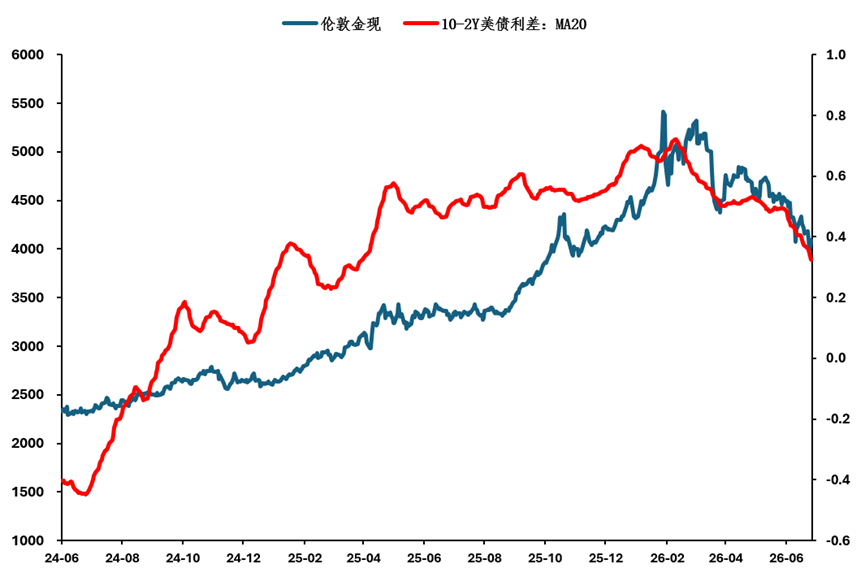
Looking back, since the beginning of this year—driven by factors such as improvements in US employment data, a more hawkish tone from Federal Reserve officials, and the change in the Federal Reserve Chair nominee from Milan to Walsh—the US Treasury yield curve shifted from steepening to flattening, which indeed marked a turning point in this round of precious metals performance.
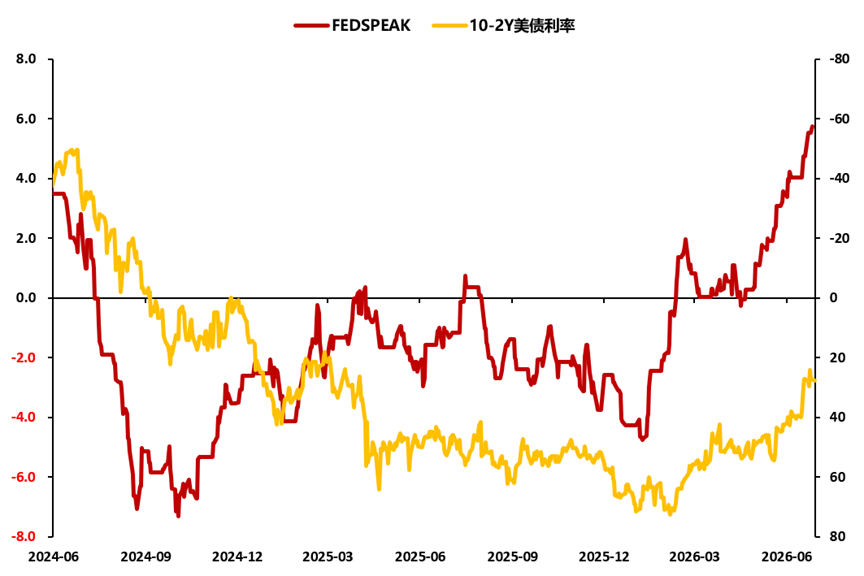
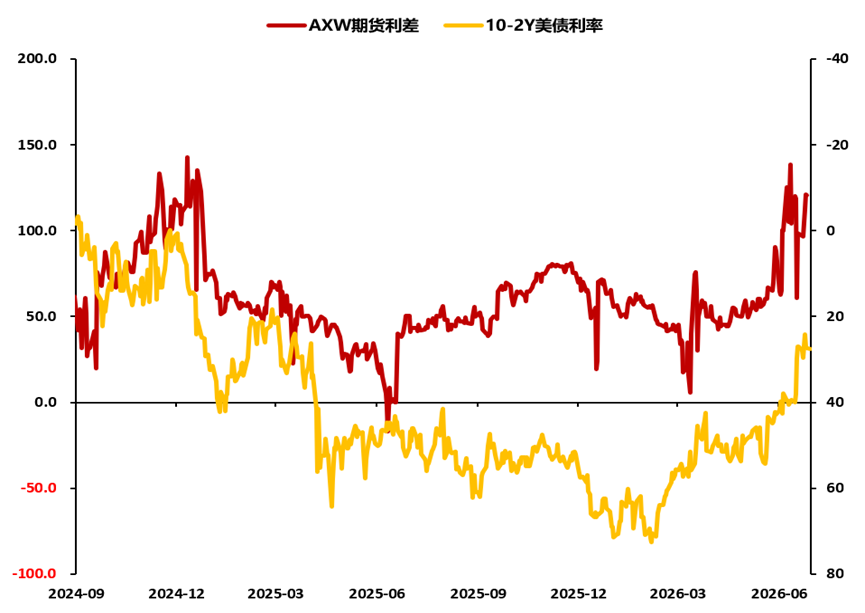
However, I also believe that considering only monetary policy is not enough to explain the further impact of liquidity on precious metals prices, especially the accelerated declines after Q2/the Iran conflict.Yet, when considering broader macro trading narratives, the explanatory power is significantly enhanced.
In my view, the two most important macro narratives in the second quarter are: first, the policy shift of the Federal Reserve and the stronger US dollar narrative; and second, the independent rally of the “hard” technology equity sector.
Some market peers may not have noticed that, behind the independent rally in the “hard” technology equity sector, leverage levels in major global markets have been climbing rapidly to historical highs.This means that overall liquidity, already converging, has been further siphoned off and squeezed by equity leverage, causing a general bleed in other macro asset classes apart from the “hard” technology equity sector.
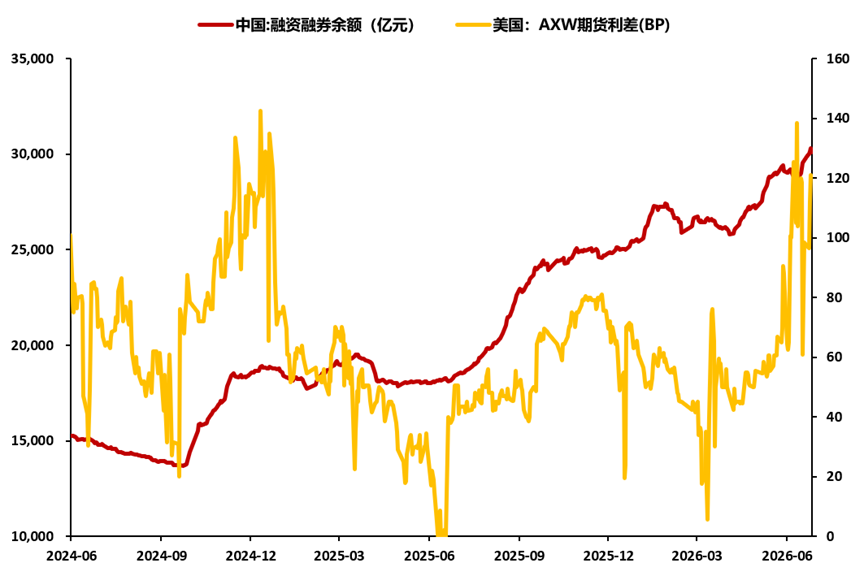
The financial attributes are the decisive factor for precious metals, especially for silver—which is more driven by speculative behavior—making liquidity squeeze a much more convincing explanation. Further, weighed down by a relatively weak fundamental backdrop, the quick correction in the Hang Seng Technology Index and other seasoned sectors under the “Davis Double Hit” can also be reasonably explained.
Will the liquidity squeeze pattern continue? In my view, the primary factor is the leverage siphoning effect from the independent rally in “hard” tech, with monetary policy as a secondary aspect. Currently, capital expenditure for AI is still in an accelerated expansion phase and is less sensitive to high interest rates. From a medium-term perspective, tech sector leverage likely has not yet peaked. Moreover, the wealth effect of strong equities may impose periodic inflationary pressures, restricting room for central bank easing.
Therefore, in my opinion, the "liquidity pain" for precious metals may well continue.
BFC Talks
Together with you in 2026
Welcome to leave a message in the background
to communicate with us
Disclaimer: The content of this article solely reflects the author's opinion and does not represent the platform in any capacity. This article is not intended to serve as a reference for making investment decisions.
You may also like
Anthropic signs $13.7 billion computing power agreement with "Trump-linked company" Rum Group
Anthropic has signed a $13.7 billion, six-year computing power agreement with Rum Group. The core of the agreement is a data center under construction in Georgia. Rum Group was formerly the conservative video platform Rumble, whose early investors include current U.S. Vice President Vance.
Will the midterm elections cause the US stock market to crash? 75 years of history give an unexpected answer
Currently, with less than eight weeks until the midterm elections, one of the greatest uncertainties facing Wall Street is imminent. But will the reshuffling of power in Congress lead to a stock market crash? Looking back over 75 years of history, the answer is surprising, and ultimately leans toward optimism.

New Zealand Dollar weakens below 0.5800 on RBNZ dovish signals
Crypto prices
More


