
Bill Miller highlights strong fundamental case for Bitcoin amid $1.9T US deficit

Bill Miller IV just made one of the clearest institutional cases for Bitcoin in months. In a CNBC Closing Bell appearance on July 2, the Miller Value Partners executive laid out why America’s $1.9 trillion projected budget deficit, as estimated by the Congressional Budget Office, is essentially a rolling advertisement for owning Bitcoin.
Here’s the thing: the US government’s annual unfunded obligations are roughly 50% larger than Bitcoin’s entire market capitalization. The gap between what Washington promises to pay and what it can actually fund dwarfs the total value of every Bitcoin in existence.
The deficit math that keeps Bitcoiners up at night (in a good way)
The CBO’s $1.9 trillion deficit projection means the federal government is spending nearly $2 trillion more than it collects. Every year. That gap gets filled by issuing more debt, which eventually gets monetized through money printing, which dilutes the purchasing power of every dollar you hold.
Bitcoin, by contrast, has a hard cap of 21 million coins. No CBO projection changes that. No congressional spending bill inflates it. That’s the fundamental pitch Miller is making: in a world where fiat currencies face structural debasement, a digitally scarce asset starts looking less like speculation and more like insurance.
Miller has been beating this drum for years. His conviction in Bitcoin traces back to lessons learned during the 2008 financial crisis, when central bank money printing went from theoretical concern to lived experience.
Trading 50% below all-time highs: bug or feature?
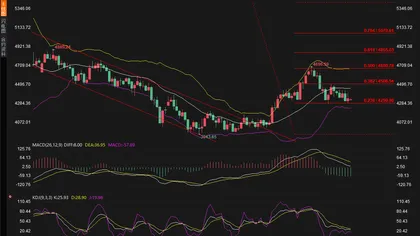
Bitcoin is currently sitting roughly 50% below its all-time high. Miller attributed the price weakness primarily to regulatory uncertainty, specifically legislation like the CLARITY Act that remains unresolved. Until Congress provides clear guardrails, big money stays cautious.
The AI wildcard
Miller introduced an interesting wrinkle to the standard Bitcoin bull case: artificial intelligence. First, AI-driven productivity gains could create deflationary pressure across the economy. But central banks and governments have shown zero appetite for allowing deflation to take hold. Their likely response to AI-driven price declines would be even more aggressive monetary expansion, essentially printing more money to prevent deflation from hurting debtors and government balance sheets. More money printing means more currency debasement, reinforcing Bitcoin’s role as a hedge regardless of which force dominates.
What this means for investors
Miller’s appearance matters because of who he is, not just what he said. When a prominent value investor frames Bitcoin as fundamentally undervalued relative to the fiscal risks facing the US dollar, it gives institutional allocators intellectual cover to increase exposure. Institutional interest in Bitcoin has been growing steadily despite the regulatory headwinds.
The regulatory picture remains the biggest near-term risk. The CLARITY Act and similar legislative efforts will determine how quickly institutional capital can flow into crypto without compliance concerns.
Disclaimer: The content of this article solely reflects the author's opinion and does not represent the platform in any capacity. This article is not intended to serve as a reference for making investment decisions.
You may also like
AI development slowdown combined with surging oil prices hit Japanese and Korean chip stocks first, SK Hynix falls more than 5%, SoftBank plunges 11%
AI giants have made a rare joint call to slow down the development of advanced models. The South Korean and Japanese stock markets have declined, with the Seoul Composite Index falling over 3% and the Nikkei 225 Index dropping more than 2%. SoftBank plunged 11% in a single day, while SK Hynix dropped over 5%. Meanwhile, Saudi Arabia has shut down oil pipelines, pushing Brent crude prices up to $107. Combined with the US CPI exceeding expectations, the probability of a Fed rate hike on Wednesday is now over 90%. The double whammy has led to a turbulent opening for Asian markets.

ASIC and optical interconnects drive high-speed growth! Bank of America strongly supports the soaring Marvell (MRVL.US), claiming there's still 55% upside potential
Bank of America maintains its $365 price target for Marvell, citing its focus on expanding revenue per AI system through custom AI accelerators (i.e., AI ASIC/XPU) and supporting optical interconnect chips, driven by massive demand for AI agents. Compared to the September 11 closing price of $236.10, this target implies a potential upside of approximately 54.6%.

Crypto prices
More


