

Ripple’s journey from a small blockchain startup to a major player in digital payments narrowly avoided an early end, according to recent remarks from co-founder Chris Larsen. During a recent interview, Larsen revealed that several lawyers had once advised Ripple’s leadership to abandon the company, arguing it was “unsavable” due to steep legal and regulatory barriers.
Ripple co-founder says lawyers advised shutting down company in early years
By:Cointurk
Bitget offers one-stop trading for cryptocurrencies, stocks, and gold. Trade now!
A welcome pack worth 6200 USDT for new users! Sign up now!
Ripple’s early struggles and legal risks
Founded in 2012, Ripple developed blockchain-based infrastructure aimed at transforming global payments. At the time, the company faced significant skepticism from banks, regulators, and industry insiders about the viability of cryptocurrency solutions for cross-border financial transfers.
Larsen explained that some external legal teams concluded that Ripple’s business faced challenges too severe to overcome. These advisers reportedly urged company executives to withdraw rather than risk further difficulties.
Instead, Ripple’s leadership chose to continue building its payment infrastructure and pursued strategic partnerships worldwide. Over the years, Ripple formed relationships with banks and financial institutions across different continents, steadily growing its presence in the financial sector.
This resilience was later put to the test when the U.S. Securities and Exchange Commission (SEC) filed a lawsuit against Ripple in late 2020. The SEC alleged that the company had conducted unregistered securities offerings through the sale of XRP, Ripple’s native digital asset. The legal proceedings produced a period of uncertainty for both Ripple and the broader XRP ecosystem.
Rather than close the business, Ripple’s founders continued expanding global payment services and investing in blockchain-based settlement solutions, even as regulatory concerns and court actions mounted over the years.
Despite these challenges, Ripple pressed on, maintaining operations internationally and contesting the SEC’s charges in court. Several decisions in the case have since influenced regulatory discussions across the digital asset industry in the United States.
Diversification and a focus on transparency
Today, Ripple has diversified its business beyond cross-border payments. The company recently introduced RLUSD, a USD-backed stablecoin, and continues to support development on the XRP Ledger for various tokenization projects.
Chief Executive Brad Garlinghouse stated that Ripple remains committed to reinforcing XRP’s role in the ecosystem while also creating complementary financial products. He said Ripple’s substantial XRP holdings ensure that its long-term success remains tightly connected to the future of the asset and its network.
Ripple’s leadership has also addressed ongoing speculation. Chief Technology Officer David Schwartz has dismissed unfounded rumors of secret government partnerships or undisclosed catalysts, emphasizing that the company operates transparently and that its escrow system and commercial activities are publicly accessible.
Routine treasury activities, such as XRP escrow releases and internal wallet transfers, continue to attract attention but represent standard practices within Ripple’s operational strategy.
As one of the sector’s most prominent firms, Ripple now serves institutional clients worldwide and invests in a range of blockchain solutions, from payments to tokenization and stablecoins.
The company’s transformation from a startup that some advisers deemed “beyond saving” to a recognized global firm highlights the lasting impact of perseverance in the fast-evolving cryptocurrency industry.
Mini dictionary: Ripple, a US-based fintech company founded in 2012, develops blockchain-based solutions for real-time cross-border payments. Its native asset, XRP, serves as a bridge currency for international transactions on the XRP Ledger.
0
0
Disclaimer: The content of this article solely reflects the author's opinion and does not represent the platform in any capacity. This article is not intended to serve as a reference for making investment decisions.
Understand the market, then trade.
Bitget offers one-stop trading for cryptocurrencies, stocks, and gold.
Trade now!
You may also like
AI development slowdown combined with surging oil prices hit Japanese and Korean chip stocks first, SK Hynix falls more than 5%, SoftBank plunges 11%
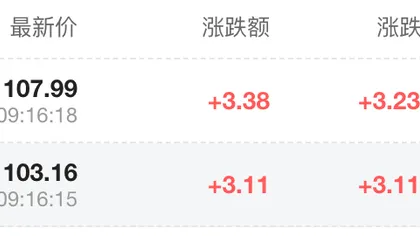
AI giants have made a rare joint call to slow down the development of advanced models. The South Korean and Japanese stock markets have declined, with the Seoul Composite Index falling over 3% and the Nikkei 225 Index dropping more than 2%. SoftBank plunged 11% in a single day, while SK Hynix dropped over 5%. Meanwhile, Saudi Arabia has shut down oil pipelines, pushing Brent crude prices up to $107. Combined with the US CPI exceeding expectations, the probability of a Fed rate hike on Wednesday is now over 90%. The double whammy has led to a turbulent opening for Asian markets.
华尔街见闻•2026/09/14 01:31
ASIC and optical interconnects drive high-speed growth! Bank of America strongly supports the soaring Marvell (MRVL.US), claiming there's still 55% upside potential
Bank of America maintains its $365 price target for Marvell, citing its focus on expanding revenue per AI system through custom AI accelerators (i.e., AI ASIC/XPU) and supporting optical interconnect chips, driven by massive demand for AI agents. Compared to the September 11 closing price of $236.10, this target implies a potential upside of approximately 54.6%.
智通财经•2026/09/14 01:26

Crypto prices
More
Bitcoin
BTC
$76,890.02
-0.50%

Ethereum
ETH
$2,486.47
-1.53%

Tether USDt
USDT
$0.9996
-0.02%

BNB
BNB
$717.12
-1.66%

XRP
XRP
$1.35
-1.58%

USDC
USDC
$0.9999
+0.01%

Solana
SOL
$99.65
-2.53%

TRON
TRX
$0.3382
-0.65%

Hyperliquid
HYPE
$77.96
-1.84%

Zcash
ZEC
$1,070.72
-5.07%
How to buy BTC
Bitget lists BTC – Buy or sell BTC quickly on Bitget!
Trade now
Become a trader now?A welcome pack worth 6200 USDT for new users!
Sign up now