
Institution: The Federal Reserve is likely to maintain interest rates this year; U.S. policies are forcing global central banks to increase gold reserves

Fxstreet July 16 News—— Natixis economist Christopher Hodge analyzes that for 2026, inflation remains the Federal Reserve’s primary focus, but it is highly likely that rates will remain unchanged throughout the year. The new Fed Chair, Kevin Warsh, has taken a hawkish stance; however, being overly aggressive may limit the room for future policy adjustments. The ever-changing US trade and sanctions policies continue to erode the dollar’s appeal as a reserve asset, and alongside geopolitical factors, central banks worldwide are continuously increasing their gold holdings, accelerating the global diversification of reserves.
Christopher Hodge, Chief US Economist at Natixis, makes the core judgment that for the remainder of 2026, the Fed’s top priority will be inflation, but it is highly likely that monetary policy will maintain unchanged interest rates throughout the year.
The new Fed Chair, Kevin Warsh, after assuming office, has sent strong hawkish anti-inflation signals while abandoning forward guidance and refusing to participate in the dot plot forecasts. However, this itself poses new constraints on operational policy statements. Additionally, the unpredictability in US trade and sanctions policy continues to undermine the dollar’s role as a reserve currency. Combined with the impact of global geopolitics, central banks are increasingly adding gold to their reserves, restructuring the global reserve asset landscape.
Layered Inflation Assessment, Fed Likely to Hold Rates Steady Throughout the Year
Hodge points out that the Fed's policy focus is clearly tilted toward price stability, as the US has failed to hit the 2% inflation target for five years, and ongoing tariffs and energy shocks continue to push prices higher. The central bank needs to distinguish between one-off external shocks and domestic inflation dynamics. Housing makes up 35% of the CPI index; ongoing data is expected to cool. Wage growth, which drives core services inflation, is holding steady at 3%–3.5%, supporting stable inflation, and endogenous price increase momentum hasn't heated up.
Given this data context, Hodge believes the Fed’s best choice is to extend the pause cycle to fully observe the transmission of external oil price shocks into core inflation. Therefore,
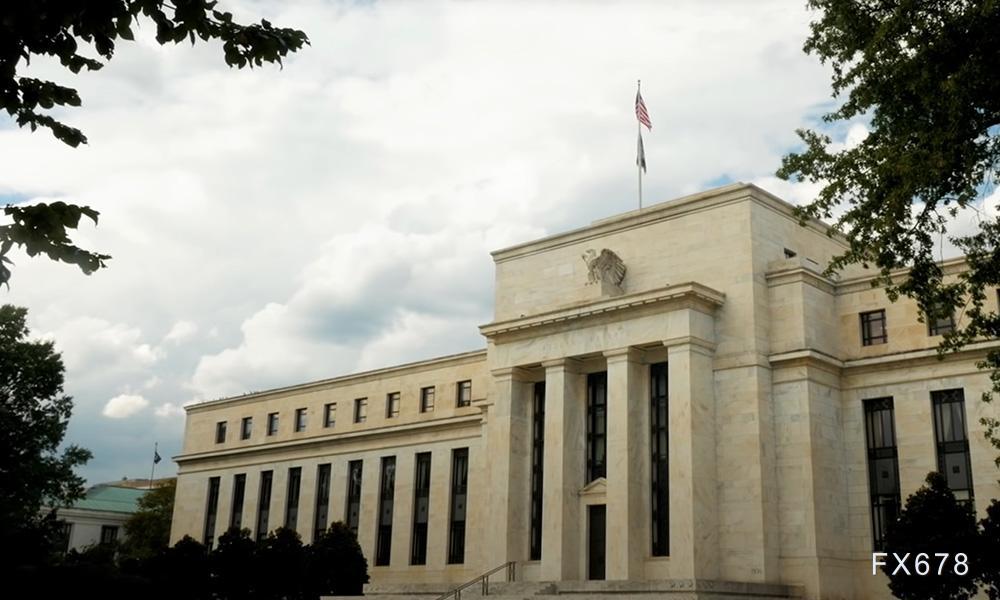
Warsh’s Hawkish Tone Presents Policy Dilemma, Downplaying Forward Guidance Fits the Current Environment
Hodge remarks that Warsh’s decision to abandon forward guidance and not fill in dot plot rate expectations adapts well to today’s environment of high uncertainty, and most officials agree that guidance tools have limited utility at this stage. At the same time, Hodge points out a key risk: Warsh, at his first FOMC meeting, used extremely strong language emphasizing anti-inflation resolve, but being overly hawkish could limit future policy flexibility. If inflation data keeps rising, the market will pressure the Fed into rate hikes based on previous hawkish rhetoric, putting the Fed in a passive credibility dilemma.
Some believe Warsh is intentionally sending hawkish signals to prove independence to Trump; however, Hodge observes that Warsh has maintained a broadly hawkish stance throughout his career, only briefly expressing dovish views during two Fed Chair nomination episodes. The current tough stance is a return to his original policy position, not an attempt to pander to or resist presidential demands. Several economic indicators came in weaker after the June FOMC meeting, further reducing the likelihood of a rate hike this year.
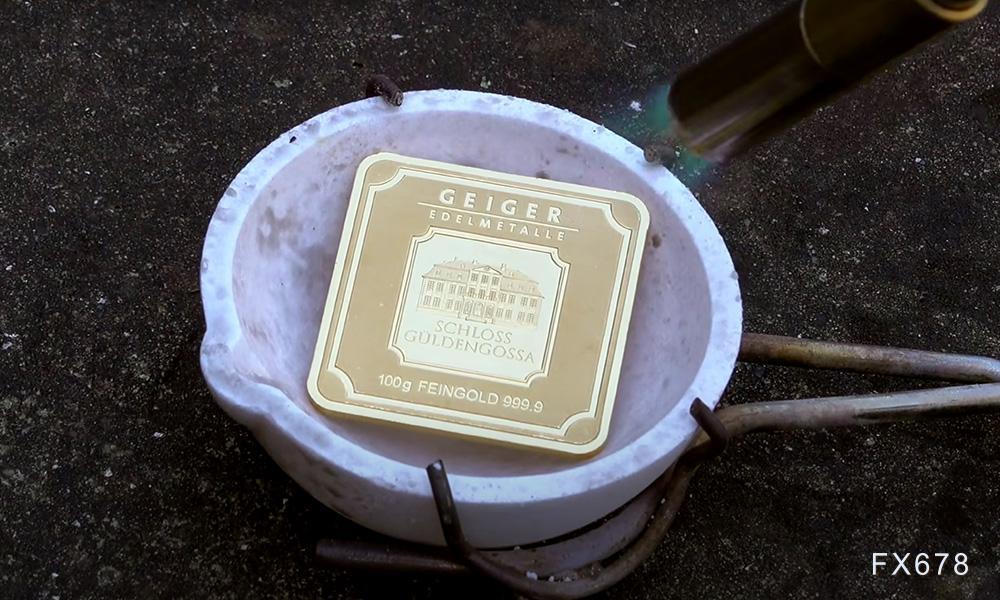
US Policy Weakens Dollar Reserve Demand, Gold Becomes the Core Choice for Diversified Central Bank Allocations
On the changes in global central bank reserve allocations, Hodge notes that the Russia-Ukraine conflict was the starting point of a new round of gold purchases by central banks, and the persistent unpredictability of US trade and sanctions policy continues to drive this trend. Central banks are not engaged in large-scale dumping of dollar assets, but are instead passively reducing dollar exposure via ceasing reinvestment. Although the vibrancy of the private US market still provides foundational support for the dollar, sovereign reserve allocations to dollars are weakening.
To hedge against policy uncertainty in dollar assets, many central banks are continuously increasing gold positions, and gold’s status in official reserves is steadily rising. A variety of restrictive policies initiated by the US are indirectly accelerating the diversification of the global reserve system.
Summary
Overall, current endogenous inflation pressure in the US is moderate, while external energy shocks remain periodic. The Fed is likely to keep interest rates unchanged throughout 2026. Warsh’s insistence on a hawkish anti-inflation stance and the downplaying of forward guidance fit current economic conditions, yet also create constraints for potential future policy adjustments.
Looking globally, US policy uncertainty continues to reduce central banks’ willingness to allocate to the dollar. Gold, as a non-sovereign risk asset, has substantial long-term demand underpinning, and is continually reshaping the structure of global foreign reserves.
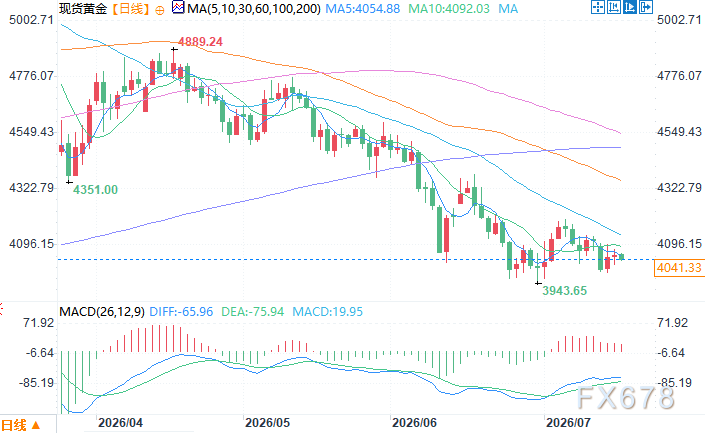
Spot gold daily chart Source: eHuitong
East Eighth District July 16, 9:44 Spot Gold at $4041.33/ounce
Disclaimer: The content of this article solely reflects the author's opinion and does not represent the platform in any capacity. This article is not intended to serve as a reference for making investment decisions.
You may also like
Anthropic signs $13.7 billion computing power agreement with "Trump-linked company" Rum Group
Anthropic has signed a $13.7 billion, six-year computing power agreement with Rum Group. The core of the agreement is a data center under construction in Georgia. Rum Group was formerly the conservative video platform Rumble, whose early investors include current U.S. Vice President Vance.
Will the midterm elections cause the US stock market to crash? 75 years of history give an unexpected answer
Currently, with less than eight weeks until the midterm elections, one of the greatest uncertainties facing Wall Street is imminent. But will the reshuffling of power in Congress lead to a stock market crash? Looking back over 75 years of history, the answer is surprising, and ultimately leans toward optimism.

New Zealand Dollar weakens below 0.5800 on RBNZ dovish signals
Crypto prices
More


