
Japanese Yen hangs near four-decade low as bears turn cautious amid intervention risks

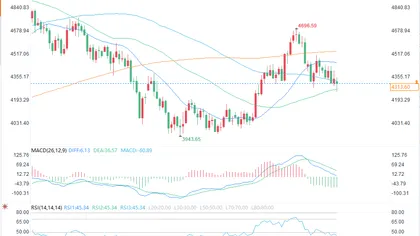
The USD/JPY pair seesaws between tepid gains/minor losses during the Asian session on Monday and currently trades just below mid-162.00s amid relatively thin liquidity on the back of a holiday in Japan. Nevertheless, spot prices remain close to a four-decade high, touched earlier this July, though bulls seem hesitant amid speculations that Japanese authorities will step in to prop up the Japanese Yen (JPY).
Japan’s Finance Minister Satsuki Katayama said on Friday that the government will take decisive action at any time if it becomes necessary. Despite the warning of possible intervention in the currency market, the JPY continues with its struggle to attract any meaningful buyers amid the wide rate differential between Japan and other major economies, which keeps the so-called carry trade active. Apart from this, economic risks stemming from the Middle East crisis continue to undermine the JPY, which, along with a modest US Dollar (USD) strength, acts as a tailwind for the USD/JPY pair.
Given that Japan relies on the Middle East for over 90% of its crude oil, investors are increasingly worried that the economy will remain under strain due to escalating US-Iran tensions and supply disruptions in the Strait of Hormuz. In fact, the US military said that it carried out a ninth straight night of strikes against Iran aimed at degrading its capabilities used to attack commercial vessels and civilian mariners transiting the strategic waterway. Moreover, US allies in the region reported a new wave of attacks on Sunday, prompting traders to continue to price in the geopolitical risk premium.
Meanwhile, US-Iran hostilities benefit the safe-haven USD amid concerns that rising crude oil prices would revive inflationary pressures and force the US Federal Reserve (Fed) to adopt a more hawkish stance. According to the CME Group's FedWatch Tool, traders are still pricing in the possibility of at least one interest rate hike by the Fed in 2026. This, in turn, favors the USD bulls and backs the case for a further near-term appreciating move for the USD/JPY pair. Hence, any corrective pullback could be seen as a buying opportunity and is more likely to be limited.
Disclaimer: The content of this article solely reflects the author's opinion and does not represent the platform in any capacity. This article is not intended to serve as a reference for making investment decisions.
You may also like
BTC, ETH, XRP, ZEC consolidate near highs as breakout levels approach
As chip stocks plummet, "cybersecurity software" surges across the board, CrowdStrike and Palo Alto Networks hit new highs
CrowdStrike surged 13.8% in a single day to a record high, while Palo Alto Networks soared 13%. The software ETF outperformed the semiconductor ETF by more than 10 percentage points in a single day, marking the largest gap in history. Analysts believe that regardless of the pace of AI development, security demand will only continue to rise. Capital is accelerating its rotation from computing hardware to security software, with segments such as identity management and data governance expected to benefit first.
Altman can afford to wait, but Masayoshi Son can't: OpenAI will not go public this year, exposing a $20 billion gap and a credit weakness for SoftBank.
OpenAI has postponed its public listing, putting its largest external shareholder, SoftBank, in a liquidity crisis. This week, SoftBank is conducting a roadshow in New York, seeking to issue $10-20 billion in bonds to repay the $40 billion bridge loan previously borrowed to increase its investment in OpenAI. According to Bloomberg estimates, SoftBank faces a funding gap of at least $20 billion, and the yield on its existing U.S. dollar bonds has already exceeded 8.5%, with pricing approaching junk status.
Meeting postponed, gold price drops rapidly
Crypto prices
More


