
Bitcoin defies recent tech stocks sell-off. Are bulls eyeing a $70K rally?

Key takeaways:
- Bitcoin futures and options show whales still prefer hedging downside risks as socio-economic risks mount.
- Rising Treasury yields and declines in AI stocks fuel risk aversion, yet BTC’s strength signals continued decoupling.
Bitcoin (BTC) showed relative strength over the past week, despite failing to break above $65,500. More importantly, the cryptocurrency has decoupled from traditional markets as investors took profits in memory-chip makers amid fears of excessive valuations in the artificial intelligence sector. Still, judging by Bitcoin’s derivative metrics, top traders are not particularly confident about a rally toward $70,000.
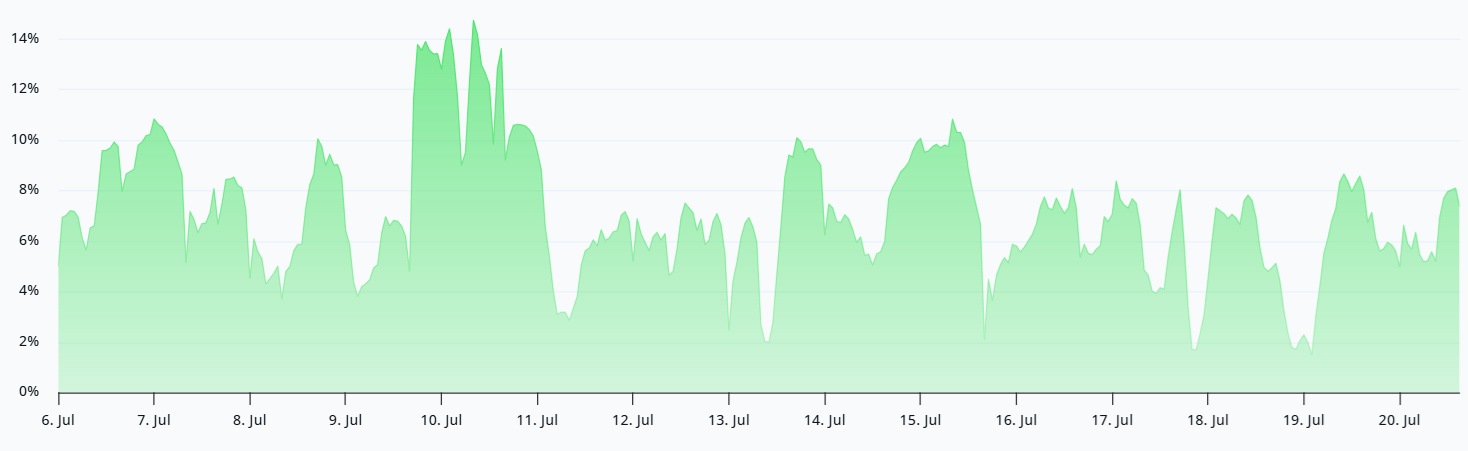
Bitcoin perpetual futures annualized funding rate. Source: Laevitas
The Bitcoin perpetual futures annualized funding rate stood at a neutral 8% mark on Monday, flat from one week prior. Excessive demand for bullish leverage drives the indicator above the 12% level, which last occurred on July 10. It is unclear if Bitcoin traders’ lack of optimism is somewhat related to contagion fears from the sell-off in tech stocks or the war in Iran.
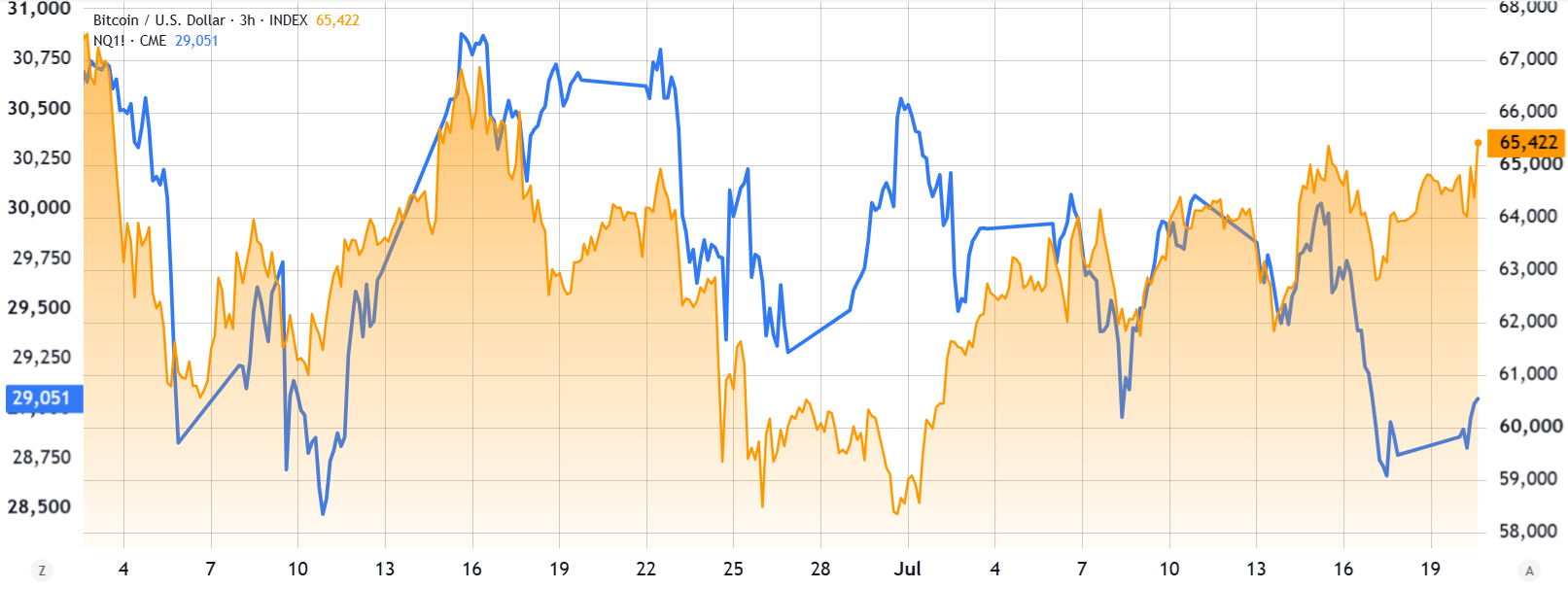
Nasdaq-100 futures (left) vs. Bitcoin/USD (right). Source: TradingView
The tech-heavy Nasdaq-100 Index dropped below 28,800 on Friday for the first time in five weeks, while Bitcoin displayed strength over the weekend and eventually broke above $65,000 on Monday. Strategy announced a successful raise of $263 million in cash by selling common stock during the prior week, easing concerns of potential Bitcoin sell pressure.
Investors became extremely anxious about Strategy’s $1.76 billion annual dividend payout to its preferred perpetual equity shareholders, in addition to the $2.6 billion of convertible debt maturing in 2028 and 2029. By raising cash reserves to a comfortable $3.22 billion, the company hopes to eliminate the uncertainty caused by unrealized Bitcoin losses held in its balance sheet.
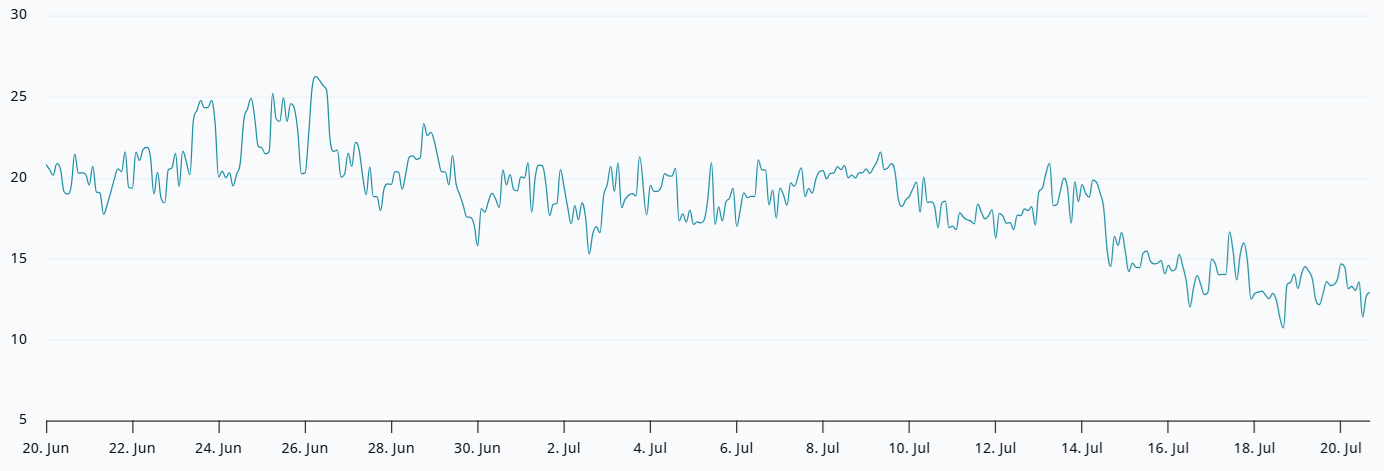
Bitcoin 30-day options delta skew (put-call) at Deribit. Source: Laevitas
The Bitcoin 30-day options delta skew stood at 13% on Monday, meaning puts (sell) traded at a premium relative to calls (buy). Under neutral conditions, the indicator should range from -6% to +6%. Despite the modest improvement from the prior week’s 19% delta skew, whales and market makers remain reluctant to hold downside price exposure.
Bitcoin’s resilience amid AI stocks weakness and increased risk aversion
The sell-off in AI-related stocks has also caused investors to act more risk-averse. The sharp declines in the shares of IBM, SanDisk, Oracle, ARM, SpaceX and Intel coincided with a rally in 5-year US Treasury yields. Traders demanded higher returns to hold government bonds, indicating they anticipate further expansionary monetary measures due to the ongoing fiscal debt issue.
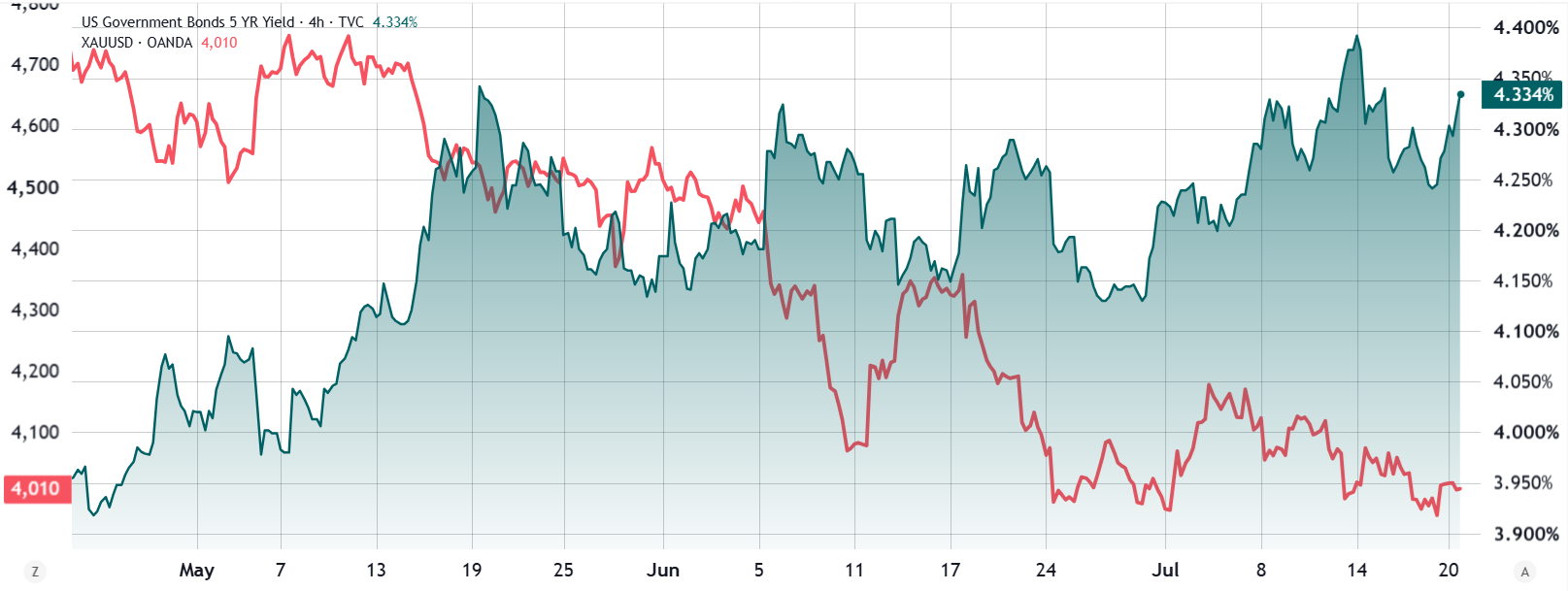
Gold/USD (left) vs. US 5-year Treasury yield (right): Source: TradingView
The US 5-year Treasury yield surged to 4.33% on Monday, up from 4.22% two weeks prior. Curiously, gold prices have been in a downtrend since mid-May, suggesting that no asset class has been immune to the deteriorating global economic growth outlook and ongoing geopolitical tensions in the Middle East.
On Monday, US President Trump vowed to retaliate against Iran for a missile strike that killed US soldiers in Jordan, putting risk assets on high . Bitcoin’s jump to $65,500 strengthens the case for further decoupling from traditional finance markets amid signs of monetary base expansion. Despite a lack of bullishness in BTC derivatives markets, a rally toward $70,000 could be ignited by weak corporate earnings, especially in the AI sector.
Disclaimer: The content of this article solely reflects the author's opinion and does not represent the platform in any capacity. This article is not intended to serve as a reference for making investment decisions.
You may also like
US and European interest rate trends may diverge! Citadel Securities: Energy shocks and high interest rates may increase downward pressure on the European economy
Castle Securities believes that although energy price shocks and the tightening of monetary policy by the European Central Bank have driven European bond yields to continue rising, these two forces may ultimately also act as factors limiting further increases in yields.

Bank of America (BAC.US) once plunged 6% as CEO sends cautious signal: Q3 trading revenue expected to be flat year-over-year, investment banking fee income may fall short of expectations
Bank of America CEO Brian Moynihan stated that the bank's trading revenue for the third quarter is expected to be "roughly flat" compared to the same period last year, indicating that after strong growth in the first half of the year, the growth momentum of Wall Street trading businesses is slowing down.

Overnight US Stocks | Three Major Indices Closed Lower, AI Giants Jointly Call for Slowing Development, Concept Stocks Plunge Across the Board
At the close, the Dow Jones Industrial Average fell by 152.01 points, or 0.29%, to 52,421.28 points; the S&P 500 Index dropped by 37.03 points, or 0.48%, to 7,619.95 points; and the Nasdaq Composite Index declined by 146.62 points, or 0.56%, to 26,186.41 points.

Bitcoin ETF See $463 Million Exit In Just Four Sessions

Crypto prices
More


