
The AI Earnings Test at the End of July: Wall Street Awaits Not Just Growth, but Proof of Returns on $750 Billion Invested

At the end of July, Alphabet, Microsoft, Meta, and Amazon will release their financial reports in quick succession. On the surface, the market is still waiting to see if search advertising, Azure, AWS, or Meta's advertising revenue can surpass expectations; however, what truly determines stock prices and the direction of the AI industry chain is no longer about whether a company earns a few percentage points more in a single quarter, but whether these four companies can prove that the unprecedented global investment in AI infrastructure is translating into sustainable revenue, profit, and cash flow.
This test is taking place in an exceptionally tense market environment. The AI cycle has not ended, and many institutions still describe enterprise demand for computing power as "almost limitless"; however, capital is no longer unconditionally rewarding capital expenditures as it has over the past two years.
01 What the Market Really Fears Is Not AI Demand, But That Returns Are Too Slow
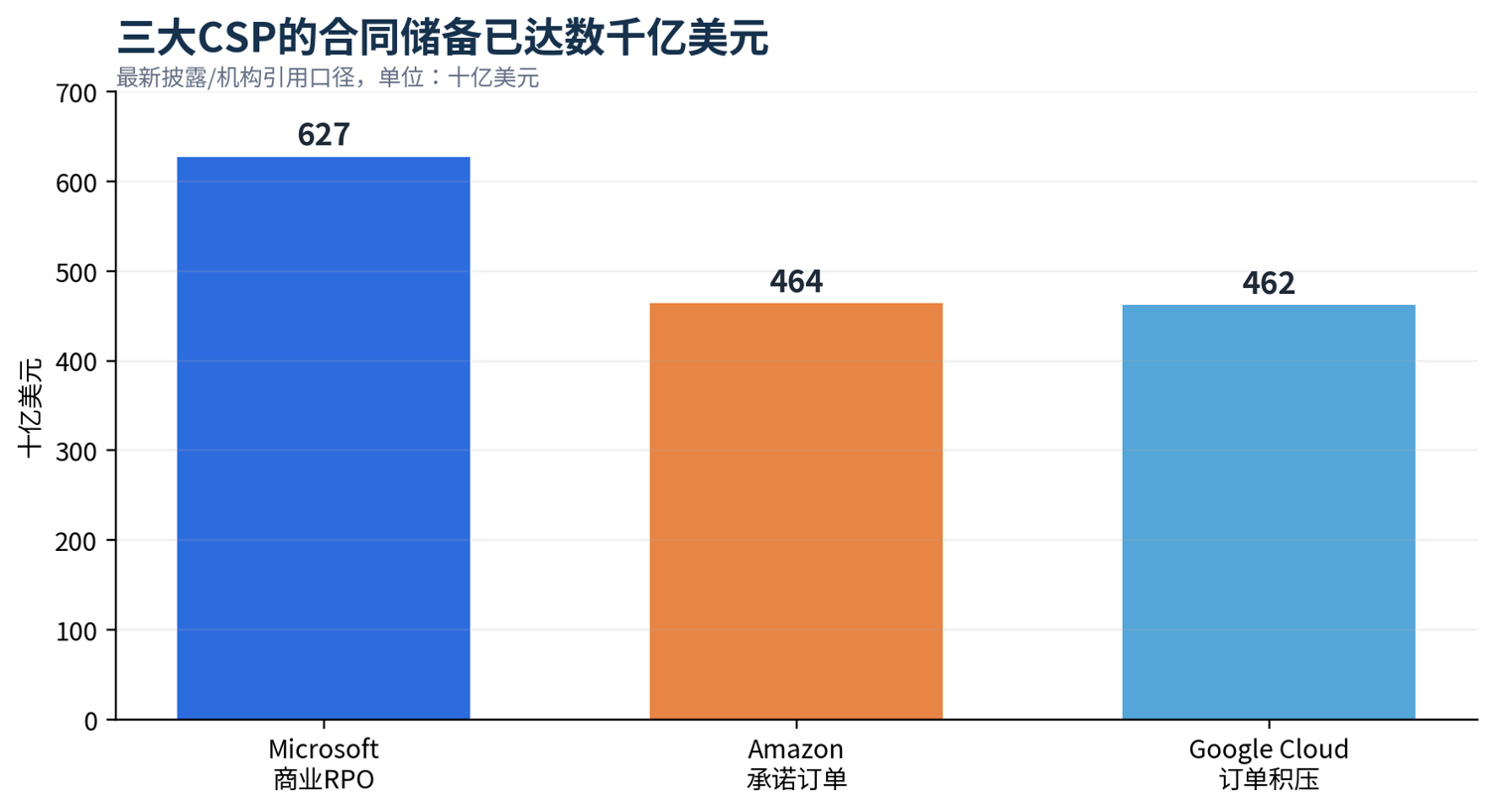
Wall Street's current core concern is not "whether there is demand for AI." Microsoft's commercial remaining performance obligations have reached $627 billion; Amazon has disclosed committed orders of about $464 billion; Google Cloud's backlog has also expanded rapidly. Microsoft, Google, and AWS are still, to varying degrees, facing shortages in computing power supply, and the construction of new data centers, power, and accelerators nearly all have clear directions.
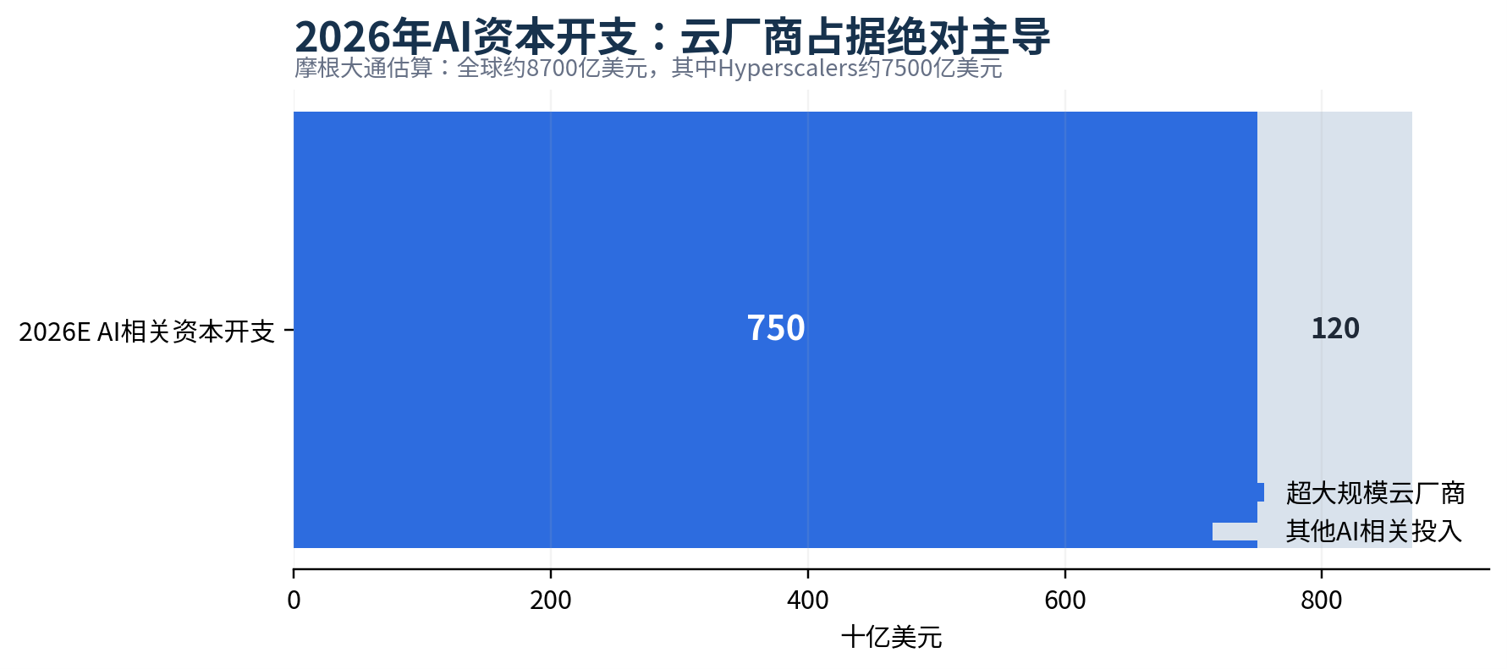
The problem is that, to meet this demand, capital expenditures are reaching levels once unimaginable. JPMorgan estimates that by 2026, AI-related capital expenditures may approach $870 billion, with hyperscale cloud vendors accounting for about $750 billion; their forecast for 2027 shows that capital expenditures at Google, Amazon, and Meta could still grow by about 54%, 42%, and 42%, respectively. Meanwhile, the debt financing of the five major cloud vendors has risen from about $40 to $50 billion in 2022 to about $190 billion in 2026, and Google has also started using large-scale equity financing.
This changes the criteria for evaluating earnings reports. Previously, an increase in capital expenditure typically indicated robust AI demand and was a positive signal for the chip and data center industry chains; now, the same increase may be interpreted as deteriorating free cash flow, rising reliance on financing, and a further delayed investment return cycle. Citi predicts that, under the new development cycle, Google, Amazon, and Meta may simultaneously experience negative free cash flow from 2027 to 2028.
……
Disclaimer: The content of this article solely reflects the author's opinion and does not represent the platform in any capacity. This article is not intended to serve as a reference for making investment decisions.
You may also like
Can Zcash Really Follow Bitcoin? This Model Puts ZEC to the Test
TAO Drops 7% After the Raydium Rally: Is a Bigger Move Coming?

Bitcoin: $85M whale buy meets Fed FUD – Is BTC setting up a bear trap?
SHIB Bulls Face a Test as 463 Billion Tokens Move in Just 24 Hours

Crypto prices
More


