China’s decision to halt helium exports is tightening an already strained global market, adding pressure on semiconductor manufacturers and other technology industries that rely on the gas. The move comes as conflict in the Middle East disrupts shipments from Qatar and Russia tightens its own helium exports, creating another supply risk for technology manufacturers.
While China produces only a small share of the world’s helium, it has become an important transit hub for Russian supplies bound for Europe. Beijing earlier this month introduced the export restrictions as it sought to secure enough helium for domestic industries and hospitals.
Higher semiconductor costs could eventually filter through to cryptocurrency miners, which rely on specialized chips to secure blockchain networks.
The export restrictions add to a series of disruptions that have tightened the global helium market. Conflict in the Middle East has interrupted shipments from Qatar, which previously accounted for about one-third of global helium production, while Russia supplies nearly 10% of the world’s output. The European Union’s 2024 ban on direct Russian helium imports also increased reliance on shipments routed through China.
“China isn’t a source; it’s a conduit,” said Seokjoon Kwon, a professor at Sungkyunkwan University in Seoul. The export halt “pinches a re-export valve Europe had been leaning on,” he said, adding that the move suggests China is preparing for “renewed scarcity.”
Supply pressures have intensified further after a Ukrainian strike targeted Russia’s Orenburg gas processing and helium plant. At the same time, major facilities, including QatarEnergy’s Ras Laffan complex, suspended production, pushing spot helium prices to roughly double since the disruptions began while long-term contract prices also moved higher.
Helium is a key part of semiconductor manufacturing and is used to produce the specialized chips that power ASIC crypto miners and high-performance graphics processors. If helium prices continue to rise, chipmakers could face higher production costs, increasing the likelihood that mining equipment will become more expensive.
The effects could extend beyond cryptocurrency mining. Many modern data centers support both artificial intelligence and blockchain workloads, meaning tighter semiconductor supplies could increase infrastructure costs across the broader technology sector.
Major chipmakers including TSMC, Samsung, and Intel could face higher production costs if helium prices continue to rise. Over time, manufacturers are expected to reduce supply risks by sourcing more helium from the United States, Australia, and new production projects.
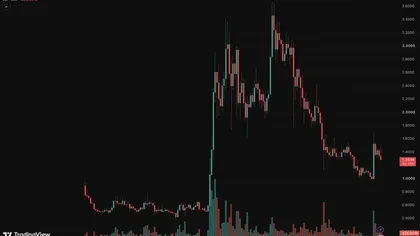
The supply disruptions are unrelated to the Helium Network, whose HNT token shares the gas’s name. Any movements in HNT linked to the export restrictions would likely reflect investor sentiment rather than changes to the project’s underlying technology or operations.